




What is the story about?
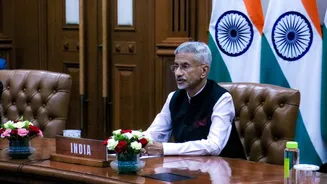
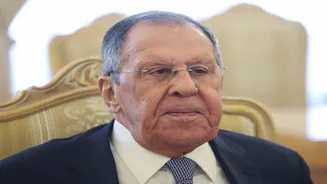
India and Russia on Wednesday reaffirmed their ambition to scale bilateral trade to $100 billion by 2030 as External Affairs Minister S. Jaishankar and Russian Foreign Minister Sergey Lavrov held wide-ranging talks in New Delhi focused on energy cooperation, Brics coordination and rising tensions in West Asia.
The meeting, held ahead of the Brics foreign ministers’ conclave hosted by India, highlighted Moscow and New Delhi’s push to deepen strategic and economic ties despite mounting geopolitical uncertainty and continued Western pressure on Russia over the Ukraine conflict.
“The goal which the leaders set to scale up bilateral trade for 2030 is $100 billion,” Lavrov said during the talks, underlining Russia’s intent to expand economic engagement with India across energy, investment and connectivity sectors.
Watch the video here:
The discussions focused heavily on energy trade, supply-chain resilience, transport connectivity and investment cooperation, while also reviewing flashpoints in West Asia and divisions emerging within the expanded Brics grouping over regional conflicts.
In his opening remarks, Jaishankar said the India-Russia partnership had acquired greater significance amid a rapidly shifting global order.
“The last few years have seen a steady and sustained growth in our bilateral partnership. Its economic and energy dimensions have become pronounced," Jaishankar said.
He added that both countries shared an interest in strengthening a multipolar world order and expanding cooperation in science, technology and talent mobility.
“Our conversation touched upon several aspects of the India-Russia Special and Privileged Strategic Partnership, including trade and investment, energy and connectivity, science and technology, as well as facilitating mobility of skills and talent,” Jaishankar later said in a social media post.
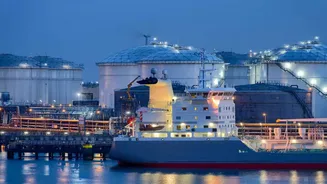
Lavrov’s visit comes at a sensitive moment for India’s energy security calculations, with the expiry of a US waiver linked to sanctioned Russian oil due on May 16.
Ahead of his India trip, Lavrov had signalled Moscow’s determination to maintain energy exports to New Delhi regardless of external pressure.
He said agreements on Russian energy supplies to India would be honoured despite what he described as “unfair external competition”, while emphasising that India-Russia relations were built on longstanding strategic trust.
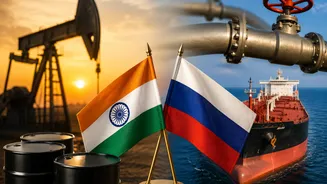
India has sharply increased purchases of discounted Russian crude since the outbreak of the Ukraine war in 2022, making Russia one of New Delhi’s largest oil suppliers. The cheaper imports have helped India contain inflationary pressures and shield domestic fuel markets from repeated global disruptions.
The two sides also exchanged views on the deteriorating security situation in West Asia, particularly concerns over the impact of regional instability on global trade corridors, shipping routes and energy markets.
Jaishankar said the “complicated international situation” required “an open exchange of views, especially between two trusted partners”.
The Lavrov-Jaishankar meeting took place ahead of the two-day Brics foreign ministers’ gathering in New Delhi.
Foreign ministers from several Brics nations,
including Abbas Araghchi of Iran, Mauro Vieira of Brazil and Ozzy Lamola of South Africa, have arrived in the Indian capital for the conclave.
India currently holds the Brics chairmanship and is preparing to host the bloc’s annual summit later this year.
Originally comprising Brazil, Russia, India, China and South Africa, Brics expanded in 2024 to include Egypt, Ethiopia, Iran and the United Arab Emirates, with Indonesia joining in 2025.
The grouping now represents nearly half of the world’s population and around 40 per cent of global GDP, strengthening its position as a major platform for emerging economies seeking greater influence in global governance.
The meeting, held ahead of the Brics foreign ministers’ conclave hosted by India, highlighted Moscow and New Delhi’s push to deepen strategic and economic ties despite mounting geopolitical uncertainty and continued Western pressure on Russia over the Ukraine conflict.
“The goal which the leaders set to scale up bilateral trade for 2030 is $100 billion,” Lavrov said during the talks, underlining Russia’s intent to expand economic engagement with India across energy, investment and connectivity sectors.
Watch the video here:
VIDEO | Delhi: "The goal which the leaders set to scale up bilateral trade for 2030 is USD 100 billion," says Russian Foreign Minister Sergey Lavrov during his meeting with EAM S Jaishankar.
(Source: Third Party) pic.twitter.com/SPmBe2QSDi
— Press Trust of India (@PTI_News) May 13, 2026
The discussions focused heavily on energy trade, supply-chain resilience, transport connectivity and investment cooperation, while also reviewing flashpoints in West Asia and divisions emerging within the expanded Brics grouping over regional conflicts.
In his opening remarks, Jaishankar said the India-Russia partnership had acquired greater significance amid a rapidly shifting global order.
“The last few years have seen a steady and sustained growth in our bilateral partnership. Its economic and energy dimensions have become pronounced," Jaishankar said.
He added that both countries shared an interest in strengthening a multipolar world order and expanding cooperation in science, technology and talent mobility.
“Our conversation touched upon several aspects of the India-Russia Special and Privileged Strategic Partnership, including trade and investment, energy and connectivity, science and technology, as well as facilitating mobility of skills and talent,” Jaishankar later said in a social media post.
Lavrov’s visit comes at a sensitive moment for India’s energy security calculations, with the expiry of a US waiver linked to sanctioned Russian oil due on May 16.
Ahead of his India trip, Lavrov had signalled Moscow’s determination to maintain energy exports to New Delhi regardless of external pressure.
He said agreements on Russian energy supplies to India would be honoured despite what he described as “unfair external competition”, while emphasising that India-Russia relations were built on longstanding strategic trust.
India has sharply increased purchases of discounted Russian crude since the outbreak of the Ukraine war in 2022, making Russia one of New Delhi’s largest oil suppliers. The cheaper imports have helped India contain inflationary pressures and shield domestic fuel markets from repeated global disruptions.
The two sides also exchanged views on the deteriorating security situation in West Asia, particularly concerns over the impact of regional instability on global trade corridors, shipping routes and energy markets.
Jaishankar said the “complicated international situation” required “an open exchange of views, especially between two trusted partners”.
The Lavrov-Jaishankar meeting took place ahead of the two-day Brics foreign ministers’ gathering in New Delhi.
Foreign ministers from several Brics nations,
India currently holds the Brics chairmanship and is preparing to host the bloc’s annual summit later this year.
Originally comprising Brazil, Russia, India, China and South Africa, Brics expanded in 2024 to include Egypt, Ethiopia, Iran and the United Arab Emirates, with Indonesia joining in 2025.
The grouping now represents nearly half of the world’s population and around 40 per cent of global GDP, strengthening its position as a major platform for emerging economies seeking greater influence in global governance.