






What is the story about?
For decades, the personal computer industry has largely revolved around a familiar cast of chipmakers. It includes Intel, AMD and, more recently, Qualcomm and Apple. Nvidia, despite becoming the dominant force behind the artificial intelligence boom, has mostly stayed out of the battle for the main processor inside PCs.
That is about to change.
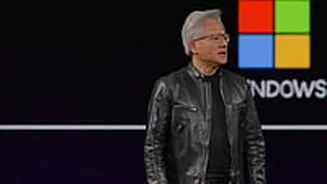
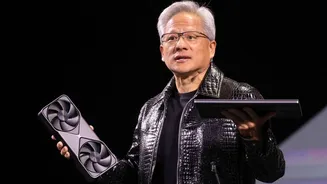
Speaking at Computex in Taiwan, Nvidia CEO Jensen Huang unveiled RTX Spark, a new AI-focused superchip designed to power the next generation of Windows computers. Developed in partnership with Microsoft, the chip marks Nvidia's most ambitious attempt yet to enter the mainstream PC processor market and challenge some of the industry's most established players.
The new hardware will begin appearing later this year in laptops and desktops from manufacturers including Dell, HP, Lenovo, Asus, MSI and Microsoft.
For Huang, the launch represents more than just another processor. He described it as the beginning of a fundamental shift in personal computing, comparing the transition to the transformation that turned mobile phones into modern smartphones.
At the heart of the announcement is Nvidia's new N1X processor, an Arm-based CPU developed in collaboration with Taiwanese chip designer MediaTek.
Rather than relying on a traditional processor design, RTX Spark combines Nvidia's expertise in graphics and AI acceleration with a custom-built CPU architecture. The result is a unified computing platform intended to run AI applications directly on personal computers.
Nvidia plans to launch more than 40 systems built around the new chip, including over 30 laptops and 10 desktop computers.
The company believes AI agents will become a central part of future computing experiences. Instead of simply opening applications and manually completing tasks, users may increasingly rely on AI systems that can assist with coding, content creation, research and productivity workflows directly on their devices.
Microsoft has played a significant role in the project. According to Nvidia, the two companies have worked together for several years to optimise Windows for the new architecture. Microsoft has also tuned Windows 11's scheduling system to improve performance and efficiency across different workloads, whether users are checking emails or running local AI agents.
RTX Spark combines two of Nvidia's flagship technologies into a single package. The chip pairs a Blackwell graphics processor with the new N1X Arm-based CPU, creating a unified system capable of handling graphics, AI and general computing tasks.
Nvidia says the platform can deliver up to one petaflop of AI computing performance. The chip includes 6,144 Blackwell GPU cores alongside 20 Arm CPU cores and features an integrated neural processing unit capable of meeting Microsoft's Copilot+ PC requirements.
One of its standout features is unified memory. Unlike conventional systems where memory is split between components, RTX Spark allows the processor and graphics engine to access a shared memory pool ranging from 16GB to 128GB. This design can improve efficiency for AI workloads that require rapid access to large datasets.
Power consumption is also a major focus. Nvidia claims RTX Spark can deliver performance comparable to some high-end laptop graphics processors while consuming significantly less power.
While Nvidia initially sees the platform as a tool for content creators and AI developers, the broader ambition is clear. The company wants to help redefine the personal computer for an era where AI is not just an application, but the centre of the computing experience itself.
That is about to change.
Speaking at Computex in Taiwan, Nvidia CEO Jensen Huang unveiled RTX Spark, a new AI-focused superchip designed to power the next generation of Windows computers. Developed in partnership with Microsoft, the chip marks Nvidia's most ambitious attempt yet to enter the mainstream PC processor market and challenge some of the industry's most established players.
NVIDIA RTX Spark: a 1-petaflop superchip, the full CUDA and RTX ecosystem, and Windows-native agents. A new beginning for personal computers. pic.twitter.com/3OPOCNJBz5
— NVIDIA (@nvidia) June 1, 2026
The new hardware will begin appearing later this year in laptops and desktops from manufacturers including Dell, HP, Lenovo, Asus, MSI and Microsoft.
For Huang, the launch represents more than just another processor. He described it as the beginning of a fundamental shift in personal computing, comparing the transition to the transformation that turned mobile phones into modern smartphones.
Nvidia launches RTX Spark superchip for AI PCs
At the heart of the announcement is Nvidia's new N1X processor, an Arm-based CPU developed in collaboration with Taiwanese chip designer MediaTek.
Rather than relying on a traditional processor design, RTX Spark combines Nvidia's expertise in graphics and AI acceleration with a custom-built CPU architecture. The result is a unified computing platform intended to run AI applications directly on personal computers.
Nvidia plans to launch more than 40 systems built around the new chip, including over 30 laptops and 10 desktop computers.
The company believes AI agents will become a central part of future computing experiences. Instead of simply opening applications and manually completing tasks, users may increasingly rely on AI systems that can assist with coding, content creation, research and productivity workflows directly on their devices.
Microsoft has played a significant role in the project. According to Nvidia, the two companies have worked together for several years to optimise Windows for the new architecture. Microsoft has also tuned Windows 11's scheduling system to improve performance and efficiency across different workloads, whether users are checking emails or running local AI agents.
Nvidia RTX Spark: Specs and features
RTX Spark combines two of Nvidia's flagship technologies into a single package. The chip pairs a Blackwell graphics processor with the new N1X Arm-based CPU, creating a unified system capable of handling graphics, AI and general computing tasks.
Nvidia says the platform can deliver up to one petaflop of AI computing performance. The chip includes 6,144 Blackwell GPU cores alongside 20 Arm CPU cores and features an integrated neural processing unit capable of meeting Microsoft's Copilot+ PC requirements.
One of its standout features is unified memory. Unlike conventional systems where memory is split between components, RTX Spark allows the processor and graphics engine to access a shared memory pool ranging from 16GB to 128GB. This design can improve efficiency for AI workloads that require rapid access to large datasets.
Power consumption is also a major focus. Nvidia claims RTX Spark can deliver performance comparable to some high-end laptop graphics processors while consuming significantly less power.
While Nvidia initially sees the platform as a tool for content creators and AI developers, the broader ambition is clear. The company wants to help redefine the personal computer for an era where AI is not just an application, but the centre of the computing experience itself.