




What is the story about?
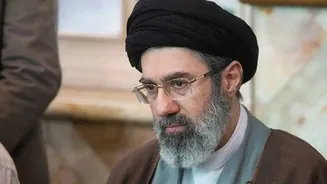
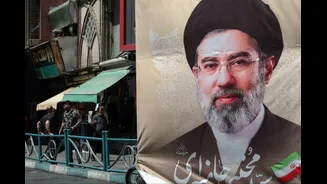
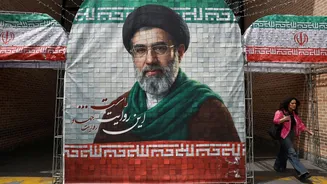
Nearly three months after assuming leadership of the Islamic Republic, Iran’s Supreme Leader Mojtaba Khamenei remains completely absent from public life.
Khamenei is reportedly operating through a shadowy wartime structure built around underground bunkers, handwritten messages and tightly controlled courier networks.
According to US intelligence officials cited by CBS News, Mojtaba Khamenei is effectively isolated in undisclosed secure locations and has little direct interaction with the outside world.
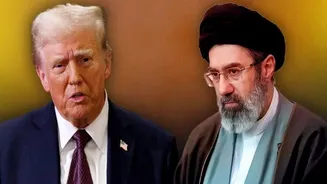
US officials familiar with ongoing discussions between Tehran and the administration of US President Donald Trump said the lack of direct communication channels inside Iran’s leadership structure
has significantly slowed negotiations and responses to American proposals.
The United States and Israel launched coordinated strikes targeting Iranian leadership compounds in Tehran’s Pasteur district on February 28.
The military operation — referred to in reports as Operation Epic Fury and also as Operation Roaring Lion — killed Ayatollah Ali Khamenei, who had ruled Iran since 1989, along with Mojtaba Khamenei’s wife, Zahra Haddad-Adel.
Mojtaba himself was reportedly wounded during the attacks but survived. Intelligence and diplomatic accounts state that he was evacuated immediately by the Islamic Revolutionary Guard Corps (IRGC) to a secure undisclosed location.
For the first time since the 1979 revolution, Iran’s supreme leadership structure faced an abrupt wartime transition following the death of a sitting Supreme Leader in a foreign military operation.
The aftermath reportedly triggered an immediate power vacuum in Tehran.
Between March 1 and March 7, an Interim Leadership Council was established under Article 111 of Iran’s Constitution to temporarily oversee state affairs while Mojtaba recovered from injuries sustained during the strikes.
During that same period, according to reports, the IRGC exerted strong pressure on Iran’s political establishment to accelerate the succession process. On March 8, the Assembly of Experts officially selected Mojtaba Khamenei as Iran’s third Supreme Leader.
The appointment was significant because it effectively transformed Iran’s leadership succession into a dynastic transition from father to son — something unprecedented in the history of the Islamic Republic.
Yet even after formally assuming office, Mojtaba Khamenei did not appear publicly.
In the weeks that followed, reports increasingly suggested that the new Supreme Leader was operating under severe security restrictions while the country’s senior leadership moved deeper underground.
American intelligence assessments cited in multiple reports describe a system in which Iran’s leadership now functions through compartmentalised bunker networks and indirect communication chains.
US officials told CBS News that Mojtaba Khamenei has effectively abandoned all standard electronic communications in order to reduce the risk of being tracked and targeted.
According to diplomatic sources cited by the Financial Times, the Iranian leader avoids electronic devices entirely and instead relies on handwritten instructions or hand-delivered communications to transmit orders and receive updates from senior officials.
The communication restrictions are reportedly so extensive that many high-ranking officials within the Iranian government do not know where the Supreme Leader is physically located.
US intelligence officials said even senior members of Iran’s cabinet and negotiating teams are unable to directly reach him.
By design, messages pass through a network of couriers whose role is to obscure the Supreme Leader’s location and prevent the emergence of any detectable communication pattern.
“This is why you see people saying things like, ‘The supreme leader has agreed to the framework,’ or ‘We’re waiting to hear back on the final deal points.’ Every piece of information he receives is dated and there’s a lot of latency to his responses,” one official said.
American officials also indicated that the communication bottlenecks have complicated ongoing negotiations between Tehran and Washington.
When US officials send draft proposals or negotiation frameworks, the documents reportedly have to move physically through layers of intermediaries before reaching Mojtaba Khamenei’s location. Responses must then travel back through the same system.
According to US officials familiar with the process, the delays have become a defining feature of current diplomacy with Iran.
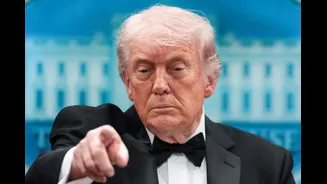
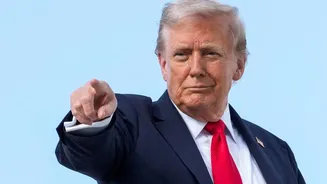
A senior Trump administration official reportedly stated that the Supreme Leader had already approved the broad contours of a draft agreement, while Trump himself posted on Truth Social that he expected a final response within days.
The operational restrictions extend beyond Mojtaba Khamenei himself.
US intelligence sources said many senior Iranian leaders are now spending extended periods inside underground facilities while minimising communication with one another to reduce exposure to surveillance or targeted attacks.
“At this point, most Iranian leaders don't see daylight, spending weeks inside highly fortified bunkers and avoiding speaking to each other unless absolutely necessary,” officials said in the reports.
One American official described the resulting communication confusion inside Tehran’s leadership circles in unusually blunt terms.
“Watching them try to figure out how to talk to each other is almost like watching a sitcom. They are completely exasperated,” the official said.
According to intelligence assessments, the security measures are rooted in the belief that American and Israeli intelligence agencies successfully penetrated Iran’s leadership structure during the war, allowing senior commanders and officials to be identified and targeted.
US officials reportedly believe intelligence gathered from within the Iranian system played a critical role in locating key leadership figures during the strikes.
As a result, Tehran’s leadership now appears to be functioning under the assumption that any electronic signal, digital communication or traceable movement could expose the Supreme Leader’s position.
Western intelligence leaks earlier this year pointed toward the holy city of Qom as one of the primary locations linked to Mojtaba Khamenei’s security arrangements.
Qom is home to some of Iran’s most fortified underground facilities and has long been viewed as a strategically important center for both the clerical establishment and the IRGC.
According to reports, intelligence agencies believe Mojtaba Khamenei initially took shelter within bunker complexes beneath the city following the February strikes. However, more recent intelligence assessments suggest he is frequently moved between different subterranean compounds in order to avoid establishing a predictable pattern.
Reports indicate the facilities are guarded directly by the IRGC and form part of a broader wartime command network established after the killing of Ali Khamenei.
Diplomatic sources cited in the Financial Times said the Supreme Leader’s protection has effectively become the exclusive responsibility of the Revolutionary Guard, highlighting what analysts described as growing mistrust inside Iran’s upper political circles.
The reports also suggest the IRGC’s role has expanded dramatically since the strikes, with military-linked figures now exercising increasing influence over state decision-making.
While Mojtaba Khamenei remains hidden, reports from the Financial Times and The New York Times suggest Iran’s political system is increasingly being managed by
a small group of powerful current and former Revolutionary Guard-linked officials.
Among the individuals identified as influential are Parliament Speaker Mohammad Bagher Ghalibaf, former Interior Minister Ahmad Vahidi, Judiciary Chief Gholam-Hossein Mohseni Ejei and former intelligence chief Hossein Taeb.
According to diplomatic accounts, Mojtaba Khamenei has established two tightly controlled committees composed of military officers, political figures and former regime officials to manage mediation efforts and coordinate decision-making.
The groups reportedly communicate directly with the Supreme Leader through the courier system while helping oversee wartime governance and negotiations.
Iranian authorities, meanwhile, continue insisting that Mojtaba Khamenei remains fully in control despite his prolonged disappearance from public life.
His official X account reportedly shared three posts on May 18, though he himself has not appeared publicly or delivered a speech since taking office.
Counterterrorism experts say the operational methods now being used by Mojtaba Khamenei resemble the tactics employed by Osama bin Laden during the final years of his life.
Dr. Omar Mohammed, a counterterrorism expert affiliated with George Washington University’s Program on Extremism, told
Fox News Digital that the Iranian leadership’s current behavior reflects lessons learned from America’s long campaign against al-Qaeda and ISIS.
“For the first time in the history of the Islamic Republic, the United States has done to Tehran what it spent two decades doing to al-Qaeda and ISIS,” Mohammed said.
“The US has driven its leader into the same kind of operational invisibility that bin Laden lived in for 10 years in Abbottabad,” he added.
According to Mohammed, both Mojtaba Khamenei and bin Laden rose to leadership positions in the aftermath of American military actions and responded by disappearing from public view.
“Both Mojtaba Khamenei and bin Laden inherited their status on the back of an American operation, and both responded the same way: by ceasing to exist publicly,” Mohammed said.
Bin Laden founded al-Qaeda during the late 1980s and orchestrated the September 11, 2001 attacks against the United States.
After the American invasion of Afghanistan, he evaded capture for years while living in hiding inside Pakistan.
Mohammed noted that bin Laden gradually eliminated his electronic footprint and shifted entirely to hand-carried communications. “Bin Laden survived with no cables out of the Abbottabad compound. Communications were carried by hand by two trusted couriers, the Kuwaiti brothers,” Mohammed said.
US intelligence agencies eventually tracked one of those couriers to the compound in Abbottabad, leading to the 2011 Navy SEAL raid that killed the al-Qaeda leader.
Mohammed argued that Tehran appears to have drawn direct lessons from that episode while designing Mojtaba Khamenei’s current security arrangements.
“Bin Laden stayed hidden for the rest of his life because the moment he surfaced was the moment he died. Mojtaba’s incentives point the same way. Mojtaba Khamenei won’t emerge,” he said.
He also suggested Iranian planners would likely prioritize hardened military-linked compounds rather than isolated mountain hideouts.
“The Abbottabad lesson, which Tehran will have studied closely, is that the safest hiding place is not a cave in Tora Bora but a walled compound in a garrison town,” Mohammed added.
“The logical Iranian equivalents are hardened sites under or alongside IRGC facilities,” he said.
According to intelligence reports, a conditional ceasefire arrangement brokered through Pakistani mediation has been slowed significantly because of the communication restrictions surrounding Mojtaba Khamenei.
Every proposal reportedly has to be physically transported through multiple layers of vetted intermediaries before reaching the Supreme Leader’s hidden location.
The process is then repeated in reverse once decisions are made. US officials say this structure reflects Tehran’s conclusion that direct electronic communications would create unacceptable security risks.
According to intelligence officials and diplomats, the operational philosophy behind the current structure is straightforward: any traceable digital signal could expose the location of Iran’s top leadership and potentially make Mojtaba Khamenei the next target for elimination.
With inputs from agencies
Khamenei is reportedly operating through a shadowy wartime structure built around underground bunkers, handwritten messages and tightly controlled courier networks.
According to US intelligence officials cited by CBS News, Mojtaba Khamenei is effectively isolated in undisclosed secure locations and has little direct interaction with the outside world.
US officials familiar with ongoing discussions between Tehran and the administration of US President Donald Trump said the lack of direct communication channels inside Iran’s leadership structure
How Khamenei was forced into hiding
The United States and Israel launched coordinated strikes targeting Iranian leadership compounds in Tehran’s Pasteur district on February 28.
The military operation — referred to in reports as Operation Epic Fury and also as Operation Roaring Lion — killed Ayatollah Ali Khamenei, who had ruled Iran since 1989, along with Mojtaba Khamenei’s wife, Zahra Haddad-Adel.
Mojtaba himself was reportedly wounded during the attacks but survived. Intelligence and diplomatic accounts state that he was evacuated immediately by the Islamic Revolutionary Guard Corps (IRGC) to a secure undisclosed location.
For the first time since the 1979 revolution, Iran’s supreme leadership structure faced an abrupt wartime transition following the death of a sitting Supreme Leader in a foreign military operation.
The aftermath reportedly triggered an immediate power vacuum in Tehran.
Between March 1 and March 7, an Interim Leadership Council was established under Article 111 of Iran’s Constitution to temporarily oversee state affairs while Mojtaba recovered from injuries sustained during the strikes.
During that same period, according to reports, the IRGC exerted strong pressure on Iran’s political establishment to accelerate the succession process. On March 8, the Assembly of Experts officially selected Mojtaba Khamenei as Iran’s third Supreme Leader.
The appointment was significant because it effectively transformed Iran’s leadership succession into a dynastic transition from father to son — something unprecedented in the history of the Islamic Republic.
Yet even after formally assuming office, Mojtaba Khamenei did not appear publicly.
In the weeks that followed, reports increasingly suggested that the new Supreme Leader was operating under severe security restrictions while the country’s senior leadership moved deeper underground.
How Iran’s hidden wartime command structure functions
American intelligence assessments cited in multiple reports describe a system in which Iran’s leadership now functions through compartmentalised bunker networks and indirect communication chains.
US officials told CBS News that Mojtaba Khamenei has effectively abandoned all standard electronic communications in order to reduce the risk of being tracked and targeted.
According to diplomatic sources cited by the Financial Times, the Iranian leader avoids electronic devices entirely and instead relies on handwritten instructions or hand-delivered communications to transmit orders and receive updates from senior officials.
The communication restrictions are reportedly so extensive that many high-ranking officials within the Iranian government do not know where the Supreme Leader is physically located.
US intelligence officials said even senior members of Iran’s cabinet and negotiating teams are unable to directly reach him.
By design, messages pass through a network of couriers whose role is to obscure the Supreme Leader’s location and prevent the emergence of any detectable communication pattern.
“This is why you see people saying things like, ‘The supreme leader has agreed to the framework,’ or ‘We’re waiting to hear back on the final deal points.’ Every piece of information he receives is dated and there’s a lot of latency to his responses,” one official said.
American officials also indicated that the communication bottlenecks have complicated ongoing negotiations between Tehran and Washington.
When US officials send draft proposals or negotiation frameworks, the documents reportedly have to move physically through layers of intermediaries before reaching Mojtaba Khamenei’s location. Responses must then travel back through the same system.
According to US officials familiar with the process, the delays have become a defining feature of current diplomacy with Iran.
A senior Trump administration official reportedly stated that the Supreme Leader had already approved the broad contours of a draft agreement, while Trump himself posted on Truth Social that he expected a final response within days.
The operational restrictions extend beyond Mojtaba Khamenei himself.
US intelligence sources said many senior Iranian leaders are now spending extended periods inside underground facilities while minimising communication with one another to reduce exposure to surveillance or targeted attacks.
“At this point, most Iranian leaders don't see daylight, spending weeks inside highly fortified bunkers and avoiding speaking to each other unless absolutely necessary,” officials said in the reports.
One American official described the resulting communication confusion inside Tehran’s leadership circles in unusually blunt terms.
“Watching them try to figure out how to talk to each other is almost like watching a sitcom. They are completely exasperated,” the official said.
According to intelligence assessments, the security measures are rooted in the belief that American and Israeli intelligence agencies successfully penetrated Iran’s leadership structure during the war, allowing senior commanders and officials to be identified and targeted.
US officials reportedly believe intelligence gathered from within the Iranian system played a critical role in locating key leadership figures during the strikes.
As a result, Tehran’s leadership now appears to be functioning under the assumption that any electronic signal, digital communication or traceable movement could expose the Supreme Leader’s position.
The role of Qom and underground bunkers
Western intelligence leaks earlier this year pointed toward the holy city of Qom as one of the primary locations linked to Mojtaba Khamenei’s security arrangements.
Qom is home to some of Iran’s most fortified underground facilities and has long been viewed as a strategically important center for both the clerical establishment and the IRGC.
According to reports, intelligence agencies believe Mojtaba Khamenei initially took shelter within bunker complexes beneath the city following the February strikes. However, more recent intelligence assessments suggest he is frequently moved between different subterranean compounds in order to avoid establishing a predictable pattern.
Reports indicate the facilities are guarded directly by the IRGC and form part of a broader wartime command network established after the killing of Ali Khamenei.
Diplomatic sources cited in the Financial Times said the Supreme Leader’s protection has effectively become the exclusive responsibility of the Revolutionary Guard, highlighting what analysts described as growing mistrust inside Iran’s upper political circles.
The reports also suggest the IRGC’s role has expanded dramatically since the strikes, with military-linked figures now exercising increasing influence over state decision-making.
The officials believed to hold power in Tehran
While Mojtaba Khamenei remains hidden, reports from the Financial Times and The New York Times suggest Iran’s political system is increasingly being managed by
Among the individuals identified as influential are Parliament Speaker Mohammad Bagher Ghalibaf, former Interior Minister Ahmad Vahidi, Judiciary Chief Gholam-Hossein Mohseni Ejei and former intelligence chief Hossein Taeb.
According to diplomatic accounts, Mojtaba Khamenei has established two tightly controlled committees composed of military officers, political figures and former regime officials to manage mediation efforts and coordinate decision-making.
The groups reportedly communicate directly with the Supreme Leader through the courier system while helping oversee wartime governance and negotiations.
Iranian authorities, meanwhile, continue insisting that Mojtaba Khamenei remains fully in control despite his prolonged disappearance from public life.
His official X account reportedly shared three posts on May 18, though he himself has not appeared publicly or delivered a speech since taking office.
Why analysts are comparing Mojtaba Khamenei to Osama bin Laden
Counterterrorism experts say the operational methods now being used by Mojtaba Khamenei resemble the tactics employed by Osama bin Laden during the final years of his life.
Dr. Omar Mohammed, a counterterrorism expert affiliated with George Washington University’s Program on Extremism, told
“For the first time in the history of the Islamic Republic, the United States has done to Tehran what it spent two decades doing to al-Qaeda and ISIS,” Mohammed said.
“The US has driven its leader into the same kind of operational invisibility that bin Laden lived in for 10 years in Abbottabad,” he added.
According to Mohammed, both Mojtaba Khamenei and bin Laden rose to leadership positions in the aftermath of American military actions and responded by disappearing from public view.
“Both Mojtaba Khamenei and bin Laden inherited their status on the back of an American operation, and both responded the same way: by ceasing to exist publicly,” Mohammed said.
Bin Laden founded al-Qaeda during the late 1980s and orchestrated the September 11, 2001 attacks against the United States.
After the American invasion of Afghanistan, he evaded capture for years while living in hiding inside Pakistan.
Mohammed noted that bin Laden gradually eliminated his electronic footprint and shifted entirely to hand-carried communications. “Bin Laden survived with no cables out of the Abbottabad compound. Communications were carried by hand by two trusted couriers, the Kuwaiti brothers,” Mohammed said.
US intelligence agencies eventually tracked one of those couriers to the compound in Abbottabad, leading to the 2011 Navy SEAL raid that killed the al-Qaeda leader.
Mohammed argued that Tehran appears to have drawn direct lessons from that episode while designing Mojtaba Khamenei’s current security arrangements.
“Bin Laden stayed hidden for the rest of his life because the moment he surfaced was the moment he died. Mojtaba’s incentives point the same way. Mojtaba Khamenei won’t emerge,” he said.
He also suggested Iranian planners would likely prioritize hardened military-linked compounds rather than isolated mountain hideouts.
“The Abbottabad lesson, which Tehran will have studied closely, is that the safest hiding place is not a cave in Tora Bora but a walled compound in a garrison town,” Mohammed added.
“The logical Iranian equivalents are hardened sites under or alongside IRGC facilities,” he said.
How a peace deal has been slowed
According to intelligence reports, a conditional ceasefire arrangement brokered through Pakistani mediation has been slowed significantly because of the communication restrictions surrounding Mojtaba Khamenei.
Every proposal reportedly has to be physically transported through multiple layers of vetted intermediaries before reaching the Supreme Leader’s hidden location.
The process is then repeated in reverse once decisions are made. US officials say this structure reflects Tehran’s conclusion that direct electronic communications would create unacceptable security risks.
According to intelligence officials and diplomats, the operational philosophy behind the current structure is straightforward: any traceable digital signal could expose the location of Iran’s top leadership and potentially make Mojtaba Khamenei the next target for elimination.
With inputs from agencies