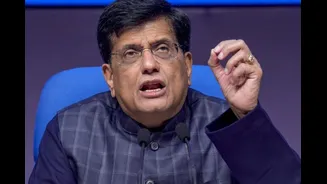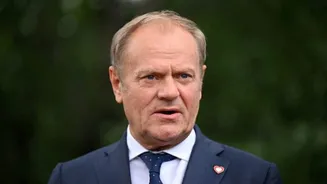

Finance Minister Andrzej Domanski told the Financial Times the case for adopting the euro has weakened considerably as Poland’s economy has surged ahead of most Eurozone members. In an interview with the newspaper, Domanski made it clear that Warsaw sees little urgency in giving up monetary independence.
“Our economy is now doing clearly better than most of those that have the euro,” he said. “We have more and more data, research and arguments to keep the Polish zloty.”
The comments signal a notable cooling of enthusiasm for euro adoption from a government that is otherwise strongly pro-European Union. Poland is legally obliged, under EU accession rules, to adopt the single currency once it meets key convergence criteria. But the timeline, Domanski stressed, remains a political choice, and for now, Warsaw is choosing to wait.
From euro ambition to economic caution
Prime Minister Donald Tusk’s position on the euro has evolved over time. When he first took office in 2008, Tusk had argued that Poland should adopt the single currency by 2012. That ambition was quietly shelved after the Eurozone debt crisis exposed deep structural weaknesses within the bloc and fuelled domestic scepticism.
The rightwing Law and Justice (PiS) party, which ruled Poland for eight years until late 2023, made opposition to the euro a pillar of its sovereignty narrative. Even after Tusk returned to power in October 2023 at the head of a pro-EU coalition, public sentiment has remained firmly against abandoning the zloty.
Opinion polls show a majority of Poles opposed to euro adoption. Since Tusk’s election victory, the zloty has also strengthened against the euro, a trend the government sees as reinforcing its argument.
“Public opinion favours the zloty, but the main reasons we’re not working on euro adoption right now are economic and not about Polish politics,” Domański said. “Two years ago I was a bit worried that Poland could be left behind in a two-tier EU and outside the Eurozone, but today Poland is clearly in the top economic tier, and I see no strong reason to abandon our own currency.”
Growth, scale and global ambitions
Poland’s economic numbers underpin this confidence. The country crossed the $1 trillion GDP mark last year, becoming the world’s 20th-largest economy according to International Monetary Fund estimates. The OECD forecasts Polish growth of 3.4 per cent this year — the fastest among EU countries covered in its latest report.
Rather than prioritising Eurozone entry, Warsaw is now setting its sights higher. Domanski said Poland is seeking a permanent seat at the G20, the forum of the world’s largest economies. In a symbolic boost, Poland has been invited by US President Donald Trump’s administration to attend this year’s G20 meeting in Miami as an observer.
The contrast with Bulgaria is striking. Bulgaria, which joined the EU in 2007, three years after Poland, became the Eurozone’s 21st member this month. Warsaw, by comparison, appears increasingly comfortable charting its own monetary course.
Fiscal realities still matter
Despite its strong growth, Poland does not yet meet all the Maastricht convergence criteria required for euro adoption. The European Commission forecasts Poland’s budget deficit will narrow to 6.3 per cent of GDP in 2026, down from about 6.8 per cent last year, but still more than double the 3 per cent threshold.
Domanski acknowledged the gap but argued that fiscal trends are moving in the right direction. A strong labour market has pushed unemployment to one of the lowest levels in the EU, while rising wages have boosted tax revenues.
“The wages are growing so that people are paying more in [tax] contribution,” he said, pointing to gradual improvements in public finances even before final 2025 data is released.
Calmer ties with the central bank, friction elsewhere
Relations between the government and the National Bank of Poland have also stabilised, easing fears of institutional conflict. Tusk had previously accused central bank governor Adam Glapinski, a PiS ally, of politicising monetary policy and even threatened legal action after taking office.
Those tensions have since cooled. Domanski said he has met Glapinski twice in the past two years and emphasised his respect for central bank independence. “As finance minister, I treat the independence of the central bank very, very seriously,” he said.
However, political friction has not disappeared entirely. Relations between the government and President Karol Nawrocki, another PiS nominee, are strained. Since taking office last summer, Nawrocki has vetoed several government bills, including proposals to raise sugar and alcohol taxes, and recently referred the 2026 budget to the constitutional court over concerns about deficits and debt.
Domanski warned that such moves risk damaging Poland’s credibility with investors. Rating agencies have already flagged institutional tensions as a constraint on fiscal consolidation.
“The president is trying to destabilise our efforts to improve public finances,” Domanski said. “Rating agencies are paying attention to this. It’s a danger for Poland.”