



What is the story about?
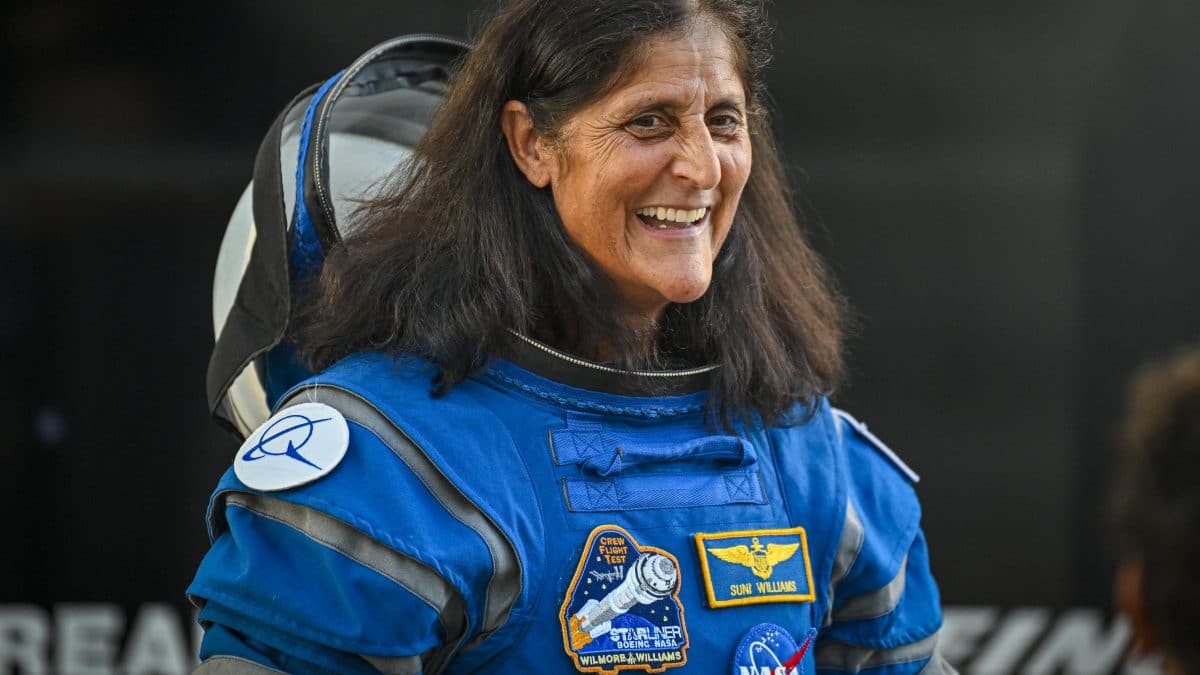
When you think of astronauts, many would conjure up the face of Sunita Williams, the veteran from America's National Aeronautics and Space Administration (Nasa). However, the renowned astronaut is hanging up her space boots, with the agency confirming her departure, effective from December 31, 2025.
The Indian-origin astronaut's retirement comes after 27 years of service to the space agency. Throughout her journey, she completed three missions aboard the International Space Station (ISS) and set numerous human spaceflight records.
New Nasa Administrator Jared Isaacman hailed Williams as "a trailblazer in human spaceflight," congratulating her on a "well-deserved retirement" in an official statement.
Speaking on her exit, Scott Tingle, chief of the Astronaut Office at Nasa Johnson, said, “Suni is incredibly sharp, and an all-around great friend and colleague.” He added, “She’s inspired so many people, including myself and other astronauts in the corps. We’re all going to miss her greatly and wish her nothing but the best.”
Here's a look at her stellar career as an astronaut.
One of the most recent and longest space missions will be the launch aboard the Starliner spacecraft in June 2024 as part of Nasa's Boeing Crew Flight Test mission. The mission was designed to certify Starliner for routine crew transport as part of Nasa’s Commercial Crew Programme, which aims to rely on private companies rather than government-owned spacecraft. The short eight-day mission stretched into nine months following technical woes. Williams, along with fellow astronaut Barry 'Butch' Wilmore,
was stranded on the ISS for 286 days
.
Hers was the first crewed Starliner mission, a crucial test flight for Boeing, and setbacks were expected. But the scale of the hiccups, especially the thruster issues, forced unexpected decisions. The spacecraft could not return as planned with a crew. The duo touched down on Earth on March 18, 2025 as part of SpaceX's Crew-9 mission, having travelled 121,347,491 miles (195.29 million km) and completed 4,576 orbits around Earth.
But before this, Williams took her first flight on to space in December 2006, aboard space shuttle Discovery with the crew of STS-116. Serving as a flight engineer on Expeditions 14 and 15, Williams made history by logging four spacewalks that added up to 29 hours and 17 minutes. She further completed the first-ever space marathon, wherein she ran the distance of the Boston Marathon on the ISS treadmill as the space station orbited the Earth.
Williams returned to space six years later, lifting off from Kazakhstan’s Baikonur Cosmodrome on July 14, 2012, for a 127-day mission as part of Expedition 32/33. During this mission, she performed three spacewalks to repair an ammonia leak on a station radiator and replace a component that gets power from the station's solar arrays to its systems.
She is currently second on Nasa’s all-time list for cumulative time in space (608 days), with fellow astronaut Peggy Whitson, who retired in 2018, holding the top position. Beyond spaceflights, Williams also took part in Nasa’s Extreme Environments Mission Operations (Neemo) programme, living underwater for nine days, and went on to serve as deputy chief of the Astronaut Office before becoming Director of Operations in Star City, Russia, after her second ISS mission.
Sunita, also known as Suni, Williams was born to Indian-American father Deepak Pandya, who was a neuroanatomist, and Slovenian-American mother Ursuline Bonnie Pandya on September 19,1965 in Eucid, Ohio.
But she considers Needham, Massachusetts, as her hometown. In 2019, her hometown honoured her by naming the elementary school in Needham after her, where her flight suit and other Nasa artifacts are now on display.
Her space journey began when she began training to become an astronaut at the Johnson Space Centre in 1998, after a stint with the US Navy, which saw her retire as a Captain.
Williams’ retirement closes a significant chapter in Nasa’s post-Shuttle transition, highlighting the inherent risks of commercial crew vehicles. Her career remains a source of inspiration, demonstrating that even extended isolation 250 miles above Earth cannot diminish a pioneer’s resolve.
With inputs from agencies
The Indian-origin astronaut's retirement comes after 27 years of service to the space agency. Throughout her journey, she completed three missions aboard the International Space Station (ISS) and set numerous human spaceflight records.
New Nasa Administrator Jared Isaacman hailed Williams as "a trailblazer in human spaceflight," congratulating her on a "well-deserved retirement" in an official statement.
.@NASA astronaut Suni Williams retires after 27 years, effective Dec. 27, 2025. Williams completed three missions aboard the International Space Station, setting numerous human spaceflight records. More... https://t.co/xrxErQKntr pic.twitter.com/CnRS693KSV
— International Space Station (@Space_Station) January 21, 2026
Speaking on her exit, Scott Tingle, chief of the Astronaut Office at Nasa Johnson, said, “Suni is incredibly sharp, and an all-around great friend and colleague.” He added, “She’s inspired so many people, including myself and other astronauts in the corps. We’re all going to miss her greatly and wish her nothing but the best.”
Here's a look at her stellar career as an astronaut.
Various missions Sunita Williams undertook over the years
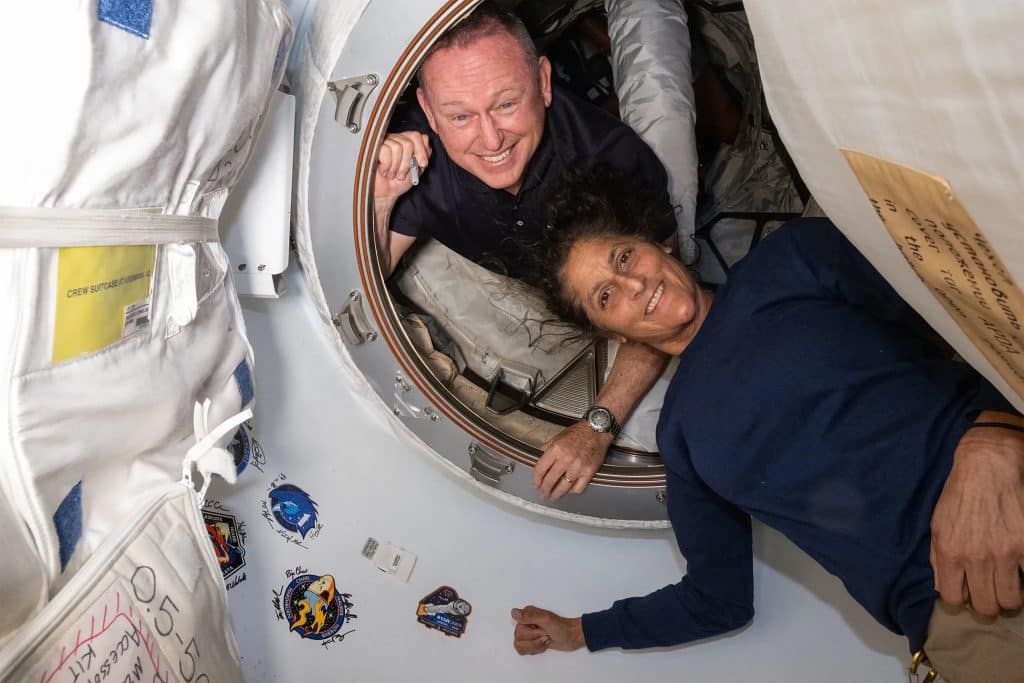
One of the most recent and longest space missions will be the launch aboard the Starliner spacecraft in June 2024 as part of Nasa's Boeing Crew Flight Test mission. The mission was designed to certify Starliner for routine crew transport as part of Nasa’s Commercial Crew Programme, which aims to rely on private companies rather than government-owned spacecraft. The short eight-day mission stretched into nine months following technical woes. Williams, along with fellow astronaut Barry 'Butch' Wilmore,
Hers was the first crewed Starliner mission, a crucial test flight for Boeing, and setbacks were expected. But the scale of the hiccups, especially the thruster issues, forced unexpected decisions. The spacecraft could not return as planned with a crew. The duo touched down on Earth on March 18, 2025 as part of SpaceX's Crew-9 mission, having travelled 121,347,491 miles (195.29 million km) and completed 4,576 orbits around Earth.
Nasa's Boeing Crew Flight Test astronauts (from top) Butch Wilmore and Suni Williams inside the vestibule between the forward port on the International Space Station's Harmony module and Boeing's Starliner spacecraft. File image/AFP
But before this, Williams took her first flight on to space in December 2006, aboard space shuttle Discovery with the crew of STS-116. Serving as a flight engineer on Expeditions 14 and 15, Williams made history by logging four spacewalks that added up to 29 hours and 17 minutes. She further completed the first-ever space marathon, wherein she ran the distance of the Boston Marathon on the ISS treadmill as the space station orbited the Earth.
Williams returned to space six years later, lifting off from Kazakhstan’s Baikonur Cosmodrome on July 14, 2012, for a 127-day mission as part of Expedition 32/33. During this mission, she performed three spacewalks to repair an ammonia leak on a station radiator and replace a component that gets power from the station's solar arrays to its systems.
She is currently second on Nasa’s all-time list for cumulative time in space (608 days), with fellow astronaut Peggy Whitson, who retired in 2018, holding the top position. Beyond spaceflights, Williams also took part in Nasa’s Extreme Environments Mission Operations (Neemo) programme, living underwater for nine days, and went on to serve as deputy chief of the Astronaut Office before becoming Director of Operations in Star City, Russia, after her second ISS mission.
Williams' early years
Sunita, also known as Suni, Williams was born to Indian-American father Deepak Pandya, who was a neuroanatomist, and Slovenian-American mother Ursuline Bonnie Pandya on September 19,1965 in Eucid, Ohio.
But she considers Needham, Massachusetts, as her hometown. In 2019, her hometown honoured her by naming the elementary school in Needham after her, where her flight suit and other Nasa artifacts are now on display.
Her space journey began when she began training to become an astronaut at the Johnson Space Centre in 1998, after a stint with the US Navy, which saw her retire as a Captain.
Williams’ retirement closes a significant chapter in Nasa’s post-Shuttle transition, highlighting the inherent risks of commercial crew vehicles. Her career remains a source of inspiration, demonstrating that even extended isolation 250 miles above Earth cannot diminish a pioneer’s resolve.
With inputs from agencies