


What is the story about?
Donald Trump’s plate is too full right now—but he’s eager to gorge more, like his insatiable appetite for Big Macs and Filets-O-Fish.
The US president knows it too, but is perpetually famished for global attention and praise, wants to be seen as a peacemaker despite bombing seven nations and kidnapping the head of one of them and is delusional about being the world’s policeman.
Trump has already exposed his immaturity and the lack of diplomacy on three fronts in his foreign policy.
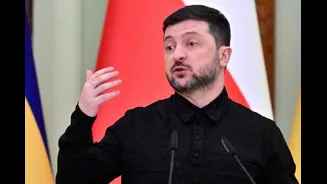
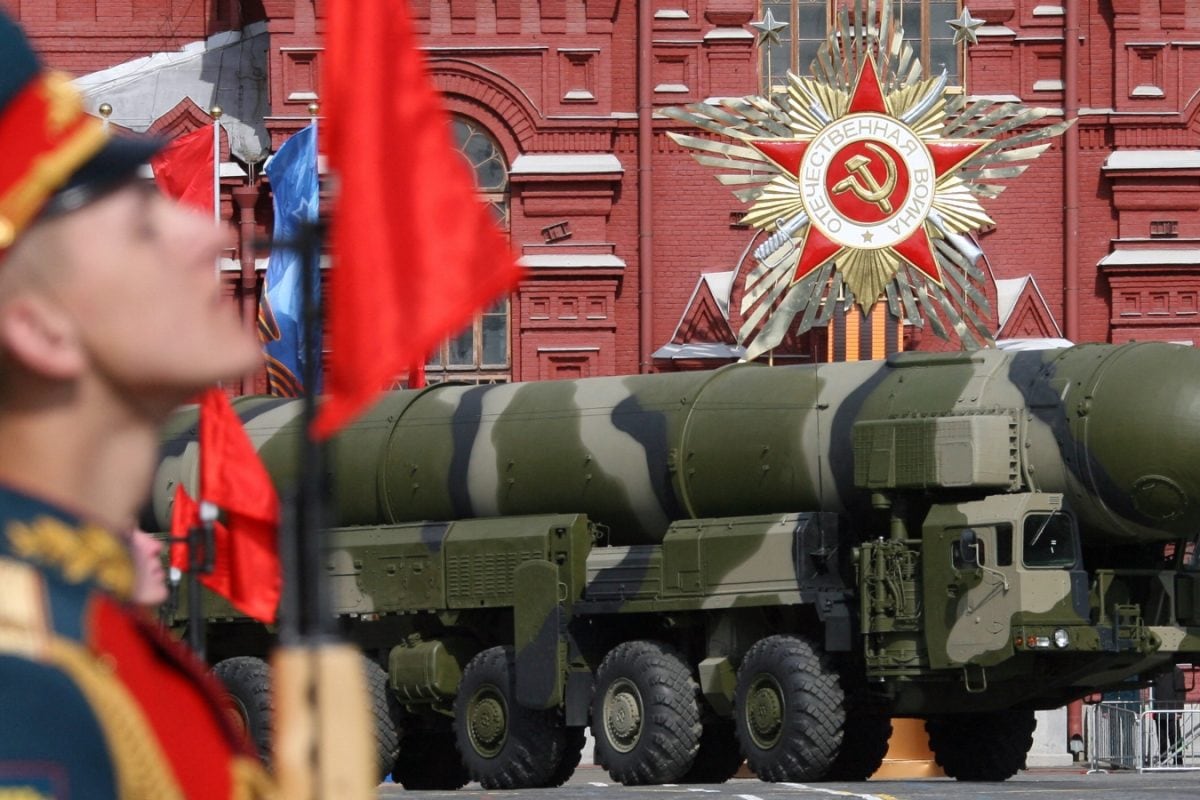
First, Trump has disastrously failed to end the Ukraine War despite his ridiculous claim during the 2024 re-election campaign trail that he would end it in 24 hours. An unrelenting Vladimir Putin has turned Trump’s self-professed bromance into a joke by repeatedly cheating on him. The Russian leader intends to continue the war unless Trump convinces Volodymyr Zelenskyy to accept all his terms unconditionally.
Second, Trump managed a ceasefire in Gaza last year, but the war-ravaged coastal enclave’s control is divided in half between Israel and Hamas.
Israel has killed more than 71,000 Palestinians, including 442 since the ceasefire’s first phase was implemented on October 11. Hamas has refused to disarm without Palestinian statehood.
However, the US, whose president is disconnected from Gaza’s political and security realities, announced a technocratic Palestinian government, the National Committee for the Administration of Gaza (NCAG), on January 14 as part of the ceasefire’s second phase.
According to Trump’s Middle East envoy, Steve Witkoff, Hamas and other terrorist groups would disarm, Gaza reconstructed and an International Stabilisation Force deployed to train and support vetted Palestinian police forces.
Ali Shaath, a former deputy minister of planning in the Palestinian Authority, would head the NCAG, which would be overseen by a “Board of Peace” chaired by Trump.
Despite Trump’s grand vision for Gaza, only $1 billion has been raised with Western and Muslim nations reluctant to deploy peacekeeping troops or fund Gaza.
Third, despite Nicolás Maduro’s kidnapping, the former strongman’s core team of politicians and military officers continues to govern Venezuela.
Maduro’s vice-president, Delcy Rodriguez, is the interim president. Her brother, Jorge Rodriguez, heads the National Assembly.
Interior minister Diosdado Cabello, who oversees the military counterintelligence agency, DGCIM, and “Colectivos,” the ruling party-aligned motorcycle gangs, remains despite being indicted by the US on narcoterrorism charges and carrying a $25-million reward. Defence minister, Vladimir Padrino Lopez, also indicted for drug smuggling and with a $15 million reward on his head, is in power as well.
Moreover, Trump claimed to be in control of the world’s biggest oil reserves after Maduro’s ouster and wanted oil giants to invest $100 billion in Venezuela. However, despite his assurances, American and European oil majors, like ExxonMobil and ConocoPhillips, are extremely wary due to Venezuela’s security and legal issues.
US-Iran History has Lesson for Trump
Trump wants to get his hands burned in a furnace in which his predecessors were either scalded or were extremely wary to enter.
If the decades-long animosity with Iran has taught the US anything, it is that interference in the Islamic Republic’s internal or foreign affairs backfires.
However, Trump, whose knowledge and understanding of history is pathetic and suppression of truth with lies is notorious, is undeterred in Mission Iran.
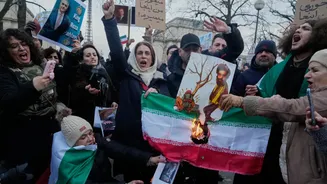
Emboldened by the bombing of three Iranian nuclear sites last June and the Delta Force blitzkrieg in Venezuela this month, Trump threatened to attack Iran if it didn’t stop killing protesters in one of the biggest protests to have engulfed Ayatollah Ali Hosseini Khamenei’s regime.
According to an Iranian official, around 5,000 people have been killed in the protests, which started on December 28 against record-high inflation, rising food prices and the Iranian rial’s depreciation, and soon evolved into a countrywide movement challenging Khamenei’s authority.
Starting January 2, Trump threatened to hit Iran “very hard” with the US “locked and loaded”, was “ready to help” the protesters, imposed a 25 per cent tariff on countries doing business with Iran and warned of “very strong action” if any of the detained protesters were executed.
Trump is following the typical American playbook of restoring so-called democracy in authoritarian regimes.
US regime changes in the name of democracy have turned nations into ruins—Afghanistan, Iraq and Libya.
Trump, advised by war hawks like Marco Rubio and Pete Hegseth, is either unaware of or has ignored the disastrous 1953 CIA-MI6 coup in Iran, which replaced the democratically elected prime minister Mohammad Mosaddegh with the autocratic US puppet Mohammad Reza Pahlavi, Iran’s last Shah.
Again, the American-British coup was for oil.
Mosaddegh had nationalised the oil industry, controlled by Britain’s Anglo-Iranian Oil Company. To preserve British oil interests, Dwight D Eisenhower and Winston Churchill launched Operation Ajax and Operation Boot. Mosaddegh was replaced by the Shah, who ruled for 26 years.
However, the coup finally backfired as the Shah was overthrown in the 1979 Islamic Revolution with the ruthless and conservative cleric Ruhollah Khomeini becoming Iran’s first Supreme Leader.
Iran changed forever—both for Iranians and the US.
From a pro-Western secular monarchy, Iran turned into a conservative Islamic theocracy with Sharia implemented and all power vested in Khomeini.
Iran became America’s arch-enemy in West Asia with Ayatollah Khomeini calling the US the “Great Satan”.
Still, American interference in Iran was unabated.
Despite the Shah becoming a liability, the US admitted him for cancer treatment after his exile, angering Iranian students, who stormed the US embassy in Tehran and took 52 Americans hostage for 444 days in 1979.
Then-US President Jimmy Carter’s bid to rescue the hostages ended in a disaster in 1980. Operation Eagle Claw, the Delta Force’s first operation, was aborted after one copter crashed into a transport aircraft killing eight servicemen. Finally, the hostages were released during the Ronald Reagan presidency.
Trump shouldn’t forget how the operation ended in humiliation for the US.
The US continued to meddle in Iran by backing Saddam Hussein in the 1980-88 Iran-Iraq War. The Iraqi dictator violated the 1925 Geneva Protocol by using chemical weapons like sarin, tabun and VX, killing thousands of Iranians as the US turned a blind eye.
On the other hand, the US played a dirty game by also arming Iran from 1981 to 1986. Despite the Boland Amendments, barring further funding of the Contras, senior Reagan administration officials concluded that not arming and supplying weapon spare parts to Iran would force it to buy Soviet arms.
Publicly, the US launched Operation Staunch asking other nations not to sell weapons to Iran. Privately, the US trafficked arms to Iran and used the proceeds to fund the anti-Sandinista Contra rebels to overthrow the leftist FSLN Nicaraguan government, which came to be known as the Iran-Contra Scandal.
Per the Reagan administration, the US was arming Iran to free the seven American hostages held by the Tehran-backed terrorist group Hezbollah in Lebanon. At the same time, Reagan officially designated Iran as a “state sponsor of terror” following the US involvement when Israel invaded Lebanon.
After 9/11, George W Bush termed Iran as part of the “Axis of Evil” alongside Iraq and North Korea despite no Iranian involvement in the terrorist attacks.
US Laid Foundation of Iran N-Programme
The main irritant in US-Iran relations has been Tehran’s nuclear enrichment, which, the West fears, could be used by the Islamic nation to make a nuclear bomb.
However, the foundation of Iran’s nuclear programme was laid by Eisenhower’s Atoms for Peace programme in 1953.
In 1957, the US and Shah-led Iran signed a nuclear agreement for the civilian use of nuclear power. In 1967, the US supplied a five-megawatt research reactor to Iran.
By the mid-1970s, Iran signed a deal with Kraftwerk Union of then-West Germany to build two 1,200-megawatt reactors at Bushehr and with French company Framatome for two more 900-megawatt reactors. Iran also planned a new nuclear research centre at Isfahan and the exploration of uranium mining and ore processing.
However, Iran’s nuclear programme was severely affected by the war with Iraq. By the early 1990s, Iran restarted its nuclear programme with the help of Russia, China and Pakistan.
Iran signed two nuclear cooperation protocols with China in 1985 and 1990. In 1995, Iran signed a protocol of cooperation with Russia to complete the construction of the reactor at Bushehr and possibly supply a uranium enrichment plant.
Pakistani nuclear scientist AQ Khan, the “father of Pakistan’s nuclear bomb, helped Iran with uranium enrichment technology via his black market network.
In 1989, Iran launched the AMAD Project, a clandestine plan to build five nuclear weapons by 2004 under the scientist Mohsen Fakhrizadeh, assassinated by Israel in Tehran in 2020. However, Iran lacked weapons-grade uranium or plutonium to fuel the bombs.
In 2002, the existence of a secretive dual-use uranium enrichment facility at Natanz and a heavy-water production facility (for plutonium) at Arak was revealed. After the IAEA was alarmed, Iran made the plants public and halted the AMAD Project in 2003.
In the same year, Iran signed a deal with three European countries to suspend enrichment and allow IAEA inspections—but enrichment-related activities continued.
By 2006, Iran had enriched uranium to 3.6 per cent. In the same year, China, France, Germany, Russia, the UK and the US (P5+1) proposed another framework pact offering incentives if Iran suspended enrichment. The UNSC also adopted Resolution 1696 asking Iran to halt enrichment.
Amid diplomacy, the secret Fordow Fuel Enrichment Plant (FFEP) was revealed in 2009. By next year, Iran had increased enrichment to 20 per cent purity. Despite UNSC Resolution 1929, expanding sanctions, Iran had installed 18,000 first-generation IR-1 centrifuges and 1,300 IR-2m model centrifuges at all enrichment sites.
Iran had 9,700 kg of 5 per cent-enriched uranium and 370 kg enriched up to 20 per cent. In 2016, the US said that the amount was enough for one nuclear weapon, with further enrichment, within two or three months.
Between 2013 and 2015, the Barack Obama administration started high-level talks with Iran. In 2015, Iran, P5+1 and the EU signed the Joint Comprehensive Plan of Action (JCPOA),
Iran agreed to reduce its uranium stockpile by 98 per cent, restrict enrichment to 3.67 per cent, decrease the number of centrifuges at Natanz to 6,104 for the next 10 years, stop enrichment at Fordow for 15 years, fill the Arak reactor with concrete and provide unfettered IAEA access to its nuclear facilities and potentially to undeclared sites.
In exchange, the EU, the UN and the US committed to lifting nuclear-related sanctions.
Trump Messed up Iranian Problem
Iran met its preliminary pledges under the JCPOA, and the sanctions were either repealed or suspended. The Obama administration also repealed secondary sanctions on Iran’s oil sector and also unfroze around $100 billion worth of frozen Iranian assets.
However, Trump unilaterally withdrew from the JCPOA in 2018, saying that the pact didn’t address Iran’s ballistic missile programme and its proxy war in West Asia, and reimposed the sanctions.
It was obvious that Benjamin Netanyahu convinced Trump to pull out of the JCPOA by citing the Iranian ballistic missile threat. Israel has always been worried about its arch-rival’s ballistic missiles. In the 12-day war with Israel in June 2025, Iran launched 550 ballistic missiles, including the Haj Qasem, Khaibar Shekan, Ghadr and Emad.
Iran’s ballistic missile programme was never part of the JCPOA, which addressed only Iran’s enrichment, considered the highest global security priority.
The UNSC had already passed six resolutions restricting Iran’s ballistic missile activities relating to the delivery of a nuke. For example, Resolution 2231 placed an eight-year restriction on Iranian (nuclear-capable) ballistic missile activities.
After Trump withdrew from the nuclear deal, Iran also ended its commitments and started producing enriched uranium beyond 3.67 per cent.
According to the IAEA’s quarterly report last September, on the eve of the Iran-Israel War (June 13), Iran’s total enriched uranium stockpile was 9,874.9 kg, of which 9,040.5 kg was in the form of uranium hexafluoride (UF6), a crucial chemical compound in the nuclear fuel cycle used to enrich uranium for nuclear reactors and weapons. The UF6 stockpile comprised 2,391.1 kg of uranium enriched up to 2 per cent, 6,024.4 kg up to 5 per cent, 184.1 kg of up to 20 per cent and 440.9 kg of up to 60 per cent.
Two years later, Trump ordered the assassination of Iranian General Qassem Soleimani, the head of the Islamic Revolutionary Guard Corps’ elite Quds Force, in Baghdad. Iran launched missiles against US military assets in Iraq.
In his second term, Trump launched a maximum pressure campaign against Iran to curb enrichment and sign a new N-deal.
Despite Iranian foreign minister Abbas Araghchi meeting Witkoff five times, Trump bombed the FFEP, Natanz Enrichment Complex and Isfahan Nuclear Technology Centre during the Iran-Israel War.
While Trump claimed that the strike “completely and totally obliterated” the nuclear facilities, a Pentagon assessment stated that Iran’s nuclear programme was “degraded” by one to two years.
According to the US-based Institute for Science and International Security (ISIS), a non-profit and non-partisan institution, the three nuclear sites were “largely destroyed”.
In a November 2025 report, the ISIS said that satellite imagery indicated that Iran’s uranium enrichment programme “remains significantly set back.
However, the 440.9 kg of 60 per cent enriched uranium is still untraceable. Iran claimed to have moved it before the US strikes.
Bluff or Reality
The US policy of military intervention has always been about regime change or oil, not democracy—whether it’s Latin America or West Asia.
Trump, a brash businessman who views foreign policy through the prism of deals with other countries, is neither worried about democracy in Iran nor the killing/execution of protesters.
On January 13, Trump made it clear that his threats against Iran weren’t about restoring democracy. He only wanted a “little bit of freedom” for Iranians—that’s all.
When asked by a reporter after an event in Detroit whether he wanted democracy in Iran, he said, “Ideally, we would like to see it [democracy]. We don’t want to see people killed, and we want to see a little bit of freedom for these people.”
If it were about democracy, Trump wouldn’t have pushed for a new nuclear deal with Iran last year. He’s perfectly okay dealing with Khamenei if he kowtows to him as he’s fine with other authoritarians like China’s Xi Jinping, North Korea’s Kim Jong-un, Hungary’s Viktor Orban and Putin.
Oil is a big reason for Trump’s interest in Iran.
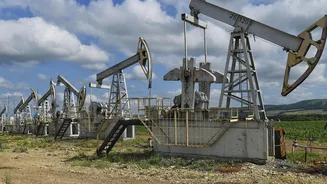
According to OPEC’s latest annual figures, Iran has the world’s third-largest oil reserves at 209 billion barrels, produces around 3.2 million barrels of oil per day on average—almost four per cent of global crude production—and is sixth-largest oil producer.
“Trump would love to cut a deal with the current Iranian regime if perhaps the Supreme Leader could be removed and there could be access to American oil companies into Iran,” according to Nader Hashemi, associate professor of Middle East and Islamic politics, Georgetown University.
The American Petroleum Institute (API) is ecstatic and wants to be a “stabilising force” in Iran if the regime falls.
“Our industry is committed to being a stabilising force in Iran if they [protesters] decide to overturn the regime,” Mike Sommers told reporters. “It’s an important oil play in the world—about the sixth-largest producer now — they could absolutely do more.”
Bob McNally, a former national security and energy adviser to George Bush, said, “You can imagine our industry going back there—we would get a lot more oil, a lot sooner than we will out of Venezuela.”
Trump, moved by the killing of Iranian protesters, was expected to take action on January 13, the big day.
The president warned Iran of “very strong action” if Erfan Solatani, a 26-year-old protester, was executed—he pretended to be immensely moved by the planned execution the next day.
Trump and his national security team met in the Situation Room to discuss options to attack Iran. Rubio and Hegseth were certain that the president had made up his mind.
However, Trump made a U-turn, surprising his top Cabinet members, Iran and the rest of the world.
“The killing in Iran is stopping, and there’s no plan for executions,” Trump, informed by “very important sources on the other side”, said on the execution day. Though Trump added that he would “watch and see what the process is” regarding an attack.
Trump had threatened to attack Iran 7 times in 14 days this month.
Now, livid Iranians say that Trump “betrayed” them by supporting the protest initially and backing out later.
Moreover, Trump’s claim that Iran will not execute arrested prosecutors fell flat as the judiciary said that “a series of actions have been identified as Mohareb (an action to wage war against God, punishable by death under Iranian law) which is among the most severe Islamic punishments”.
Perhaps, Trump had another memory lapse or chose to ignore that Khamenei crushed four nationwide protests in 2009, 2017, 2019 and 2022.
So, was Trump bluffing when he said he would attack Iran?
Trump’s first-term NSA, John Bolton, thinks Trump is bluffing. “Otherwise, he (Trump) has put down a red line and if the regime crossed it, which they have, and he doesn’t do something, then his own credibility is at stake,” he told a news channel.
However, Trump often bluffs but also acts without warning. He kept everyone guessing on January 17 after Khamenei posted on X: “We find the US President guilty due to the casualties, damages and slander he inflicted upon the Iranian nation.”
Trump said, “It’s time to look for new leadership in Iran. The man [Khamenei] is a sick man who should run his country properly and stop killing people.”
Going by his past actions, Trump could still attack Iran—his words and actions don’t match.
Before Israel attacked Iran and the US bombed its nuclear facilities, Trump warned Tehran several times even as Araghchi and Witkoff were involved in hectic negotiations.
On June 13, Trump said that the US was “committed to a diplomatic resolution to the Iran nuclear issue”, but hours later Israeli jets bombed Iran.
Similarly, on June 20, Trump said that he would decide on bombing Iran’s N-facilities “within the next two weeks”—two days later, B-2 bombers and the submarine USS Georgia struck the nuclear plants.
Trump repeated the tactic against Venezuela.
The Pentagon started bombing alleged drug boats in the Caribbean and the Pacific on September 2 and deployed the largest naval assets in the region since the 1962 Cuban Missile Crisis.
Meanwhile, Trump continued to threaten Maduro and said that an attack on Venezuela was imminent. However, both leaders had a “cordial” conversation in November. In December, a CIA drone struck a Venezuelan port facility. On January 1, Maduro told Trump that he was open to talks. Two days later, Trump attacked Venezuela and Maduo and his wife were kidnapped by the Delta Force.
What Trump intends to do with Iran isn’t clear—but he hasn’t ruled out strikes.
“The truth is only President Trump knows what he’s going to do,” his press secretary Karoline Leavitt told reporters.
Trump held back for three reasons.
First, Netanyahu, aware that Khamenei can’t be overthrown so easily, advised Trump not to attack immediately. Though the Israeli PM had egged him on to act against Iran when they met at Trump’s annual New Year’s Eve gala in Palm Beach.
Regrading Iran’s nuclear and ballistic missile programmes, Trump said, “Now I hear that Iran is trying to build up again [enrichment], and if they are, we’re going to have to knock them down,” Trump said. When asked whether he would support an Israeli attack on Iran’s missile programme, he said, “If they will continue with the missiles, yes. The nuclear? Fast. OK? One will be: Yes, absolutely. The other is: We’ll do it immediately.”
Second, US allies in the region, like Saudi Arabia and Qatar, also advised against an attack.
Third, Trump was aware that an attack on Iran wouldn’t be short and conclusive and endanger US troops, numbering 40,000-50,000, at military bases in the region, especially Iraq and Syria.
However, Trump could attack Iran at any time.
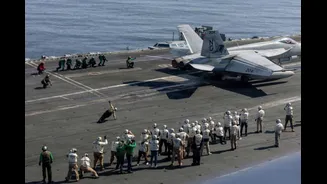
The USS Abraham Lincoln Carrier Strike Group (CSG) is on its way from the South China Sea to the US CENTCOM, which includes West Asia.
The CSG comprises USS O’ Kane, USS Spruance and USS Frank E. Petersen Jr. Arleigh Burke class destroyers, which can launch the BGM-109 Tomahawk Land Attack Missiles.
A submarine usually accompanies a CSG, but its identity is never revealed. The USS Georgia, which launched Tomahawks at Isfahan in June, has been part of the USS Abraham Lincoln CSG.
The aircraft carrier has F/A-18E Super Hornets, F/A-18F Super Hornets, F-35C Lightning IIs, EA-18G Growlers, E-2D Hawkeyes, MH-60S and MH-60R Seahawks.
The US can also launch the Joint Air-to-Surface Standoff Missiles (JASSMs) from F-15s, F-16s and F-35s, B-1, B-2 and B-52 bombers and F/A-18s.
The US has 19 military bases in West Asia with 8 permanent ones in Bahrain, Egypt, Iraq, Jordan, Kuwait, Qatar, Saudi Arabia and the UAE.
The only problem with attacking Iran is a prolonged war unlike the bombing of its nuclear sites or attacking Venezuela and kidnapping Maduro—both lasted for a few hours.
One of Trump’s campaign promises was to end America’s forever wars. In his 2025 inaugural address, he said that the US “will stop all wars and bring a new spirit of unity to a world that has been angry, violent and totally unpredictable”.
Trump is doing exactly the opposite—but all his military interventions have been short and quick.
However, Iran is a different ballgame. The US president better realise it like his predecessors.
(The writer is a freelance journalist with more than two decades of experience and comments primarily on foreign affairs. He tweets as @FightTheBigots. Views expressed in the above piece are personal and solely those of the writer. They do not necessarily reflect Firstpost’s views.)