





What is the story about?
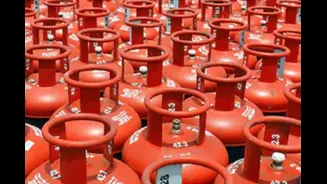
The liquefied petroleum gas (LPG) crisis in India due to the war in Iran has left people scrambling for alternatives. There has been a sharp rise in the demand for induction stoves amid the scarcity of commercial LPG cylinders and supply disruptions.
E-commerce platforms and offline retail stores have witnessed a spike in sales of induction cooktops in recent days. As of Thursday (March 12), quick-commerce apps like Swiggy and Zepto across major cities showed induction cooktops were out of stock.
Let’s take a closer look.
Amid fears of a possible shortage of cooking gas supplies, Indian consumers have begun panic buying. While the LPG cylinders have become costlier, people are rushing to buy electric stoves.
Some physical stores have started to run out of induction hobs amid a sudden surge in demand.
Speaking to India Today Digital, a store owner in South Delhi's Kalkaji said he had low stock after selling more than 50 induction units in a day.
In Mumbai's Juhu, a retailer confirmed the increased demand, with low-cost options already sold out. "We're moving up to 70 units per day. People are buying one or two cooktops to be safe," she was quoted as saying.
Sagar Satra, manager of Manpada-based Golden Steel and Appliances in Thane, told Indian Express that the demand for induction stoves rose fivefold in the past week.
“Previously, we would sell 5-7 gas stoves in a day as against 2-3 induction stoves in a week. However, in the past one week, we have observed that while the sales of gas stoves have remained the same, the sale of induction stoves increased to 10 in a week, marking a five times rise. While we are not certain whether this is a direct result of the LPG cylinder crisis, we are definitely witnessing an increased demand,” said Satra.
Speaking to Times of India (TOI), Manish Khosla, director of Kolkata's Khosla Electronics, said the surge in demand has been seen since March 7 as concerns over higher prices and possible LPG shortages grew.
“People are panicking due to the rise in gas prices and are apprehensive about the unavailability of cylinders. On Saturday, we saw a 60 per cent spurt in sales and the same trend continued on Sunday,” he said.
Khosla said the chain generally sells about 40-45 induction cookers a day across its 86 outlets in the city. “Now the sales have jumped to around 120-130 units daily,” he added.
Even hotels are exploring switching to induction cooktops amid restrictions on commercial LPG supplies.
“While we have not seen a direct increase in sales, this morning, some hotels approached us to make inquiry about the induction cooktops. Since the supply of commercial LPG is entirely disrupted, many have expressed concerns over their business and are trying to explore options when it comes to big induction stoves,” Govardhan Trivedi of the Big B Appliances store in Malad was quoted as saying by
Indian Express.
With some consumers buying induction stoves in bulk, the stock in retail stores may not last long. “Sales of induction cooktops have jumped 3x (three times) in the last two days and we see the trend on till stocks last,” Nilesh Gupta, managing partner and director, Vijay Sales, told Financial Express.
The demand for induction cooktops has also zoomed on e-commerce platforms. The sales of induction cooktops have “tripled” on Flipkart in recent days, with demand driven by Delhi, Kolkata, and Uttar Pradesh.
“The prevailing global condition has made the induction cooktop from a “kitchen upgrade” into a “survival necessity” for many households. We are seeing an unprecedented surge in induction sales driven by a combination of soaring costs and physical supply shortages of LPG. Sales volume has tripled over the last 4-5 days as compared to the preceding 3-4 weeks, with some localised high-demand areas like Delhi, Kolkata, and UP having even higher spikes as consumers hedge against future price volatility,” a Flipkart spokesperson told
Indian Express.
Not only electric stoves, but also the demand for other electric appliances has surged.
Flipkart reported a “massive surge” in sales for electric cookers, kettles, and air fryers, which it said is “expected to continue increasing with each passing day”.
An Amazon India spokesperson told Indian Express on Tuesday (March 11) that demand for induction cooktops has climbed 20 times on the e-commerce site over the last 24 hours, compared to a regular day.
Amid heightened demand for induction cooktops, shares of TTK Prestige and Jaipan Industries jumped 8 per cent each. Shares of Butterfly Gandhimathi and Stove Kraft rose 2.5 per cent and 2 per cent, respectively, while Borosil stock climbed 3 per cent, reported
Moneycontrol.
Induction cooktops have become a hot topic on social media platforms, with videos of people queuing up to buy LPG cylinders spreading.
X users are discussing food that can and cannot be cooked on these electric stoves. Some are also posting recipes that require no or minimal heating.
Induction cooktops work faster when it comes to cooking simple meals or preparing tea, all the while consuming less energy than standard gas stoves.
Induction hobs use electromagnetic technology to heat cookware directly, unlike gas stoves that depend on an open flame.
It can cook most of the food except for items that require high flame, such as rotis. A drawback of using induction cooktops is that not all utensils can be used.
They require ferromagnetic vessels. Thus, only aluminium or copper utensils with an induction-friendly base can be used.
For many households, replacing their entire set of utensils is not an easy feat. If their area is prone to power cuts, induction cooktops become an unfavourable alternative.
Using these electric appliances can also lead to the electricity bill shooting up, which consumers will need to consider before completely switching to induction cooktops.
Moreover, the prices of induction cooktops could also jump up if the surge in demand continues.
Iran’s shutdown of the crucial Strait of Hormuz, a key chokepoint for global oil and gas flows, has halted the movement of ships, putting pressure on global energy markets.
India consumes about 31.3 million tonnes of cooking gas annually. Over 80 per cent of India’s LPG imports travel through this narrow strait between Iran and Oman.
About 87 per cent of India's LPG demand is consumed by the domestic sector, i.e. household kitchens, while the rest is used by commercial establishments such as hotels and restaurants.
Amid disruptions in LPG imports, India has increased the price of domestic cooking gas cylinders by Rs 60 and commercial cylinder prices rose by Rs 115.
India has invoked emergency powers, ordering refiners to maximise LPG production and prioritise domestic consumers of the cooking gas. This has led to disruptions in the supply of commercial LPG cylinders used by hotels, restaurants and other sectors.
While the Centre has assured that households will not face an LPG shortage, panic has spread across the country. As people rush to buy LPG cylinders, a black market has cropped up where cylinders are being sold for as high as Rs 2,000-Rs 3,000,
Indian Express reported.
With inputs from agencies
E-commerce platforms and offline retail stores have witnessed a spike in sales of induction cooktops in recent days. As of Thursday (March 12), quick-commerce apps like Swiggy and Zepto across major cities showed induction cooktops were out of stock.
Let’s take a closer look.
Demand for induction stoves skyrocket
Amid fears of a possible shortage of cooking gas supplies, Indian consumers have begun panic buying. While the LPG cylinders have become costlier, people are rushing to buy electric stoves.
Some physical stores have started to run out of induction hobs amid a sudden surge in demand.
Speaking to India Today Digital, a store owner in South Delhi's Kalkaji said he had low stock after selling more than 50 induction units in a day.
In Mumbai's Juhu, a retailer confirmed the increased demand, with low-cost options already sold out. "We're moving up to 70 units per day. People are buying one or two cooktops to be safe," she was quoted as saying.
Sagar Satra, manager of Manpada-based Golden Steel and Appliances in Thane, told Indian Express that the demand for induction stoves rose fivefold in the past week.
“Previously, we would sell 5-7 gas stoves in a day as against 2-3 induction stoves in a week. However, in the past one week, we have observed that while the sales of gas stoves have remained the same, the sale of induction stoves increased to 10 in a week, marking a five times rise. While we are not certain whether this is a direct result of the LPG cylinder crisis, we are definitely witnessing an increased demand,” said Satra.
Speaking to Times of India (TOI), Manish Khosla, director of Kolkata's Khosla Electronics, said the surge in demand has been seen since March 7 as concerns over higher prices and possible LPG shortages grew.
“People are panicking due to the rise in gas prices and are apprehensive about the unavailability of cylinders. On Saturday, we saw a 60 per cent spurt in sales and the same trend continued on Sunday,” he said.
Khosla said the chain generally sells about 40-45 induction cookers a day across its 86 outlets in the city. “Now the sales have jumped to around 120-130 units daily,” he added.
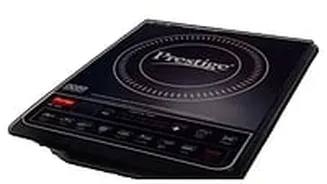
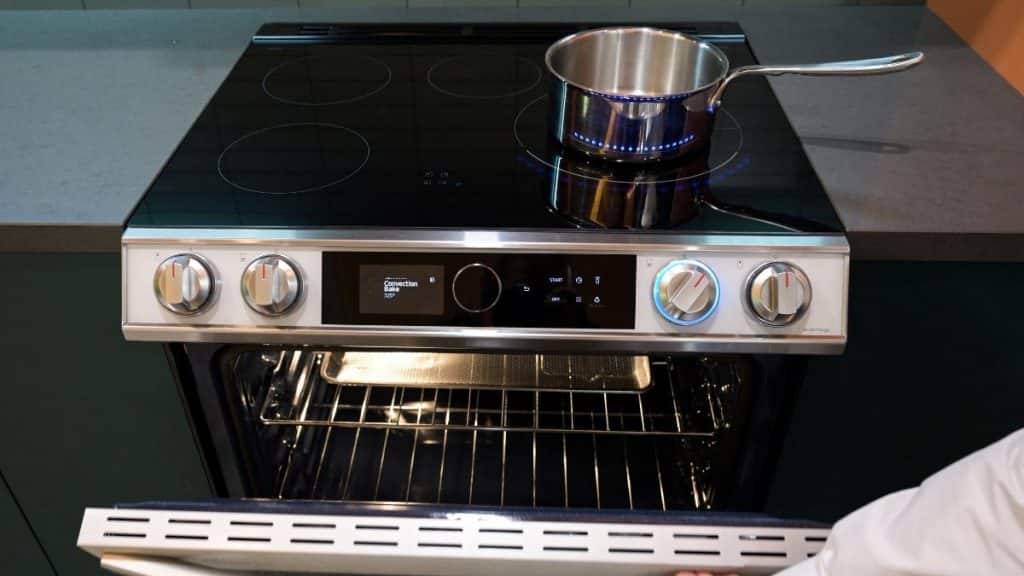
Consumers are rushing to buy electric induction stove cooktops in India. Representational Image/AFP
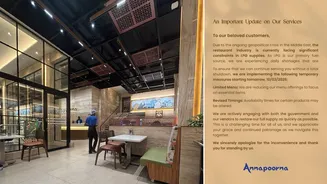
Even hotels are exploring switching to induction cooktops amid restrictions on commercial LPG supplies.
“While we have not seen a direct increase in sales, this morning, some hotels approached us to make inquiry about the induction cooktops. Since the supply of commercial LPG is entirely disrupted, many have expressed concerns over their business and are trying to explore options when it comes to big induction stoves,” Govardhan Trivedi of the Big B Appliances store in Malad was quoted as saying by
With some consumers buying induction stoves in bulk, the stock in retail stores may not last long. “Sales of induction cooktops have jumped 3x (three times) in the last two days and we see the trend on till stocks last,” Nilesh Gupta, managing partner and director, Vijay Sales, told Financial Express.
The demand for induction cooktops has also zoomed on e-commerce platforms. The sales of induction cooktops have “tripled” on Flipkart in recent days, with demand driven by Delhi, Kolkata, and Uttar Pradesh.
“The prevailing global condition has made the induction cooktop from a “kitchen upgrade” into a “survival necessity” for many households. We are seeing an unprecedented surge in induction sales driven by a combination of soaring costs and physical supply shortages of LPG. Sales volume has tripled over the last 4-5 days as compared to the preceding 3-4 weeks, with some localised high-demand areas like Delhi, Kolkata, and UP having even higher spikes as consumers hedge against future price volatility,” a Flipkart spokesperson told
Not only electric stoves, but also the demand for other electric appliances has surged.
Flipkart reported a “massive surge” in sales for electric cookers, kettles, and air fryers, which it said is “expected to continue increasing with each passing day”.
An Amazon India spokesperson told Indian Express on Tuesday (March 11) that demand for induction cooktops has climbed 20 times on the e-commerce site over the last 24 hours, compared to a regular day.
Amid heightened demand for induction cooktops, shares of TTK Prestige and Jaipan Industries jumped 8 per cent each. Shares of Butterfly Gandhimathi and Stove Kraft rose 2.5 per cent and 2 per cent, respectively, while Borosil stock climbed 3 per cent, reported
What can be cooked on induction stoves?
Induction cooktops have become a hot topic on social media platforms, with videos of people queuing up to buy LPG cylinders spreading.
X users are discussing food that can and cannot be cooked on these electric stoves. Some are also posting recipes that require no or minimal heating.
NO LPG, NO PROBLEM
Fireless Cooking (No Heat Needed):
•Salads: Sprouts salad (mixed with onion, tomato, lemon), cucumber salad, or mixed fruit bowl.
•Sandwiches: Vegetable sandwich with cucumber, tomato, and cheese.
•Snacks: Dry fruit laddoos, coconut burfi, or papad snacks.…
— Sharad Dubey (@Sharad9Dubey) March 11, 2026
Induction cooktops work faster when it comes to cooking simple meals or preparing tea, all the while consuming less energy than standard gas stoves.
Induction hobs use electromagnetic technology to heat cookware directly, unlike gas stoves that depend on an open flame.
It can cook most of the food except for items that require high flame, such as rotis. A drawback of using induction cooktops is that not all utensils can be used.
You can cook almost everything on induction, except for things that need a flame - chinese high-heat stir fries, phulka, etc.
You will need induction-friendly cooking vessels. There are regular kadhai available with a flat magnetised bases.
The only other issue with induction…
— Aunindyo Chakravarty (@Aunindyo2023) March 11, 2026
They require ferromagnetic vessels. Thus, only aluminium or copper utensils with an induction-friendly base can be used.
For many households, replacing their entire set of utensils is not an easy feat. If their area is prone to power cuts, induction cooktops become an unfavourable alternative.
Using these electric appliances can also lead to the electricity bill shooting up, which consumers will need to consider before completely switching to induction cooktops.
Moreover, the prices of induction cooktops could also jump up if the surge in demand continues.
LPG crisis spreads anxiety in India
Iran’s shutdown of the crucial Strait of Hormuz, a key chokepoint for global oil and gas flows, has halted the movement of ships, putting pressure on global energy markets.
India consumes about 31.3 million tonnes of cooking gas annually. Over 80 per cent of India’s LPG imports travel through this narrow strait between Iran and Oman.
About 87 per cent of India's LPG demand is consumed by the domestic sector, i.e. household kitchens, while the rest is used by commercial establishments such as hotels and restaurants.
Amid disruptions in LPG imports, India has increased the price of domestic cooking gas cylinders by Rs 60 and commercial cylinder prices rose by Rs 115.
India has invoked emergency powers, ordering refiners to maximise LPG production and prioritise domestic consumers of the cooking gas. This has led to disruptions in the supply of commercial LPG cylinders used by hotels, restaurants and other sectors.
While the Centre has assured that households will not face an LPG shortage, panic has spread across the country. As people rush to buy LPG cylinders, a black market has cropped up where cylinders are being sold for as high as Rs 2,000-Rs 3,000,
With inputs from agencies