







What is the story about?
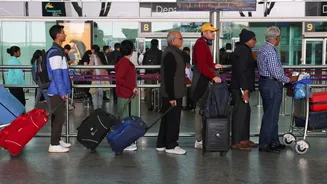
Indian nationals travelling to a third country via German airports will no longer require an airport transit visa, according to an announcement by the Embassy of the Federal Republic of Germany in New Delhi.
The German Embassy said the decision was published in the Federal Law Gazette (Bundesgesetzblatt) on June 2 and takes effect the following day.
“The lifting of the so-called airport transit visa requirement for Indian citizens was announced in the Federal Law Gazette (Bundesgesetzblatt) on June 2, 2026, and takes effect on June 3, 2026,” the embassy said in a statement.
The embassy noted that the move was one of the outcomes of German Chancellor Friedrich Merz's visit to India in January this year.
“It underlines the Federal Government’s commitment to deepening German-Indian relations, facilitating the movement of people, and further strengthening economic ties,” the statement added.
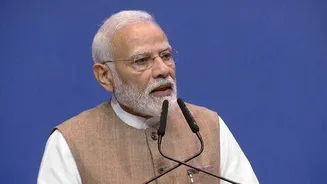
During Chancellor Merz's visit on January 13, 2026, Prime Minister Narendra Modi and the German leader held wide-ranging talks aimed at strengthening cooperation in strategic, economic and technological sectors.
The two leaders oversaw the signing of a Critical Minerals and Semiconductor Intent Agreement as well as a Declaration of Intent on Defence Industrial Cooperation, signalling deeper collaboration in technology, manufacturing and security.
PM Modi and Merz welcomed the continued growth in bilateral trade and investment, noting that trade between the two countries reached a record high in 2024 and maintained its upward trajectory through 2025.
According to the Ministry of External Affairs, India and Germany concluded 19 agreements and made several policy announcements covering trade, technology, health, renewable energy and people-to-people exchanges.
The leaders also reaffirmed support for the India-Middle East-Europe Economic Corridor (IMEC), describing it as a transformative initiative for global trade, connectivity and economic prosperity. They expressed hope that the first IMEC ministerial meeting would help advance the project.
The two sides also highlighted growing defence cooperation. A joint statement welcomed the signing of a roadmap for defence industrial collaboration, including technology partnerships, co-development and co-production of defence equipment.
India welcomed Germany's efforts to expedite export clearances for defence equipment. Prime Minister Modi said expanding cooperation in defence and security reflected the “mutual trust and shared vision” between the two democracies.
He also emphasised shared priorities in renewable energy and announced the establishment of an India-Germany Centre of Excellence to further boost cooperation in the sector.
The January meeting came ahead of a landmark year in India-Germany relations. Modi noted that the two countries will celebrate 75 years of diplomatic relations in 2026, having marked 25 years of strategic partnership in 2025.
He said the milestones reflected the depth of trust and growing ambition that continue to define ties between India and Germany.
The German Embassy said the decision was published in the Federal Law Gazette (Bundesgesetzblatt) on June 2 and takes effect the following day.
Transit visa requirement scrapped
“The lifting of the so-called airport transit visa requirement for Indian citizens was announced in the Federal Law Gazette (Bundesgesetzblatt) on June 2, 2026, and takes effect on June 3, 2026,” the embassy said in a statement.
The embassy noted that the move was one of the outcomes of German Chancellor Friedrich Merz's visit to India in January this year.
“It underlines the Federal Government’s commitment to deepening German-Indian relations, facilitating the movement of people, and further strengthening economic ties,” the statement added.
Outcome of Merz's India visit
During Chancellor Merz's visit on January 13, 2026, Prime Minister Narendra Modi and the German leader held wide-ranging talks aimed at strengthening cooperation in strategic, economic and technological sectors.
The two leaders oversaw the signing of a Critical Minerals and Semiconductor Intent Agreement as well as a Declaration of Intent on Defence Industrial Cooperation, signalling deeper collaboration in technology, manufacturing and security.
Growing economic and strategic partnership
PM Modi and Merz welcomed the continued growth in bilateral trade and investment, noting that trade between the two countries reached a record high in 2024 and maintained its upward trajectory through 2025.
According to the Ministry of External Affairs, India and Germany concluded 19 agreements and made several policy announcements covering trade, technology, health, renewable energy and people-to-people exchanges.
The leaders also reaffirmed support for the India-Middle East-Europe Economic Corridor (IMEC), describing it as a transformative initiative for global trade, connectivity and economic prosperity. They expressed hope that the first IMEC ministerial meeting would help advance the project.
Defence and renewable energy cooperation
The two sides also highlighted growing defence cooperation. A joint statement welcomed the signing of a roadmap for defence industrial collaboration, including technology partnerships, co-development and co-production of defence equipment.
India welcomed Germany's efforts to expedite export clearances for defence equipment. Prime Minister Modi said expanding cooperation in defence and security reflected the “mutual trust and shared vision” between the two democracies.
He also emphasised shared priorities in renewable energy and announced the establishment of an India-Germany Centre of Excellence to further boost cooperation in the sector.
Milestone year for bilateral ties
The January meeting came ahead of a landmark year in India-Germany relations. Modi noted that the two countries will celebrate 75 years of diplomatic relations in 2026, having marked 25 years of strategic partnership in 2025.
He said the milestones reflected the depth of trust and growing ambition that continue to define ties between India and Germany.