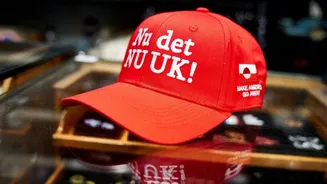

United States President Donald Trump’s insistence that the island is essential to US national security has unsettled European capitals and raised concerns within Nato.
While Denmark has sought to manage the situation through dialogue and cooperation, European leaders are increasingly debating how to respond if Washington escalates its pressure.
How did Denmark & Greenland's meeting with Washington go?
On January 14, Danish Foreign Minister Lars Løkke Rasmussen and Greenland’s Foreign Minister Vivian Motzfeldt met US Vice President JD Vance and US Secretary of State Marco Rubio at the White House to discuss the future of Greenland.
The meeting had been highly anticipated, as Trump has repeatedly expressed his desire for the United States to acquire the territory, which is a self-governing part of the Kingdom of Denmark.
Following the talks, Rasmussen acknowledged that the two sides were far from aligned. He said there was a “fundamental disagreement” over Greenland’s status and confirmed that Trump had not backed away from his ambition.
“The group, in our view, should focus on how to address the American security concerns, while at the same time respecting the red lines of the Kingdom of Denmark,” Rasmussen told reporters.
He also said it remains "clear that the president has this wish of conquering over Greenland.”
Despite the disagreements, Denmark and the United States agreed to establish a working group aimed at discussing American security concerns related to Greenland.
Rasmussen described the initiative as a way to keep communication open, even though Copenhagen has no intention of compromising on sovereignty.
Earlier that day, Rasmussen had expressed his frustration with the ongoing pressure from Washington, saying, “IT IS NOT easy to think about solutions when you wake up every morning to new threats.”
Trump did not attend the meeting, but he reinforced his stance publicly. Speaking to reporters, he said, “We need Greenland for national security. We’ll see how it all works out. I think something will work out.”
Trump has consistently argued that Nato should support the US in gaining control of Greenland, claiming that anything short of American ownership would be unacceptable. Before the Washington talks, he posted on social media that the alliance should “be leading the way” in helping the US secure the island.
Greenland’s foreign minister, Vivian Motzfeldt, struck a more diplomatic tone after the meeting, suggesting that the discussions could still prove useful. "We have shown where our limits are and from there, I think that it will be very good to look forward,” she said.
Why does Trump say he wants Greenland?
Greenland’s strategic importance has increased in recent years as climate change accelerates ice melt in the Arctic. The changing environment could open shorter maritime routes between Europe and Asia, potentially transforming global trade patterns.
In addition, Greenland holds large untapped reserves of critical minerals used in electronics such as computers and smartphones.
Trump has also linked Greenland to US missile defence. He has described the island as “vital” to the Golden Dome missile defence programme and has
According to Trump, US control of Greenland is necessary to counter these risks. He has insisted that anything less than full American ownership would fail to protect US interests.
However, experts have questioned whether these security arguments are grounded in reality. Andreas Osthagen, an Arctic specialist at the Fridtjof Nansen Institute in Oslo, told The Economist, “There’s not really a security case for a Nato mission in Greenlandic waters.”
Osthagen also dismissed Trump’s claim that Greenland’s surrounding seas are filled with Russian and Chinese vessels, saying evidence for such activity is limited. Analysts note that other parts of the Arctic, including areas near Alaska, face more immediate strategic challenges.
In terms of natural resources, many of Greenland’s rare earth and mineral deposits lie deep beneath thick ice sheets, making extraction costly and technically difficult.
While American companies are free to apply for mining licences without any change in sovereignty, few have shown strong interest so far.
What is the US military presence in Greenland?
Under an open-ended agreement signed in 1951 and updated in 2004, the United States already has extensive rights to station troops in Greenland. The arrangement allows Washington to deploy personnel and establish military facilities with the consent of Denmark and Greenland.
After the Cold War, the US significantly reduced its military footprint on the island, shrinking from a large presence to fewer than 200 troops at a single base in north-west Greenland. That base is now used for space surveillance and early-warning radar operations.
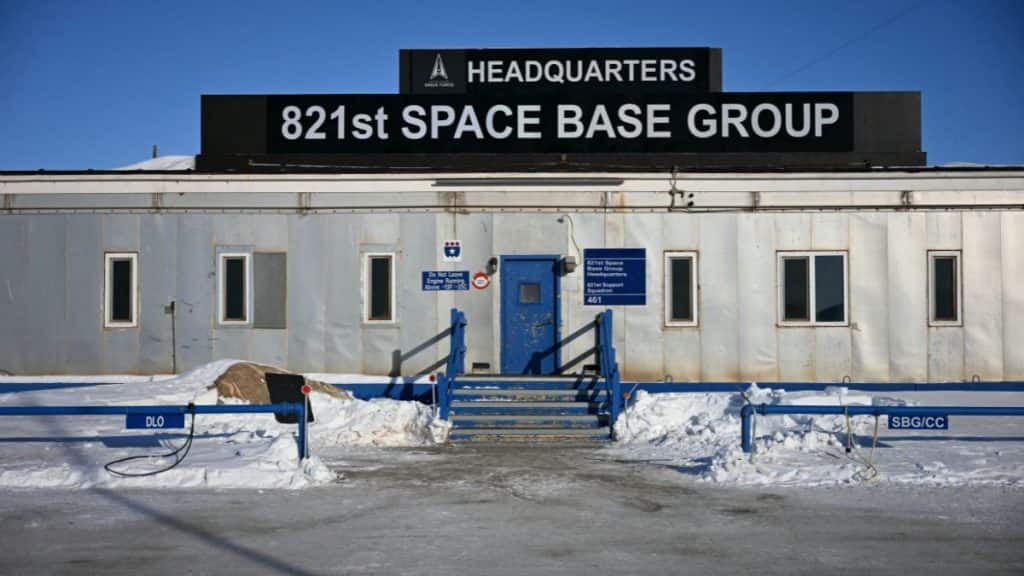
A view shows the US military's Pituffik Space Base in Greenland on March 28, 2025. File Image/Pool via Reuters
The facility’s annual resupply depends on a Canadian icebreaker, highlighting the logistical challenges of operating in the Arctic. Greenland also remains under Nato’s collective security umbrella, meaning it already benefits from alliance protection.
Danish officials have said the US is welcome to expand its existing military presence if it believes additional assets are needed for security purposes.
How has Denmark & Nato responded to address Trump's 'concerns'?
Denmark has announced plans to strengthen its military presence in Greenland and the surrounding Arctic and North Atlantic regions.
In Copenhagen, Danish Defence Minister Troels Lund Poulsen said the country would expand its security efforts “in close cooperation with our allies.” He stated that the current global security climate is unpredictable, noting that “no one can predict what will happen tomorrow.”
Several European allies have already confirmed their involvement. Germany, France, Norway and Sweden are sending personnel to Greenland to participate in joint exercises with Danish forces or to explore future military cooperation in the Arctic.
Additional troops from the Netherlands, Canada and Germany are also taking part, according to European diplomatic sources. France has likewise confirmed its involvement in the Arctic activities.
Nato is reviewing how member states can collectively increase their presence in the region, though officials remain cautious about publicising specific plans.
What can Europe do to defend Greenland from Trump?
Some European officials wonder whether the US wants to divide Greenlanders from the Danes, persuade Greenland to accept closer American ties, or even attempt to seize the territory outright.
For now, European policymakers are focusing on three broad approaches, reported The Economist: reducing tensions by addressing US concerns, discouraging any attempt to alter Greenland’s status, and hoping Trump’s attention shifts elsewhere.
The first goal is to show that American security interests can be met within existing legal frameworks.
Rasmussen said US concerns would be addressed through a “high-level working group.” Within Nato, Britain and Germany have pushed for discussions on an “Arctic Sentry” naval surveillance mission.
Some British figures have also suggested deploying forces under the Joint Expeditionary Force, a coalition of ten northern European nations. On January 6, eight European leaders issued a statement reaffirming Denmark and Greenland’s right to manage their own affairs.
Can Europe cut trade ties with the US?
Some European leaders believe more robust measures may be needed to discourage any US attempt to assert control over Greenland. In Brussels and other capitals, there has been discussion of using economic and political tools to signal the seriousness of the issue.
These ideas include suspending parts of the European Union’s recently agreed trade deal with the United States or imposing tighter regulatory pressure on American technology companies operating in Europe.
More radical proposals have also surfaced, such as closing US military bases on European soil or selling off European holdings of US Treasury bonds. However, these options would require broad political support, which may be difficult to achieve.
Jeremy Shapiro, research director of the European Council on Foreign Relations, has warned that many of these measures amount to retaliation rather than effective deterrence.
He suggests that Europe should focus on actions that could influence decision-making in Washington.
Such steps could include establishing a rotational European troop presence in Greenland, committing in advance to sanction American companies that exploit Greenlandic minerals without local consent, and quietly lobbying Republican lawmakers and sympathetic figures within the US administration.
Can Europe rely on Trump losing interest?
Some European officials hope that Trump’s attention may shift to other priorities. Unlike a long-term political strategy aimed at encouraging Greenlandic independence, a direct military takeover would be simpler to execute — but far more controversial.
Such a move would test loyalty within the US government, armed forces and Congress. Several bills designed to prevent annexation have been announced, although they are unlikely to gain majority support.
Public opinion in the United States also appears to be against the use of force. Only 4 per cent of American voters support military action to obtain Greenland.
With midterm elections approaching and foreign policy challenges mounting, including tensions with Iran, Trump may decide that Greenland is no longer worth the political effort.
Some European leaders believe his tough rhetoric could simply be a negotiating tactic aimed at extracting concessions from Denmark on security cooperation or mineral access.
What do EU leaders think about this?
European leaders are not unified in how far they are willing to go. French President Emmanuel Macron has taken a hard line, warning his cabinet that Trump’s actions could trigger “a cascade of unprecedented consequences.”
Denmark’s Prime Minister Mette Frederiksen has also raised the stakes, saying that an attack on Greenland would effectively mean the end of Nato.
Robert Habeck, a former German vice-chancellor now working at the Danish Institute for International Studies, has warned that a US move on Greenland could embolden Russia in northern Europe. “This is a nightmare, so all measures must be on the table,” he said.
Others, however, urge restraint. Jurgen Hardt, foreign-policy spokesperson for Germany’s ruling Christian Democrats, believes the issue can be resolved through diplomacy.
“The problems we have can be solved with Greenland as part of Denmark under the existing treaties,” Hardt said. “I’m sure that this argument will convince President Trump.”
Some European officials also worry that escalating tensions with Washington could have unintended consequences, particularly regarding US support for Ukraine.
Europe currently provides most of the assistance for Kyiv’s war effort, but antagonising the White House could complicate broader security cooperation.
What next for Trump & Greenland?
Despite the criticism, Trump has continued to signal his determination to pursue Greenland. Last month, he appointed Louisiana Governor Jeff Landry as a special envoy to the territory.
Landry did not attend the January 14 meeting in Washington, but his spokesperson said he was scheduled to travel to the US capital later in the week for discussions that would include Greenland.
Following Trump’s latest comments, Landry posted on X that the president was “absolutely right” about acquiring Greenland, calling the territory “a critical component of our nation’s national security portfolio.”
Trump has also suggested that Nato should play a role in helping the US gain control of the island, a position that has left alliance leaders uncomfortable.
Nato Secretary General Mark Rutte has sought to keep some distance from the dispute, avoiding direct involvement in the confrontation between Washington and Copenhagen.
For now, European governments continue to focus on diplomacy, symbolic military coordination, and political messaging to defend Greenland’s status — while hoping that the issue does not escalate into a deeper crisis.
With inputs from agencies









![[WATCH] 'Real Madrid, Ramadan and rest' - Mohammed Siraj how last-minute World Cup call-up changed February plan](https://g-mob.glance-cdn.com/public/fc/image/ByYT_LEmlrD0.webp)
