






What is the story about?
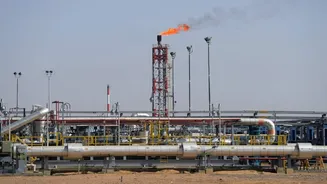
India has overhauled its oil and gas royalty regime, cutting the royalty burden on producers and offering fresh incentives for deepwater exploration as the country grapples with mounting energy security concerns and pressure on the rupee amid the ongoing West Asia conflict.
Union Petroleum and Natural Gas Minister Hardeep Singh Puri on Monday announced the rationalisation of royalty rates and methodologies for crude oil, natural gas and casing head condensate, calling it a landmark reform for India’s upstream sector.
In a post on X, Puri said the revised framework would eliminate long-standing inconsistencies across different contractual and policy regimes and create a “stable, predictable, and investor-aligned framework” for the sector.
“This decision is a culmination of a decade-long effort to modernize our regulatory landscape by replacing complexity with consistency to fuel India's energy future,” the minister said.
The changes come at a time when India is facing a sharp rise in energy import costs following the Iran war, which has sent global crude oil prices soaring and intensified pressure on the country’s current account balance and currency.
The government’s latest oil and gas royalty reforms are being viewed as part of a broader strategy to encourage higher domestic hydrocarbon production and reduce import dependence.
Under the revised framework notified by the Ministry of Petroleum and Natural Gas on May 8, the effective royalty rate on onshore crude oil production has been reduced to 10 per cent, while offshore crude production will now attract an effective royalty rate of 8 per cent.
For natural gas, the effective royalty rate has been lowered to 8 per cent through a new flat deduction mechanism for calculating the “well head price”, which determines royalty payments.
Royalty will now be calculated after allowing fixed deductions toward post well-head costs — 20 per cent of the sale price for nomination regime blocks and 15 per cent for all other regimes.
Previously, royalty calculations were linked to actual post-production costs, often resulting in higher effective rates for producers.
The government has also retained concessional royalty rates for deepwater and ultra-deepwater fields to incentivise investment in technically difficult and capital-intensive exploration areas.
Under the revised structure, crude oil and condensate production from blocks awarded under the Discovered Small Field (DSF) Policy and Hydrocarbon Exploration and Licensing Policy (HELP) will attract zero royalty for the first seven years in deepwater and ultra-deepwater areas.
From the eighth year onwards, royalty rates will be fixed at 5 per cent for deepwater blocks and 2 per cent for ultra-deepwater blocks.
The same concessions will apply to natural gas production from DSF and HELP blocks.
Puri said the reforms were aligned with global best practices and would help create a transparent, fair and competitive upstream regime capable of attracting fresh investment into exploration and production.
The Centre’s push to increase domestic output also comes as state-run fuel retailers face mounting financial pressure from surging global oil prices.
India, the world’s third-largest oil importer and consumer, meets more than 90 per cent of its crude oil requirements and nearly half of its natural gas demand through imports.
Brent crude prices have surged around 46 per cent since the conflict began in late February and were trading above $105 a barrel on Tuesday, adding to concerns over India’s import bill and inflationary pressures.
Against this backdrop, Prime Minister Narendra Modi on Sunday urged citizens to conserve fuel, reduce non-essential imports and adopt energy-efficient habits to ease pressure on India’s foreign exchange reserves and economy.
India’s balance of payments deficit is now expected to widen sharply to between $66 billion and $70 billion in the current financial year, compared with an estimated $26 billion to $28 billion in 2025-26, reflecting the growing stress from elevated energy imports.
The Reserve Bank of India has already intervened in currency markets by selling dollars and tightening trading limits for banks to contain volatility in the rupee.
Despite the ongoing turmoil in West Asia, the government said India currently has around 60 days of crude oil and natural gas stocks, along with 45 days of LPG rolling stock, which it described as sufficient to manage immediate supply-side risks.
Union Petroleum and Natural Gas Minister Hardeep Singh Puri on Monday announced the rationalisation of royalty rates and methodologies for crude oil, natural gas and casing head condensate, calling it a landmark reform for India’s upstream sector.
In a post on X, Puri said the revised framework would eliminate long-standing inconsistencies across different contractual and policy regimes and create a “stable, predictable, and investor-aligned framework” for the sector.
“This decision is a culmination of a decade-long effort to modernize our regulatory landscape by replacing complexity with consistency to fuel India's energy future,” the minister said.
In a big boost for the country’s Upstream Sector, rationalization of royalty under the ORD Act marks a new era for our Oil & Gas regimes by eliminating inconsistencies and driving growth in the upstream sector under the leadership of PM Sh @narendramodi Ji.
This landmark… pic.twitter.com/xb60UNyalH
— Hardeep Singh Puri (@HardeepSPuri) May 11, 2026
The changes come at a time when India is facing a sharp rise in energy import costs following the Iran war, which has sent global crude oil prices soaring and intensified pressure on the country’s current account balance and currency.
Lower royalties for crude oil and natural gas
The government’s latest oil and gas royalty reforms are being viewed as part of a broader strategy to encourage higher domestic hydrocarbon production and reduce import dependence.
Under the revised framework notified by the Ministry of Petroleum and Natural Gas on May 8, the effective royalty rate on onshore crude oil production has been reduced to 10 per cent, while offshore crude production will now attract an effective royalty rate of 8 per cent.
For natural gas, the effective royalty rate has been lowered to 8 per cent through a new flat deduction mechanism for calculating the “well head price”, which determines royalty payments.
Royalty will now be calculated after allowing fixed deductions toward post well-head costs — 20 per cent of the sale price for nomination regime blocks and 15 per cent for all other regimes.
Previously, royalty calculations were linked to actual post-production costs, often resulting in higher effective rates for producers.
Incentives for deepwater exploration
The government has also retained concessional royalty rates for deepwater and ultra-deepwater fields to incentivise investment in technically difficult and capital-intensive exploration areas.
Under the revised structure, crude oil and condensate production from blocks awarded under the Discovered Small Field (DSF) Policy and Hydrocarbon Exploration and Licensing Policy (HELP) will attract zero royalty for the first seven years in deepwater and ultra-deepwater areas.
From the eighth year onwards, royalty rates will be fixed at 5 per cent for deepwater blocks and 2 per cent for ultra-deepwater blocks.
The same concessions will apply to natural gas production from DSF and HELP blocks.
Puri said the reforms were aligned with global best practices and would help create a transparent, fair and competitive upstream regime capable of attracting fresh investment into exploration and production.
Rising oil prices add pressure on economy
The Centre’s push to increase domestic output also comes as state-run fuel retailers face mounting financial pressure from surging global oil prices.
India, the world’s third-largest oil importer and consumer, meets more than 90 per cent of its crude oil requirements and nearly half of its natural gas demand through imports.
Brent crude prices have surged around 46 per cent since the conflict began in late February and were trading above $105 a barrel on Tuesday, adding to concerns over India’s import bill and inflationary pressures.
Against this backdrop, Prime Minister Narendra Modi on Sunday urged citizens to conserve fuel, reduce non-essential imports and adopt energy-efficient habits to ease pressure on India’s foreign exchange reserves and economy.
India’s balance of payments deficit is now expected to widen sharply to between $66 billion and $70 billion in the current financial year, compared with an estimated $26 billion to $28 billion in 2025-26, reflecting the growing stress from elevated energy imports.
The Reserve Bank of India has already intervened in currency markets by selling dollars and tightening trading limits for banks to contain volatility in the rupee.
Despite the ongoing turmoil in West Asia, the government said India currently has around 60 days of crude oil and natural gas stocks, along with 45 days of LPG rolling stock, which it described as sufficient to manage immediate supply-side risks.