









What is the story about?
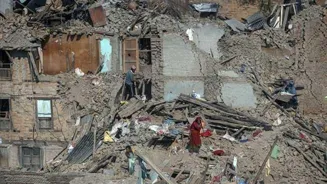
At least 622 people have died and over 1,300 others injured after a 6.3-magnitude earthquake struck eastern Afghanistan, Taliban officials said Monday.
The quake hit around midnight local time, 17 miles from Jalalabad near the Pakistan border, according to the US Geological Survey.
Because the earthquake struck a remote mountainous region, “it will take time to get the exact information about human losses and damage to the infrastructure,” said Sharafat Zaman, spokesperson for the Afghan Public Health Ministry.
“We have launched a massive rescue operation and mobilized hundreds of people to help people in the affected areas,” Zaman added.
Afghan Interior Ministry spokesperson Mufti Abdul Matin Qani confirmed the toll, reporting that the dead and injured were mainly in Nangarhar, which includes Jalalabad, and Kunar provinces. Around 1,000 injured people have been evacuated to hospitals, the ministry said.
A powerful tremor of magnitude 6.3 was also recorded in southeastern Afghanistan on Monday by the National Centre for Seismology (NCS), at 00:47 IST. The epicentre was located at latitude 34.50N and longitude 70.81E, at a depth of 160 km.
The quake was felt across Pakistan and northern India, including Delhi-NCR, where strong tremors shook buildings, forcing residents to rush outside in panic.
#BREAKING Over 250 killed, 500 injured in Sunday night earthquake in Afghanistan's eastern Kunar province: Information Ministry tells Anadolu pic.twitter.com/yLNy3sJAOI
— Anadolu English (@anadoluagency) September 1, 2025
The 6.3-magnitude quake was followed by several aftershocks, measuring 4.7, 4.3, and two shocks of 5.0 on the Richter scale.
All these tremors are classified as either shallow or intermediate earthquakes, based on their depth. Shallow and intermediate quakes are considered more dangerous than deep ones because their seismic waves have a shorter distance to travel to the surface. This results in stronger shaking, greater damage to structures, and potentially higher casualties.
In recent years, Afghanistan and the neighbouring Himalayan belt have seen a worrying rise in seismic activity. The latest jolt serves as another reminder of the region’s fragile and vulnerable geology.