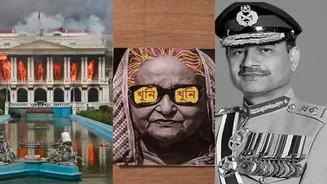

The region witnessed so much turbulence that it prompted India to realign its foreign policy towards its neighbours. While Gen Z or youth-led protests toppled the established regime in Nepal and Bangladesh, natural disasters revealed the cracks in the economies of Afghanistan and Bangladesh.
However, one of the biggest newsmaker events this year in the sub-continent was the military confrontation between India and Pakistan following the devastating Pahalgam terror attack that killed 26 in southern Kashmir. As we enter the year 2026, here's a look at the events India's neighbouring nations witnessed this year.
Pakistan: Controversial laws and 4-day conflict
This year, Pakistan witnessed turmoil both at home and on its borders. Throughout the year, there have been multiple protests over the arrest of former Prime Minister of Pakistan Imran Khan. On December 20, Khan and his wife, Bushra Bibi, were sentenced to 17 years in prison in the infamous Toshakhana case. Many in the past and this year have been calling Khan's arrest political persecution.
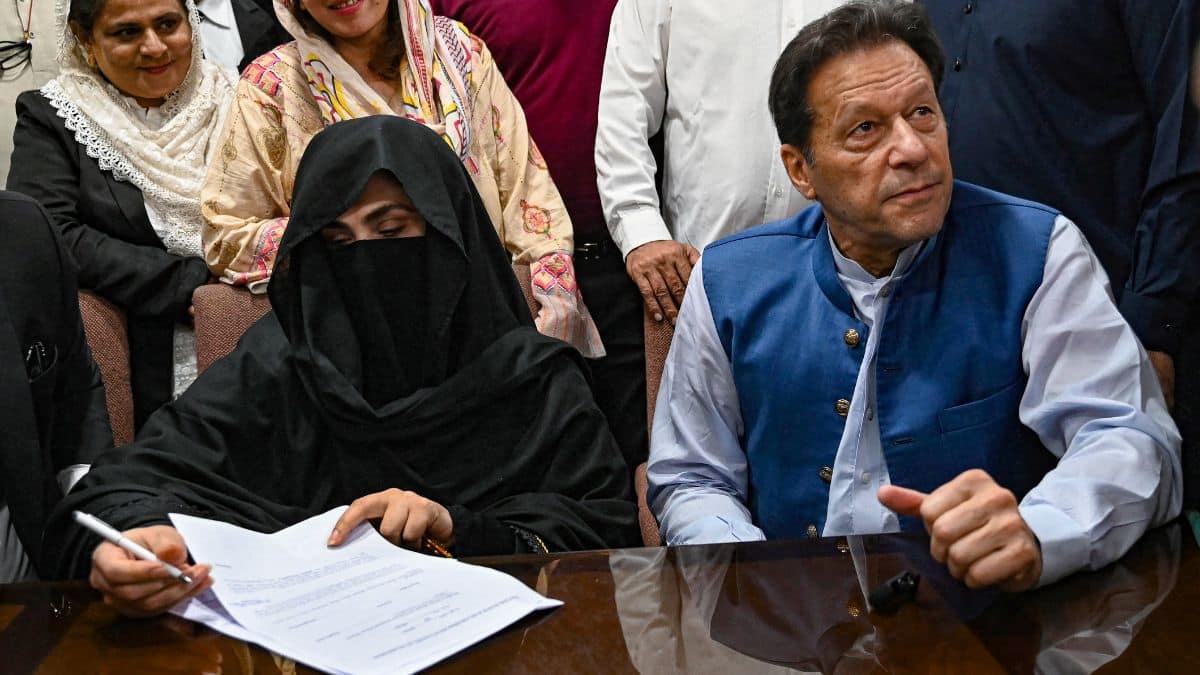
Imran Khan (R), along with his wife Bushra Bibi (L), looks on as he signs surety bonds for bail in various cases, at a registrar office in the High Court, in Lahore on July 17, 2023. File Photo/AFP
Protests also took place in Balochistan, where people raised concerns over extrajudicial killings and enforced disappearances. In March 2025, internationally renowned Balochi activist Mahrang Baloch was arrested by Pakistani authorities for taking part in a peaceful protest. The people of Balochistan have also been concerned about China's infrastructure projects in Pakistan, especially the Gwadar Port, claiming that these projects take away crucial resources of the locals.
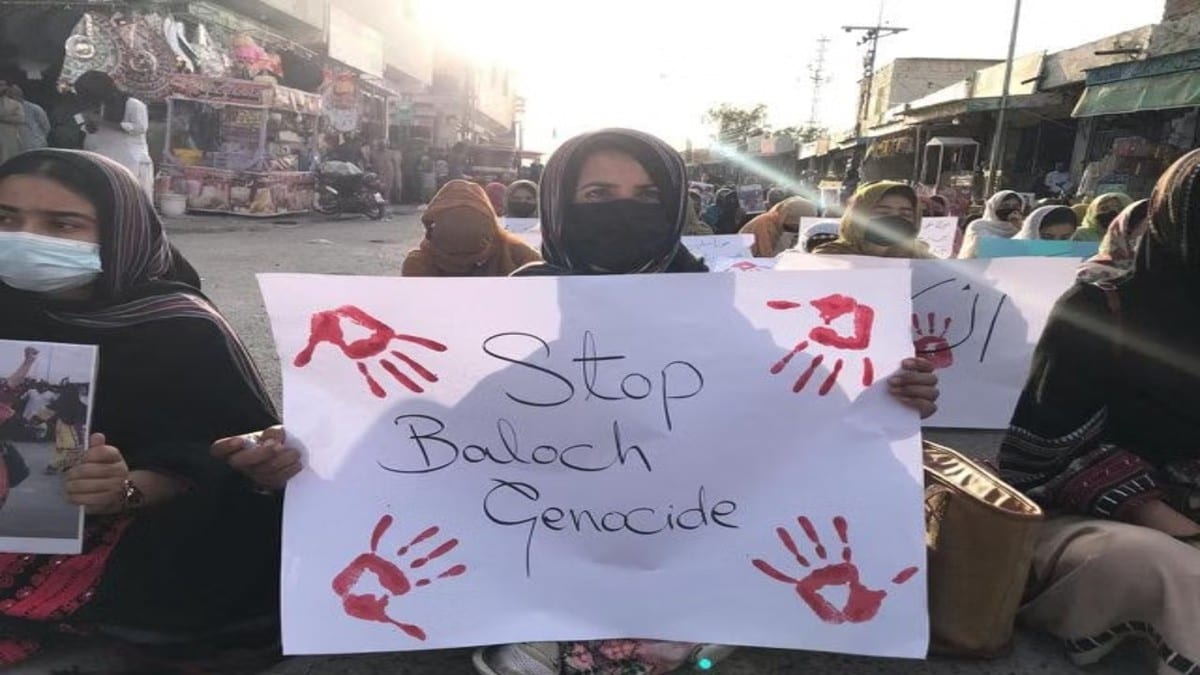
The US, apparently the world’s most powerful democracy, entirely ignores the fact that it is the Pakistani practices that are fuelling the Baloch insurgency. (Image: X@BalochYakjehtiC)
Pakistan also faced its fair share of terror attacks within the country. The biggest one was the Jaffar Express hijacking that killed at least 64 people, including 18 soldiers on leave who were identified among the passengers and killed by the attackers, and 33 attackers. Several other such attacks took place in Khyber Pakhtunkhwa, Islamabad, etc.

A cameraman films the Jaffar Express train, riddled with bullet holes, after it was attacked by Baloch militants in Bolan, at the Railway Station in Quetta, Balochistan. File image/Reuters
However, one of the major events that rocked Pakistan was India's Operation Sindoor. After the Pahalgam terror attack, India conducted Operation Sindoor against 9 terror camps in Pakistan and Pakistan-occupied Kashmir. This led to a four-day military escalation between the two nations, with Pakistan suffering significant losses. In the midst of this, India also put the Indus Water Treaty into abeyance, which ultimately affected Pakistan's farmers.

A Pakistani Army soldier examines a building damaged by missile attack carried out by Indian armed forces in PoK's Muzaffarabad during Operation Sindoor. File image/AP
The country also witnessed protests and political struggle over the controversial 27th Amendment that weakened the Pakistani judiciary and handed immunity to country's Army Chief Asim Munir.
Bangladesh: A death sentence and an assassination
Bangladesh in 2025 was overcoming the crisis that hit the country last year. The 2024 July uprising toppled the government of the country's former PM Sheikh Hasina and brought Nobel Peace Prize winner Muhammad Yunus. The year 2025 started with hopes for fresh elections in the country.

(File) Supporters of Bangladesh's former prime minister Khaleda Zia and her Bangladesh Nationalist Party (BNP). AP
Political parties in Bangladesh demanded that the elections be conducted this year. However, Yunus dampened the spirit, insisting that it was too early to hold polls. Meanwhile, Hasina's Awami League was banned from polls, prompting questions about the fairness of the upcoming elections.
Hasina herself faced a fair share of challenges this year as she became the first Prime Minister of Bangladesh to be sentenced to death by the International Crimes Tribunal, which, interestingly, was established by her government. The former Bangladeshi prime minister was convicted of committing crimes against humanity. Since Hasina is in India, the ties between India and Bangladesh also took a major hit.

A vendor sells newspapers with headlines about the ousted Prime Minister Sheikh Hasina’s death sentence on charges of 'crimes against humanity' for ordering a 'deadly crackdown' on a student-led uprising last year in Dhaka, Bangladesh, November 18, 2025. File Image/Reuters
The year ended for Bangladesh with the assassination of 32-year-old youth leader Sharif Osman Hadi. His death, six days after he was shot by masked gunmen, triggered protests and a riot-like situation across the country, garnering even international condemnation.

Protesters vandalise the office of Bangladesh's newspaper Prothom Alo amid widespread outrage over the death of Sharif Osman Hadi. PTI
Nepal: The GenZ protest that brought change
The Himalayan nation witnessed one of its most violent youth-led movements in decades as Gen-Z of the country took to the streets and staged demonstrations against the rampant corruption in Nepal. The protests soon became violent, leaving 19 people dead and hundreds injured.
Ultimately, the protests resulted in the resignation of the country's then-Prime Minister KP Sharma Oli. Interestingly, the chaos was triggered by the government’s move to block 26 major social media platforms, including Facebook, Instagram, WhatsApp, YouTube and X for failing to register locally.

Fire rages through the Singha Durbar, the main administrative building for the Nepal government, in Kathmandu on September 9, a day after a police crackdown on demonstrations over social media prohibitions and corruption by the government. Nepali youth protesters set fire to parliament on September 9 as the veteran prime minister obeyed furious crowds to quit, a day after one of the deadliest crackdowns in years. AFP
However, the ban came while the Gen-Z in Nepal used social media to highlight the wealth and privilege of the children of politicians and those in power. The unrest eventually led to the formation of an interim government led by Sushila Karki, Nepal’s first woman chief justice. She was appointed PM through online voting and digital consultations with youth representatives and civil society groups.

Nepal's interim Prime Minister Sushila Karki. File Photo/PTI
China: Tariffs and Taiwan
In April this year, China was hit by one of the highest tariffs imposed by US President Donald Trump. While the tariff pressure was eased, it still led to a diplomatic row between the two nations. Beijing even went on to introduce reciprocal tariffs on American goods. Not only this, but it also imposed restrictions on the exports of rare earth, compelling Washington to come to the negotiation table.
Throughout the whole ordeal, China's economy continued to remain turbulent, with its manufacturing sector taking a hit. Apart from this, China's growing assertiveness over Taiwan also garnered international criticism. Chinese Coast Guards were often reported to be getting involved in aggressive manoeuvres with Taiwan and the Philippines.
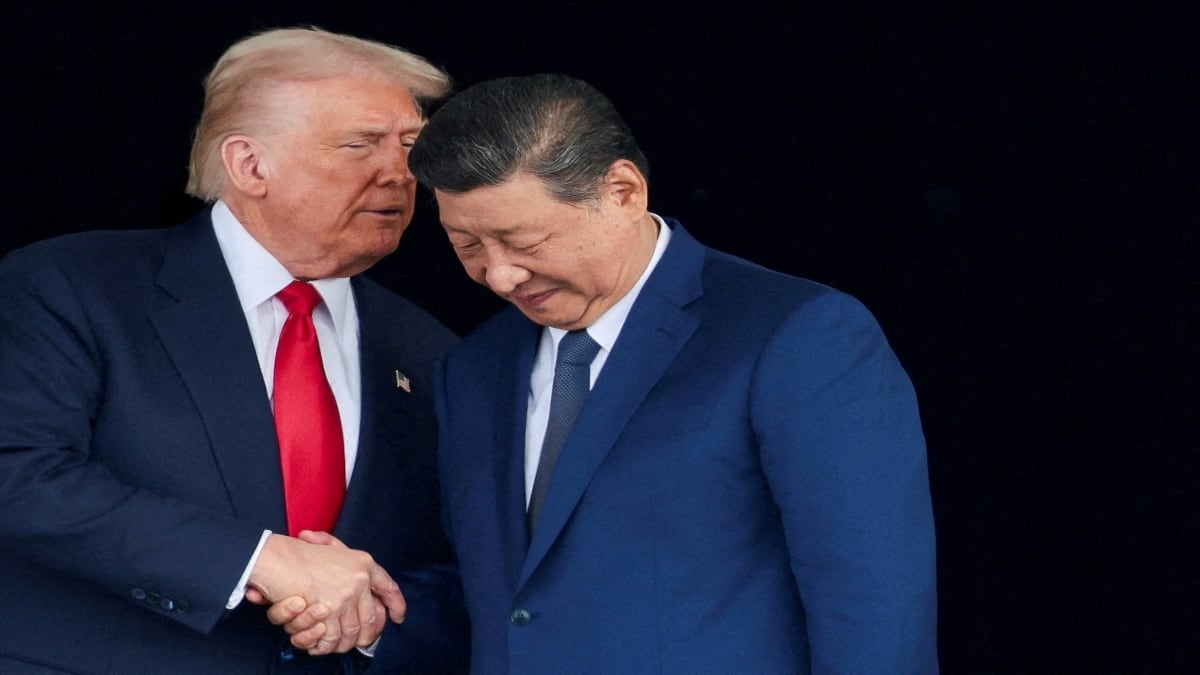
US President Donald Trump and Chinese President Xi Jinping talk as they leave after a bilateral meeting at Gimhae International Airport, on the sidelines of the Asia-Pacific Economic Cooperation (APEC) summit, in Busan, South Korea, October 30, 2025. Reuters File
By the end of the year, China also engaged in a diplomatic tussle with Japan after the latter's newly elected PM Sanae Takaichi said a Chinese attack or blockade of Taiwan would be a "survival-threatening situation" for Japan. This led to China issuing an advisory, urging its nationals to avoid travelling to Japan, hitting Tokoyo's crucial tourism sector.
Sri Lanka: A cyclone that rocked the country's fragile economy
This year, Sri Lanka faced one of its gravest humanitarian crises in decades in 2025 as Cyclone Ditwah and successive monsoon storms unleashed catastrophic flooding and landslides across the island. At least 600 people lost their lives, and hundreds remained missing. However, the disasters affected more than two million people.

Residents wade through a flooded street during heavy rainfall in Puttalam. AFP
The scale of the disasters highlighted the shortcomings in preparedness and coordination. Criticism focused on the government’s response despite early warnings. Communication failures were also reported, particularly in Tamil-speaking areas, where warnings were often issued only in Sinhala or English. All this was happening just a few years after the country recovered from a historic economic crisis.
Afghanistan: While women hunt for their voice, earthquakes take a toll
In 2025, Afghanistan faced one of the deadliest humanitarian emergencies of 2025 after a powerful earthquake struck the country’s eastern provinces in late August and early September. The 6.0 magnitude quake came with a series of aftershocks and flattened numerous villages. The earthquake and tremors managed to kill more than 2,200 villagers and injure several others.
Apart from this, the women of Afghanistan still struggled to find their voice in the country. Even this year, the Taliban came with several restrictions on women, garnering international criticism.

Collapsed houses are seen in an area devastated by Sunday's powerful earthquake that killed many people and destroyed villages in eastern Afghanistan, in Dara Noor, Kunar province, Tuesday, Sept. 2, 2025. (Photo: Wahidullah Kakar/AP)
However, one of the key events that rocked the country was its border confrontation with Pakistan, with the latter even bombing Kabul. The fighting continued for weeks and only ended after the two sides agreed to a fragile ceasefire. The tensions between the two nations are still simmering. Hence, it remains unclear how the situation would pan out next year.

An Afghan Taliban fighter sits on a tank near the Afghanistan-Pakistan border in Spin Boldak, Kandahar Province, following exchanges of fire between Pakistani and Afghan forces in Afghanistan, October 15, 2025. File Image/Reuters
Myanmar: Junta paving the road for elections
2025 for Myanmar was filled with protests and continued silence surrounding its most recognisable political figure, Aung San Suu Kyi. In four years of Junta rule, the Nobel Peace Prize winner continues to remain in detention while the ruling regime conducted polls on Sunday.
However, this year, her son Kim Aris said in an interview to Reuters that he feared he might not even learn if his mother had died. “She’s got ongoing health issues. Nobody has seen her in over two years. She hasn’t been allowed contact with her legal team, never mind her family,” Aris said. He added: “For all I know, she could be dead already.”

Myanmar's Aung San Suu Kyi won the Nobel Peace Prize in 1991. However, many called for her to be stripped of the award in later years based on her response to the Rohingya crisis. File image/Reuters
Suu Kyi turned 80 years old and is believed to be held in the capital, Naypyitaw. Aris said the last direct message he received from her was a letter two years ago describing extreme temperatures inside her cell. “In the past, when my mother was held in higher regard by the international community, it was much harder for people to ignore what was happening in Burma,” he said.
Apart from this, Myanmar faced a major earthquake in March that led to the death of 2,000 people and the collapse of several buildings across the border region.
Overall, the year 2025 ushered in a host of challenges for India's neighbour, whose cripple effects are spilling over to 2026.