







What is the story about?
A 4.2-magnitude earthquake in southern Israel on Thursday (January 15) morning triggered rumours about the government conducting a nuclear test amid heightened tensions in West Asia. The tremors set off alerts in the Dead Sea and southern Negev regions of Israel.
No injuries or major damage due to the quake, according to the Magen David Adom emergency service. The shaking, however, led to speculations whether it was a nuclear test instead of an earthquake.
Let’s take a closer look.
The earthquake that shook southern Israel occurred 20 kilometres beneath the surface of the earth, Times of Israel reported, citing the Geological Survey of Israel.
According to the European-Mediterranean Seismological Centre, the quake occurred at a depth of about 10 km beneath the surface.
The epicentre of the quake was reported near the city of Dimona, southeast of Beersheva.
An earthquake alert was sounded and public safety messages were blasted from loudspeakers in many towns near the epicentre.
Israeli authorities urged residents to shift to open ground, away from buildings and infrastructure in case of aftershocks.
No significant aftershocks were reported.
The quake was reported near the Jordan Valley, which is located on a major seismic rift zone between the African and Arabian tectonic plates.
The timing of the quake raised doubts among netizens. Iran is witnessing unrest and has blamed foreign powers for the deadly anti-government protests. The United States, which has threatened to hit Iran if force is used against protesters, seemed to soften its stance this week.
However, the possibility of US military action against the Islamic Republic remains, leading to several countries issuing advisories for their citizens in Iran as well as Israel. As per a report by Anadolu Ajansi, Israel has raised its level of military readiness "amid concerns that an Iranian response could occur at any moment following a potential US strike."
The intensity and short duration of the quake raised eyebrows as it coincided with a nationwide emergency preparedness drill in schools. A resident of Beit Shemesh told Ynet that they "felt it for maybe two seconds, but it was unmistakable".
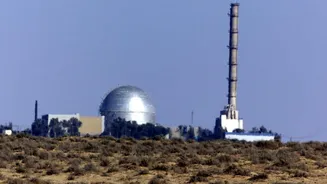
The epicentre of the earthquake was near Dimona, which houses one of Israel's two nuclear research centres. The Shimon Peres Negev Nuclear Research Center is located in the Negev desert, about thirteen kilometers south-east of Dimona. This further fuelled speculations online.
A user wrote on X, "Rumors are swirling about a M3.9 quake near Dimona and claims that Israel has just conducted a nuclear test. Is it true?"
American mixed martial artist Jake Shields asked if the earthquake, "exactly where the Dimona nuclear facility is, a warning to Trump to hurry and fight their war".
Former Israeli footballer Alon Mizrahi described the incident as highly irregular. He posted on X, "Major and very short (1.5 seconds) earthquake in the immediate vicinity of Dimona (where Israel develops a very explosive kind of candy). More unusual, an earthquake drill was scheduled a few days ago for the precise moment of the actual earthquake. Israel is trying to tell the US something, that's my guess, having learned of Trump's latest U-turn on Iran. A nuclear option may have just been made real, with Israel choosing to risk actual extinction and the fate of the entire region."
Another user commented, "Earthquake at Dimona, of all places? Underground nuclear weapons testing facility perhaps?"
Despite speculations, Israeli authorities insist the tremor was natural, owing to the region’s seismic history. The quake occurred near the Jordan Valley, which is susceptible to seismic activity.
As per Times of Israel, experts estimate that a major earthquake takes place there every 80 to 100 years.
While the epicentre of the quake was in southern Israel, tremors were also felt across central Israel and even in areas north of the capital, Jerusalem. Sirens were triggered beyond the Negev desert region, leading to confusion about the origin of the shaking.
With inputs from agencies
No injuries or major damage due to the quake, according to the Magen David Adom emergency service. The shaking, however, led to speculations whether it was a nuclear test instead of an earthquake.
Let’s take a closer look.
Earthquake hits Israel
The earthquake that shook southern Israel occurred 20 kilometres beneath the surface of the earth, Times of Israel reported, citing the Geological Survey of Israel.
According to the European-Mediterranean Seismological Centre, the quake occurred at a depth of about 10 km beneath the surface.
The epicentre of the quake was reported near the city of Dimona, southeast of Beersheva.
An earthquake alert was sounded and public safety messages were blasted from loudspeakers in many towns near the epicentre.
Israeli authorities urged residents to shift to open ground, away from buildings and infrastructure in case of aftershocks.
No significant aftershocks were reported.
The quake was reported near the Jordan Valley, which is located on a major seismic rift zone between the African and Arabian tectonic plates.
Was it a nuke test?
The timing of the quake raised doubts among netizens. Iran is witnessing unrest and has blamed foreign powers for the deadly anti-government protests. The United States, which has threatened to hit Iran if force is used against protesters, seemed to soften its stance this week.
However, the possibility of US military action against the Islamic Republic remains, leading to several countries issuing advisories for their citizens in Iran as well as Israel. As per a report by Anadolu Ajansi, Israel has raised its level of military readiness "amid concerns that an Iranian response could occur at any moment following a potential US strike."
The intensity and short duration of the quake raised eyebrows as it coincided with a nationwide emergency preparedness drill in schools. A resident of Beit Shemesh told Ynet that they "felt it for maybe two seconds, but it was unmistakable".
The epicentre of the earthquake was near Dimona, which houses one of Israel's two nuclear research centres. The Shimon Peres Negev Nuclear Research Center is located in the Negev desert, about thirteen kilometers south-east of Dimona. This further fuelled speculations online.
A user wrote on X, "Rumors are swirling about a M3.9 quake near Dimona and claims that Israel has just conducted a nuclear test. Is it true?"
American mixed martial artist Jake Shields asked if the earthquake, "exactly where the Dimona nuclear facility is, a warning to Trump to hurry and fight their war".
Former Israeli footballer Alon Mizrahi described the incident as highly irregular. He posted on X, "Major and very short (1.5 seconds) earthquake in the immediate vicinity of Dimona (where Israel develops a very explosive kind of candy). More unusual, an earthquake drill was scheduled a few days ago for the precise moment of the actual earthquake. Israel is trying to tell the US something, that's my guess, having learned of Trump's latest U-turn on Iran. A nuclear option may have just been made real, with Israel choosing to risk actual extinction and the fate of the entire region."
Another user commented, "Earthquake at Dimona, of all places? Underground nuclear weapons testing facility perhaps?"
Despite speculations, Israeli authorities insist the tremor was natural, owing to the region’s seismic history. The quake occurred near the Jordan Valley, which is susceptible to seismic activity.
As per Times of Israel, experts estimate that a major earthquake takes place there every 80 to 100 years.
While the epicentre of the quake was in southern Israel, tremors were also felt across central Israel and even in areas north of the capital, Jerusalem. Sirens were triggered beyond the Negev desert region, leading to confusion about the origin of the shaking.
With inputs from agencies