


What is the story about?
In a major move to redefine the fifth-generation AI chip, Tesla CEO is now moving forward with a big semiconductor project which will aim at improving the AI needs.
On Saturday, Tesla CEO Elon Musk announced the launch of the company’s "Terafab" project to manufacture artificial intelligence chips, saying the facility could begin operations within the next seven days. The facility is expected to produce large volumes of advanced processors required for Tesla’s artificial intelligence systems used in vehicles.
Last year, Musk talked about the building of a gigantic chip to make AI chips in a major shift to AI technology. In November again, Musk reiterated creating Tesla’s own AI chip and called the project as “Terafab.”
Musk had said at the time that the EV maker could work with Intel and said, "You know, maybe we'll, we'll do something with Intel."
"We haven't signed any deal, but it's probably worth having discussions with Intel," he had said.
Elon Musk said last month that Tesla’s need for AI processors may outstrip even the most optimistic production capacity of its current suppliers and partners.
Musk has been actively switching to artificial intelligence expanding various services. Also as a global carmaker Tesla operates some of the industry’s largest AI supercomputers clusters to train various robotics models.
Musk has teased the AI5 chip before and reiterated that Tesla was also partnering with Taiwan's TSMC and South Korea's Samsung. The AI chips power Tesla's autonomous driving systems, including the Full Self-Driving software.
"Even when we extrapolate the best-case scenario for chip production from our suppliers, it's still not enough," Musk said last year, at Tesla's AGM.
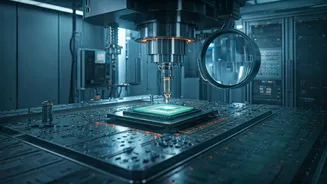
Teal could actively become its own chipmaker with the Terafab initiative, and Tesla could eventually transform itself into an integrated device manufacturer, producing its own semiconductors.
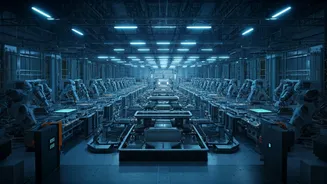
"So I think we may have to do a Tesla terafab. It's like giga but way bigger. I can't see any other way to get to the volume of chips that we're looking for. So I think we're probably going to have to build a gigantic chip fab. It's got to be done," he said.
On Saturday, Tesla CEO Elon Musk announced the launch of the company’s "Terafab" project to manufacture artificial intelligence chips, saying the facility could begin operations within the next seven days. The facility is expected to produce large volumes of advanced processors required for Tesla’s artificial intelligence systems used in vehicles.
Last year, Musk talked about the building of a gigantic chip to make AI chips in a major shift to AI technology. In November again, Musk reiterated creating Tesla’s own AI chip and called the project as “Terafab.”
Discussions with Intel
Musk had said at the time that the EV maker could work with Intel and said, "You know, maybe we'll, we'll do something with Intel."
"We haven't signed any deal, but it's probably worth having discussions with Intel," he had said.
Elon Musk said last month that Tesla’s need for AI processors may outstrip even the most optimistic production capacity of its current suppliers and partners.
Expanding all sectors to AI rapidly
Musk has been actively switching to artificial intelligence expanding various services. Also as a global carmaker Tesla operates some of the industry’s largest AI supercomputers clusters to train various robotics models.
Musk has teased the AI5 chip before and reiterated that Tesla was also partnering with Taiwan's TSMC and South Korea's Samsung. The AI chips power Tesla's autonomous driving systems, including the Full Self-Driving software.
"Even when we extrapolate the best-case scenario for chip production from our suppliers, it's still not enough," Musk said last year, at Tesla's AGM.
It's like giga but way bigger
Teal could actively become its own chipmaker with the Terafab initiative, and Tesla could eventually transform itself into an integrated device manufacturer, producing its own semiconductors.
"So I think we may have to do a Tesla terafab. It's like giga but way bigger. I can't see any other way to get to the volume of chips that we're looking for. So I think we're probably going to have to build a gigantic chip fab. It's got to be done," he said.