






What is the story about?
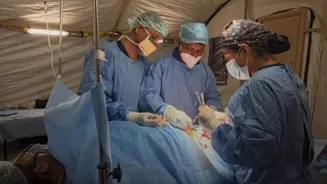
As hospitals in Venezuela struggle to cope with the aftermath of two powerful earthquakes, public spaces, including a McDonald's restaurant and a bus terminal, have been transformed into makeshift medical centres to treat thousands of injured survivors in the worst-hit areas.
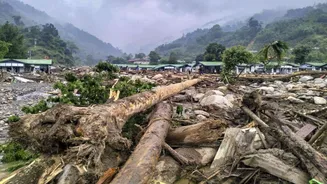
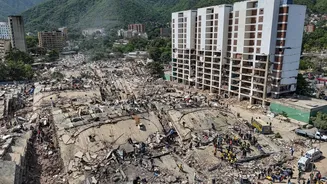
The 7.2 and 7.5 magnitude earthquakes struck La Guaira state, leaving widespread destruction, collapsing scores of buildings and killing more than 2,600 people. The disaster has overwhelmed the region's healthcare system, forcing authorities and volunteers to establish temporary treatment facilities.
A McDonald's outlet in the severely affected Caraballeda area has been converted into one of several emergency medical centres, where dozens of patients are arriving with health complications linked to the disaster.
The facility now includes a triage unit, pharmacy, storage area and dedicated spaces for psychological support and veterinary care.
Karlys Figueroa, a 33-year-old surgeon volunteering in the relief effort, said the clinic is treating patients suffering from "hypertensive crises, anxiety attacks, and diarrhoeal symptoms", she told AFP.
More than 30 doctors, including Figueroa, are providing medical care at the site.
The restaurant's serving counter, once used for hamburgers, is now distributing donated arepas and sandwiches, while its former ice cream section has been converted into a shelter for rescued animals.
Another makeshift clinic established inside a bus terminal in Catia La Mar has already treated nearly 4,000 patients.
Immediately after the earthquakes, injured residents were taken to just two hospitals, but both facilities became overwhelmed within hours of one of Latin America's worst earthquake disasters.
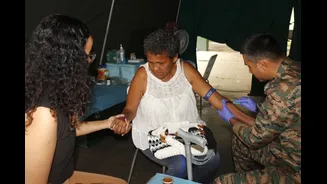
Among those receiving treatment at the bus terminal was 13-year-old Iverson Medina, who lay on a stretcher inside a large medical tent after spending 16 hours trapped beneath the rubble of his collapsed building. He suffered injuries to his right leg and left ankle and was fitted with a splint.
"I was very scared because I thought they weren't going to rescue me. It was only after I saw the firefighters and everything that I calmed down," he told AFP while accompanied by his sister.
Medina survived alongside one of his cousins but said his grandmother and another cousin died in the earthquake.
According to authorities, Medina is among the more than 12,600 injured in the disaster.
Maria Jose Pino, an obstetrician-gynaecologist working at the bus terminal health centre, described the devastation she witnessed.
"It was horrible, dead bodies in the street, the morgue couldn't keep up, the dead were out in the street, the decomposition", she said.
Pino, who also survived the earthquake after receiving a seismic alert on her mobile phone, said she has continued treating patients despite suffering a leg injury.
"I feel that despite what I did, it's like I didn't do anything,” she said. "There weren't enough hands, there wasn't enough help."
The United Nations has warned that overcrowded shelters created after the collapse of more than 150 buildings in La Guaira are increasing the risk of disease outbreaks.
Doctors at the makeshift facilities have reported treating growing numbers of patients with diarrhoea, dysentery, abdominal pain, nausea and vomiting.
"We already have infectious processes stemming from this event," medical doctor Antonio Olaizola said.
"The issue of overcrowding right now is critical for these types of infectious diseases."
The 7.2 and 7.5 magnitude earthquakes struck La Guaira state, leaving widespread destruction, collapsing scores of buildings and killing more than 2,600 people. The disaster has overwhelmed the region's healthcare system, forcing authorities and volunteers to establish temporary treatment facilities.
McDonald's transformed into a field hospital
A McDonald's outlet in the severely affected Caraballeda area has been converted into one of several emergency medical centres, where dozens of patients are arriving with health complications linked to the disaster.
The facility now includes a triage unit, pharmacy, storage area and dedicated spaces for psychological support and veterinary care.
Karlys Figueroa, a 33-year-old surgeon volunteering in the relief effort, said the clinic is treating patients suffering from "hypertensive crises, anxiety attacks, and diarrhoeal symptoms", she told AFP.
More than 30 doctors, including Figueroa, are providing medical care at the site.
The restaurant's serving counter, once used for hamburgers, is now distributing donated arepas and sandwiches, while its former ice cream section has been converted into a shelter for rescued animals.
Bus terminal becomes emergency health centre
Another makeshift clinic established inside a bus terminal in Catia La Mar has already treated nearly 4,000 patients.
Immediately after the earthquakes, injured residents were taken to just two hospitals, but both facilities became overwhelmed within hours of one of Latin America's worst earthquake disasters.
Among those receiving treatment at the bus terminal was 13-year-old Iverson Medina, who lay on a stretcher inside a large medical tent after spending 16 hours trapped beneath the rubble of his collapsed building. He suffered injuries to his right leg and left ankle and was fitted with a splint.
"I was very scared because I thought they weren't going to rescue me. It was only after I saw the firefighters and everything that I calmed down," he told AFP while accompanied by his sister.
Medina survived alongside one of his cousins but said his grandmother and another cousin died in the earthquake.
Doctors warn of growing health risks
According to authorities, Medina is among the more than 12,600 injured in the disaster.
Maria Jose Pino, an obstetrician-gynaecologist working at the bus terminal health centre, described the devastation she witnessed.
"It was horrible, dead bodies in the street, the morgue couldn't keep up, the dead were out in the street, the decomposition", she said.
Pino, who also survived the earthquake after receiving a seismic alert on her mobile phone, said she has continued treating patients despite suffering a leg injury.
"I feel that despite what I did, it's like I didn't do anything,” she said. "There weren't enough hands, there wasn't enough help."
UN warns of disease outbreak
The United Nations has warned that overcrowded shelters created after the collapse of more than 150 buildings in La Guaira are increasing the risk of disease outbreaks.
Doctors at the makeshift facilities have reported treating growing numbers of patients with diarrhoea, dysentery, abdominal pain, nausea and vomiting.
"We already have infectious processes stemming from this event," medical doctor Antonio Olaizola said.
"The issue of overcrowding right now is critical for these types of infectious diseases."