





What is the story about?
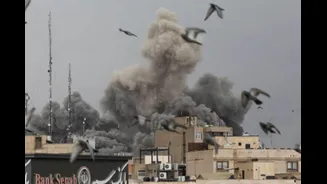
The United States launched strikes against military facilities on Qeshm Island on Tuesday, following what Washington described as a series of Iranian missile and drone attacks targeting Gulf states and threatening maritime security.
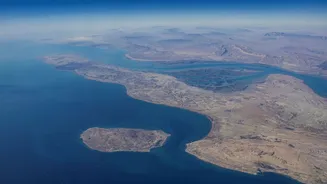
Qeshm Island is a large Iranian island that sits at the mouth of the Strait of Hormuz.
According to the US military's Central Command (CENTCOM), Iran launched missiles toward both Kuwait and Bahrain. American officials said the projectiles aimed at Kuwait never reached their destination because they broke apart while in flight.
The missiles heading toward Bahrain were intercepted by American and Bahraini air-defence systems before they could strike their targets.
At the same time, CENTCOM reported that several Iranian drones aimed at American personnel stationed in Kuwait were also destroyed. The US military in response carried out what it described as self-defence strikes against Iranian military infrastructure on Qeshm Island.
CENTCOM stated that the operation targeted a military ground-control station used to operate unmanned aerial vehicles and an Iranian communications installation located in the southern part of the island.
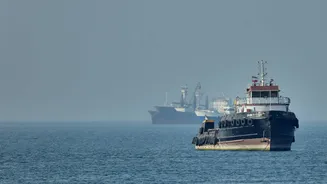
American officials said the decision to strike came after US forces intercepted three one-way attack drones that were threatening civilian maritime traffic operating in regional waters.
The objective, according to the US military, was to diminish Iran's ability to coordinate drone operations and missile-related activities across the Gulf by degrading command-and-control systems located on Qeshm.
Covering approximately 1,491 square kilometres, Qeshm is the largest island in the Persian Gulf. It lies only about 22 kilometres south of Bandar Abbas, one of Iran's most important port cities.
Its location places it directly alongside some of the most strategically important shipping routes in the world.
The island stretches parallel to the Iranian coastline and overlooks waterways connected to the Strait of Hormuz, through which a substantial portion of global oil and liquefied natural gas shipments normally pass.
Control over territory in this area provides significant leverage over maritime commerce. According to the latest information, Qeshm has evolved into a major operating centre for the Islamic Revolutionary Guard Corps (IRGC), particularly its naval and aerospace branches.
The island hosts naval facilities, drone-related infrastructure, communications systems and military command centres. Its position also allows Iranian forces to operate close to international shipping lanes while maintaining support from facilities located on the mainland.
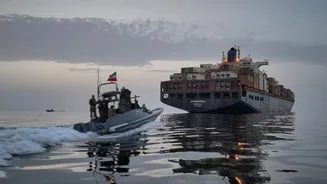
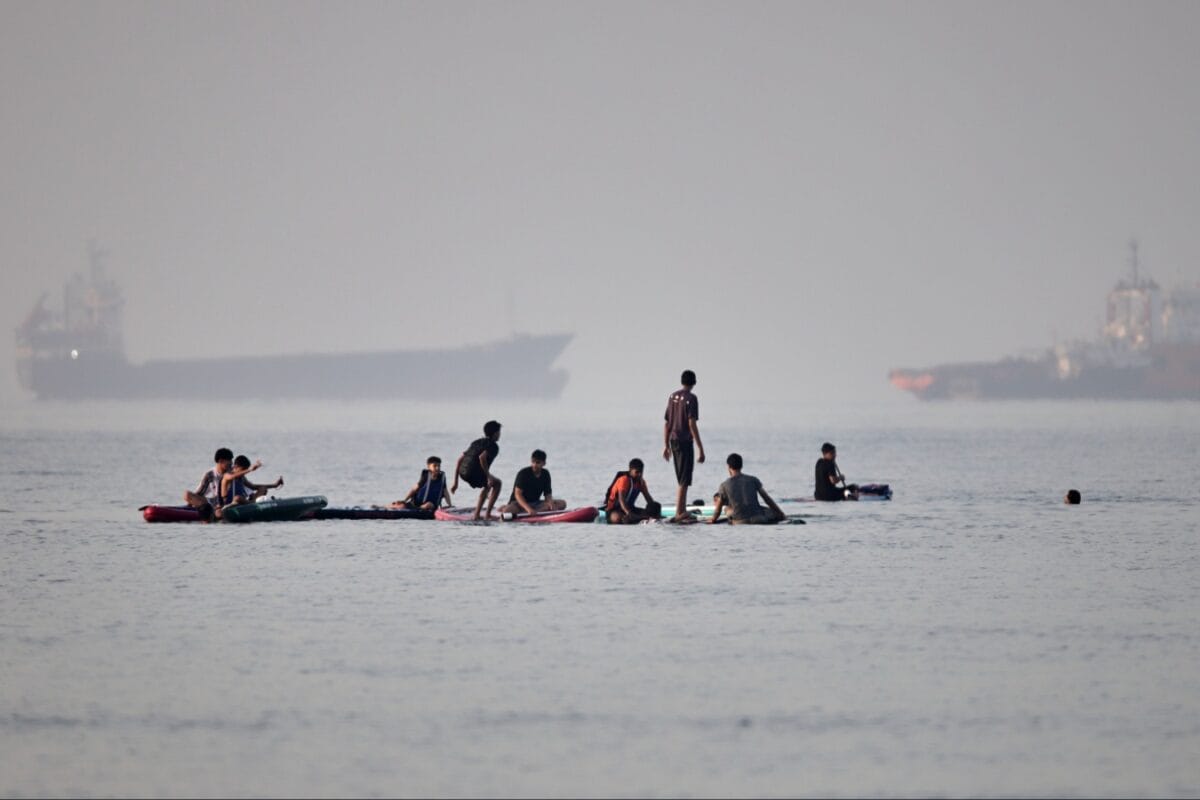
Iran has maintained what has been described as an effective blockade of the Strait of Hormuz since March 4. Although not recognised internationally as a legal blockade, the restrictions have reportedly reduced shipping activity through the area by more than 70 per cent.
The Queshm island has emerged as the operational centre supporting these efforts. Because of its location near narrow waterways separating the island from the Iranian mainland, Tehran has been able to exercise influence over vessel movements in the area.
Military analysts say that commercial ships navigating through the region have increasingly been forced into confined routes where they remain within range of Iranian military assets.
As a result, US and allied strategy has shifted beyond deterrence and increasingly focused on reducing Iran's capability to enforce restrictions around the Strait.
American officials view attacks against military infrastructure on Qeshm as part of a broader effort to restore freedom of navigation through one of the world's most economically important maritime corridors.
The consequences of the disruption have extended well beyond the Gulf. Shipping companies, insurers and energy traders have all been forced to adjust operations amid concerns over security and access.
The island reportedly contains a network of heavily fortified underground facilities often referred to as "missile cities."
These installations have been built into the island's rugged terrain, which includes extensive cave systems and geological formations that provide natural protection. According to assessments cited in reports, these underground complexes are designed to withstand significant aerial bombardment.
They are believed to house anti-ship ballistic missiles, cruise missiles, naval mines, underwater drones and fast-attack craft that can be used in swarm-style maritime operations. The island also serves as a forward operating location for Iranian drone activities.
Military facilities on Qeshm reportedly support reconnaissance and strike missions involving systems such as the Mohajer-6 and Shahed 171. Operating these assets from the island rather than from inland locations allows Iranian forces to position equipment closer to potential targets in Gulf waters.
Qeshm has repeatedly appeared in reports concerning military operations since the conflict escalated. On March 7, a major desalination facility on the island was destroyed. The plant had supplied fresh water to approximately 30 villages.
Iran accused the United States of carrying out the strike and described the incident as a civilian war crime. The United States, Israel and the United Arab Emirates denied involvement.
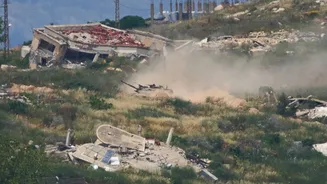
A few days later, between March 13 and March 17, satellite imagery reportedly showed extensive damage to military facilities on the island. The imagery indicated that strikes had hit an IRGC naval installation and a drone airfield.
Reports stated that 19 structures were destroyed, including reinforced bunkers allegedly used for storing attack drones and mobile command vehicles.
Another major attack was reported on March 31. Independent intelligence assessments suggested that underground storage facilities on the island may have been targeted during a large-scale joint operation involving American and Israeli forces.
On the same day that Qeshm was struck, the US military disabled a tanker attempting to reach Iran. CENTCOM released footage showing a Hellfire missile striking the engine room of the Botswana-flagged tanker M/T Lexie.
According to the US military, the vessel repeatedly ignored instructions issued by American forces. "The ship's crew ignored repeated warnings, failing to comply with directions from U.S. forces multiple times over a 24-hour period," Central Command said in a statement.
"A US aircraft ultimately disabled the vessel by firing a Hellfire missile into the ship’s engine room, preventing the tanker from reaching Iran."
US officials said the Lexie became the sixth vessel disabled since the US blockade was introduced on April 13. The military also reported that 122 vessels attempting to enter or leave Iranian ports had been redirected.
According to Iranian media reports, the Revolutionary Guard viewed the American action as an attack on shipping connected to Iran.
The Iranian Revolutionary Guard said it targeted the headquarters of the US Navy's Fifth Fleet in Bahrain as well as another Gulf state, while CENTCOM reported that all incoming threats were intercepted
The Guard also connected its actions directly to what it characterised as American aggression. “We had previously warned that in case of aggression, the response would be different and more severe, and we acted accordingly," the Guard said in its statement.
Iranian media additionally reported attacks on vessels operating in the Gulf. One such claim involved a ship identified as "Panaya," which Tehran said was targeted in retaliation for an alleged US attack on an Iranian tanker near Hormuz.
The IRGC also issued a warning regarding the future security of maritime traffic. "Disrupting the security of the Strait of Hormuz will carry a heavy price for the U.S. military," Iranian media cited the IRGC as saying.
Reports published by Iranian news agencies
Fars and Tasnim indicated that Tehran had stopped communicating with mediators regarding an extension of a ceasefire arrangement involving the United States and Israel.
The reports raised questions about the future of ongoing negotiations. United States President Donald Trump disputed the claims and insisted contacts remained active.
“The conversations between us have been going on continuously, including four days ago, three days ago, two days ago, one day ago and today,” Trump said in a social media post.
"Where they lead, one never knows, but as I told Iran, ‘It’s time, one way or another, for you to make a Deal."
US Secretary of State Marco Rubio also addressed aspects of the diplomatic process while appearing before lawmakers in Washington. Although he did not directly discuss the reports about communication channels, Rubio expressed guarded optimism regarding negotiations surrounding Iran's nuclear programme.
At the same time, he cautioned that there was no guarantee of securing an agreement acceptable to all parties. Rubio also reiterated that sanctions relief would depend on Iran abandoning nuclear activities.
During a heated exchange with Democratic Senator Cory Booker, Rubio declared, "The war is over," though the statement was disputed during the hearing.
Trump has repeatedly stated that preventing Iran from obtaining nuclear weapons remains his primary goal. Iran continues to reject accusations that it is pursuing a nuclear bomb and maintains that its nuclear programme serves peaceful purposes.
Tehran is seeking access to oil revenues, relief from sanctions, the lifting of restrictions affecting its ports and continued influence over the Strait of Hormuz.
With inputs from agencies
Qeshm Island is a large Iranian island that sits at the mouth of the Strait of Hormuz.
What triggered the latest US strikes on Qeshm Island?
According to the US military's Central Command (CENTCOM), Iran launched missiles toward both Kuwait and Bahrain. American officials said the projectiles aimed at Kuwait never reached their destination because they broke apart while in flight.
The missiles heading toward Bahrain were intercepted by American and Bahraini air-defence systems before they could strike their targets.
At the same time, CENTCOM reported that several Iranian drones aimed at American personnel stationed in Kuwait were also destroyed. The US military in response carried out what it described as self-defence strikes against Iranian military infrastructure on Qeshm Island.
CENTCOM stated that the operation targeted a military ground-control station used to operate unmanned aerial vehicles and an Iranian communications installation located in the southern part of the island.
American officials said the decision to strike came after US forces intercepted three one-way attack drones that were threatening civilian maritime traffic operating in regional waters.
The objective, according to the US military, was to diminish Iran's ability to coordinate drone operations and missile-related activities across the Gulf by degrading command-and-control systems located on Qeshm.
Why is Qeshm Island strategically important for Iran?
Covering approximately 1,491 square kilometres, Qeshm is the largest island in the Persian Gulf. It lies only about 22 kilometres south of Bandar Abbas, one of Iran's most important port cities.
Its location places it directly alongside some of the most strategically important shipping routes in the world.
The island stretches parallel to the Iranian coastline and overlooks waterways connected to the Strait of Hormuz, through which a substantial portion of global oil and liquefied natural gas shipments normally pass.
Control over territory in this area provides significant leverage over maritime commerce. According to the latest information, Qeshm has evolved into a major operating centre for the Islamic Revolutionary Guard Corps (IRGC), particularly its naval and aerospace branches.
The island hosts naval facilities, drone-related infrastructure, communications systems and military command centres. Its position also allows Iranian forces to operate close to international shipping lanes while maintaining support from facilities located on the mainland.
How has Qeshm been linked to the Strait of Hormuz crisis?
Iran has maintained what has been described as an effective blockade of the Strait of Hormuz since March 4. Although not recognised internationally as a legal blockade, the restrictions have reportedly reduced shipping activity through the area by more than 70 per cent.
The Queshm island has emerged as the operational centre supporting these efforts. Because of its location near narrow waterways separating the island from the Iranian mainland, Tehran has been able to exercise influence over vessel movements in the area.
Military analysts say that commercial ships navigating through the region have increasingly been forced into confined routes where they remain within range of Iranian military assets.
As a result, US and allied strategy has shifted beyond deterrence and increasingly focused on reducing Iran's capability to enforce restrictions around the Strait.
American officials view attacks against military infrastructure on Qeshm as part of a broader effort to restore freedom of navigation through one of the world's most economically important maritime corridors.
The consequences of the disruption have extended well beyond the Gulf. Shipping companies, insurers and energy traders have all been forced to adjust operations amid concerns over security and access.
What military infrastructure exists on the island?
The island reportedly contains a network of heavily fortified underground facilities often referred to as "missile cities."
These installations have been built into the island's rugged terrain, which includes extensive cave systems and geological formations that provide natural protection. According to assessments cited in reports, these underground complexes are designed to withstand significant aerial bombardment.
They are believed to house anti-ship ballistic missiles, cruise missiles, naval mines, underwater drones and fast-attack craft that can be used in swarm-style maritime operations. The island also serves as a forward operating location for Iranian drone activities.
Military facilities on Qeshm reportedly support reconnaissance and strike missions involving systems such as the Mohajer-6 and Shahed 171. Operating these assets from the island rather than from inland locations allows Iranian forces to position equipment closer to potential targets in Gulf waters.
How has Qeshm been targeted earlier?
Qeshm has repeatedly appeared in reports concerning military operations since the conflict escalated. On March 7, a major desalination facility on the island was destroyed. The plant had supplied fresh water to approximately 30 villages.
Iran accused the United States of carrying out the strike and described the incident as a civilian war crime. The United States, Israel and the United Arab Emirates denied involvement.
A few days later, between March 13 and March 17, satellite imagery reportedly showed extensive damage to military facilities on the island. The imagery indicated that strikes had hit an IRGC naval installation and a drone airfield.
Reports stated that 19 structures were destroyed, including reinforced bunkers allegedly used for storing attack drones and mobile command vehicles.
Another major attack was reported on March 31. Independent intelligence assessments suggested that underground storage facilities on the island may have been targeted during a large-scale joint operation involving American and Israeli forces.
How has the US blockade of Iran been faring?
On the same day that Qeshm was struck, the US military disabled a tanker attempting to reach Iran. CENTCOM released footage showing a Hellfire missile striking the engine room of the Botswana-flagged tanker M/T Lexie.
According to the US military, the vessel repeatedly ignored instructions issued by American forces. "The ship's crew ignored repeated warnings, failing to comply with directions from U.S. forces multiple times over a 24-hour period," Central Command said in a statement.
"A US aircraft ultimately disabled the vessel by firing a Hellfire missile into the ship’s engine room, preventing the tanker from reaching Iran."
US officials said the Lexie became the sixth vessel disabled since the US blockade was introduced on April 13. The military also reported that 122 vessels attempting to enter or leave Iranian ports had been redirected.
According to Iranian media reports, the Revolutionary Guard viewed the American action as an attack on shipping connected to Iran.
The Iranian Revolutionary Guard said it targeted the headquarters of the US Navy's Fifth Fleet in Bahrain as well as another Gulf state, while CENTCOM reported that all incoming threats were intercepted
The Guard also connected its actions directly to what it characterised as American aggression. “We had previously warned that in case of aggression, the response would be different and more severe, and we acted accordingly," the Guard said in its statement.
Iranian media additionally reported attacks on vessels operating in the Gulf. One such claim involved a ship identified as "Panaya," which Tehran said was targeted in retaliation for an alleged US attack on an Iranian tanker near Hormuz.
The IRGC also issued a warning regarding the future security of maritime traffic. "Disrupting the security of the Strait of Hormuz will carry a heavy price for the U.S. military," Iranian media cited the IRGC as saying.
How are negotiations faring?
Reports published by Iranian news agencies
The reports raised questions about the future of ongoing negotiations. United States President Donald Trump disputed the claims and insisted contacts remained active.
“The conversations between us have been going on continuously, including four days ago, three days ago, two days ago, one day ago and today,” Trump said in a social media post.
"Where they lead, one never knows, but as I told Iran, ‘It’s time, one way or another, for you to make a Deal."
US Secretary of State Marco Rubio also addressed aspects of the diplomatic process while appearing before lawmakers in Washington. Although he did not directly discuss the reports about communication channels, Rubio expressed guarded optimism regarding negotiations surrounding Iran's nuclear programme.
At the same time, he cautioned that there was no guarantee of securing an agreement acceptable to all parties. Rubio also reiterated that sanctions relief would depend on Iran abandoning nuclear activities.
During a heated exchange with Democratic Senator Cory Booker, Rubio declared, "The war is over," though the statement was disputed during the hearing.
Trump has repeatedly stated that preventing Iran from obtaining nuclear weapons remains his primary goal. Iran continues to reject accusations that it is pursuing a nuclear bomb and maintains that its nuclear programme serves peaceful purposes.
Tehran is seeking access to oil revenues, relief from sanctions, the lifting of restrictions affecting its ports and continued influence over the Strait of Hormuz.
With inputs from agencies