







What is the story about?
The decade-long ownership dispute over Thechikottukavu Ramachandran, commonly known as Raman, is finally over. Raman, Kerala’s tallest elephant, has been all the way from the police station in Kerala to the magistrate’s court, the Kerala High Court, and the Supreme Court.
Last week, the top court ordered the Kerala government to take charge of the elephant and house it in a rehabilitation centre, pending a final decision on its ownership.
A bench of Justices Dipankar Datta and Satish Chandra Sharma held Krishnankutty, the state's tallest captive elephant's caretaker, guilty of contempt and fined him Rs 2,000 for violating the assurance given to the top court on 6 August 2025 that the elephant "would not be made to participate in any commercial or temple activities."
The court ultimately clarified that the transfer of elephant custody is an interim measure and will be subject to the final decision in the ownership row. The court ruling refrained from disputing who owned or held legal rights to the animal and instead turned to the question of the welfare of a “voiceless” animal.
We take a look at the case.
Menon, representing Mutt, argued that Raman belongs to his client and that the elephant was handed over to Krishnankutty for care. According to Menon, Krishnankutty subsequently unlawfully retained custody of Raman and relied on fake or invalid gift documents to assert ownership.
Mutt and Menon further argued that even if such transfers were valid, any transfer without the approval under the Wildlife (Protection) Act, 1972, would be null and void.
On the other hand, Krishnankutty, in his defence, maintained that the elephant was lawfully entrusted to him under the 2017 gift deeds. And since then, he has been taking care of the elephant thereafter, according to Krishnankutty.
Under the Wildlife (Protection) Act, any transfer of an Asian elephant is subject to stringent regulatory oversight. As a Schedule I protected species, an elephant can only be transferred with the prior written approval of the state's Chief Wildlife Warden, as elephant ownership/transfer is heavily regulated.
Mutt asserts that no such approval was acquired in this case.
The Kerala High Court, while passing an interim appeal, noted the Forest Department records, which include a certificate of ownership, a microchip implantation certificate, and entries in the captive-elephant data book, back the Mutt’s prima facie claim over Raman.
The dispute started around 2018 and waded into a criminal case, with Krishnankutty charged under Sections 406 (criminal breach of trust) and 420 (cheating) of the Indian Penal Code (IPC),
the Print reported. In 2023, a criminal case was registered based on the complaint filed by Menon.
Alongside the criminal case, the Mutt approached the Judicial First Class Magistrate’s Court in Karunagappally to file an application under Section 451 of the Code of Criminal Procedure (CrPC), which empowers courts to decide on the custody and disposal of "property" while proceedings are pending.
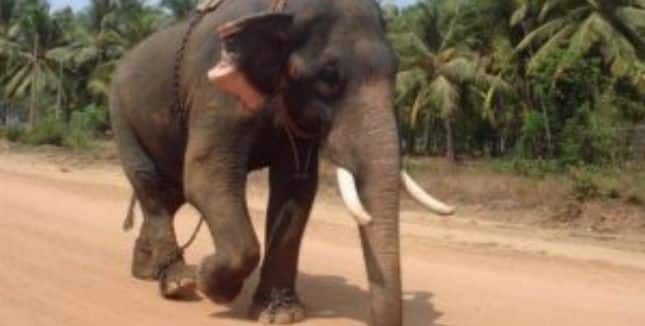
Raman, standing 11 feet tall and weighing roughly 6,000 kg, was at the centre of the "property" dispute.
In 2023, the trial court gave Raman's interim custody to the Mutt through Menon; however, the order was challenged before the High Court.
In 2024, the Supreme Court ordered that Raman's existing custody arrangement be maintained while the legal questions were adjudicated and requested a report on the elephant’s health and welfare. This status quo effectively allowed Raman to remain in Krishnankutty's custody.
On the top court's order allowing Raman to remain with Krishnankutty, Mutt moved a fresh application in 2025, raising concerns about Raman’s physical condition. He also alleged that the elephant is being used in temple festivals and commercial events.
The court then sought a report on Raman’s health by Kerala’s Chief Wildlife Warden. Krishnankutty assured the court that "the elephant would not be used for any commercial or temple activities in the meanwhile," and was officially recorded in the court’s order dated 6 August 2025.
The report on the elephant's health was delayed because he was going through musth, a periodic condition in adult male elephants characterised by heightened aggression and hormonal changes.
In the final report submission, it was noted that a three-member team's inspection found that Raman was participating in a festival ceremony at a temple.
Krishnankutty, in a written submission before the court, admitted that the temple of attendance of Raman, arguing on the doctors' advice that the elephant was required to be taken on walks for his physical recovery when emerging from musth.
However, this argument of Krishnankutty could not persuade the top court properly, and it declared that Krishnankutty had “wilfully disobeyed" an undertaking made before the court.
The Supreme Court said, "It is truly unfortunate that the elephant in question, i.e., Raman, who also happens to be the tallest elephant in the State of Kerala, has been subjected to commercial exploitation despite an order restraining such exploitation, that too on the strength of an undertaking made before this Court."
"We would be failing in our duty towards the voiceless if we turn a blind eye towards such defiance. We cannot be a mute spectator, more so in matters pertaining to voiceless animals, whose well-being is also of paramount importance," the court added.
Raman is Kerala's most famous, giant and well-known elephant; however, it also has a dubious legacy. According to the South First 2022 report, Raman has killed 13 people, six among them his own mahouts, and three were other captive elephants.
In May 2019, the then Thrissur District Collector TV Anupama prohibited the practice of parading Raman on Thrissur Pooram, noting his failing health and killing record.
The rationale behind the step was the death of two revellers in a stampede that began when Raman ran amok at a temple festival. Though it was not entirely his fault, as he was spooked by the blast of firecrackers.
The report quoted an elephant expert, VK Venkitachalam, who said Raman began seeing anyone who came near him as dangerous because his eyesight was failing.
"He pushes people away physically out of fear. The deaths are occurring because of that," he said.
Raman was hit by a manhout after the elephant could not follow his instructions due to a language barrier, and since then, Raman either gets frightened whenever people approach him, or sometimes turns violent.
With inputs from agencies
Last week, the top court ordered the Kerala government to take charge of the elephant and house it in a rehabilitation centre, pending a final decision on its ownership.
A bench of Justices Dipankar Datta and Satish Chandra Sharma held Krishnankutty, the state's tallest captive elephant's caretaker, guilty of contempt and fined him Rs 2,000 for violating the assurance given to the top court on 6 August 2025 that the elephant "would not be made to participate in any commercial or temple activities."
The court ultimately clarified that the transfer of elephant custody is an interim measure and will be subject to the final decision in the ownership row. The court ruling refrained from disputing who owned or held legal rights to the animal and instead turned to the question of the welfare of a “voiceless” animal.
We take a look at the case.
What's the ownership dispute over Raman?
There were two competing claims at the centre of the dispute over Raman's custody and ownership. One is by Mata Amritanandamayi Mutt, represented by authorised representative Jayakrishna Menon, and the other is by Krishnankutty, who claims he has cared for the elephant for the past 10 to 12 years.
Menon, representing Mutt, argued that Raman belongs to his client and that the elephant was handed over to Krishnankutty for care. According to Menon, Krishnankutty subsequently unlawfully retained custody of Raman and relied on fake or invalid gift documents to assert ownership.
Mutt and Menon further argued that even if such transfers were valid, any transfer without the approval under the Wildlife (Protection) Act, 1972, would be null and void.
On the other hand, Krishnankutty, in his defence, maintained that the elephant was lawfully entrusted to him under the 2017 gift deeds. And since then, he has been taking care of the elephant thereafter, according to Krishnankutty.
Under the Wildlife (Protection) Act, any transfer of an Asian elephant is subject to stringent regulatory oversight. As a Schedule I protected species, an elephant can only be transferred with the prior written approval of the state's Chief Wildlife Warden, as elephant ownership/transfer is heavily regulated.
Mutt asserts that no such approval was acquired in this case.
First trial court, Kerala High Court & then SC
The Kerala High Court, while passing an interim appeal, noted the Forest Department records, which include a certificate of ownership, a microchip implantation certificate, and entries in the captive-elephant data book, back the Mutt’s prima facie claim over Raman.
The dispute started around 2018 and waded into a criminal case, with Krishnankutty charged under Sections 406 (criminal breach of trust) and 420 (cheating) of the Indian Penal Code (IPC),
According to the South First 2022 report, Raman has killed 13 people, six among them his own mahouts. Image courtesy: X
Alongside the criminal case, the Mutt approached the Judicial First Class Magistrate’s Court in Karunagappally to file an application under Section 451 of the Code of Criminal Procedure (CrPC), which empowers courts to decide on the custody and disposal of "property" while proceedings are pending.
Raman, standing 11 feet tall and weighing roughly 6,000 kg, was at the centre of the "property" dispute.
In 2023, the trial court gave Raman's interim custody to the Mutt through Menon; however, the order was challenged before the High Court.
In 2024, the Supreme Court ordered that Raman's existing custody arrangement be maintained while the legal questions were adjudicated and requested a report on the elephant’s health and welfare. This status quo effectively allowed Raman to remain in Krishnankutty's custody.
On the top court's order allowing Raman to remain with Krishnankutty, Mutt moved a fresh application in 2025, raising concerns about Raman’s physical condition. He also alleged that the elephant is being used in temple festivals and commercial events.
The court then sought a report on Raman’s health by Kerala’s Chief Wildlife Warden. Krishnankutty assured the court that "the elephant would not be used for any commercial or temple activities in the meanwhile," and was officially recorded in the court’s order dated 6 August 2025.
The report on the elephant's health was delayed because he was going through musth, a periodic condition in adult male elephants characterised by heightened aggression and hormonal changes.
In the final report submission, it was noted that a three-member team's inspection found that Raman was participating in a festival ceremony at a temple.
Krishnankutty, in a written submission before the court, admitted that the temple of attendance of Raman, arguing on the doctors' advice that the elephant was required to be taken on walks for his physical recovery when emerging from musth.
However, this argument of Krishnankutty could not persuade the top court properly, and it declared that Krishnankutty had “wilfully disobeyed" an undertaking made before the court.
What the court said
The Supreme Court said, "It is truly unfortunate that the elephant in question, i.e., Raman, who also happens to be the tallest elephant in the State of Kerala, has been subjected to commercial exploitation despite an order restraining such exploitation, that too on the strength of an undertaking made before this Court."
"We would be failing in our duty towards the voiceless if we turn a blind eye towards such defiance. We cannot be a mute spectator, more so in matters pertaining to voiceless animals, whose well-being is also of paramount importance," the court added.
What's Raman's dubious past record?
Raman is Kerala's most famous, giant and well-known elephant; however, it also has a dubious legacy. According to the South First 2022 report, Raman has killed 13 people, six among them his own mahouts, and three were other captive elephants.
In May 2019, the then Thrissur District Collector TV Anupama prohibited the practice of parading Raman on Thrissur Pooram, noting his failing health and killing record.
The rationale behind the step was the death of two revellers in a stampede that began when Raman ran amok at a temple festival. Though it was not entirely his fault, as he was spooked by the blast of firecrackers.
The report quoted an elephant expert, VK Venkitachalam, who said Raman began seeing anyone who came near him as dangerous because his eyesight was failing.
"He pushes people away physically out of fear. The deaths are occurring because of that," he said.
Raman was hit by a manhout after the elephant could not follow his instructions due to a language barrier, and since then, Raman either gets frightened whenever people approach him, or sometimes turns violent.
With inputs from agencies