







What is the story about?
The Reserve Bank of India (RBI) has proposed linking the digital currencies of BRICS countries to facilitate smoother cross-border trade and tourism payments, according to two sources familiar with the matter. If adopted, the initiative could gradually reduce dependence on the U.S. dollar at a time of heightened geopolitical tensions and renewed trade frictions.
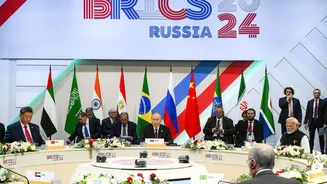
The RBI has recommended that the proposal for connecting central bank digital currencies (CBDCs) be placed on the agenda of the 2026 BRICS summit, which India will host later this year. If approved by the government, this would mark the first formal push by BRICS to integrate their official digital currencies. The bloc currently includes Brazil, Russia, India, China and South Africa, along with newer members such as the UAE, Iran and Indonesia.
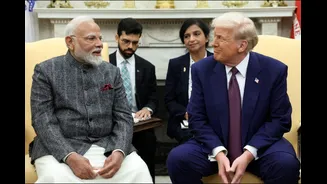
The move is likely to draw criticism from Washington. U.S. President Donald Trump has previously labelled BRICS as “anti-American” and warned against efforts to bypass the dollar, even threatening tariffs on member countries. The RBI, the Indian government, and several BRICS central banks declined to comment on the Reuters report.
The proposal builds on a 2025 BRICS declaration in Rio de Janeiro that called for interoperability between member payment systems to make cross-border transactions faster and cheaper. The RBI has separately signalled interest in linking India’s e-rupee with other countries’ CBDCs to streamline international payments and expand the rupee’s global footprint, while stressing that this is not aimed at de-dollarisation.
Although no BRICS country has fully rolled out its digital currency, all core members are running pilot projects. India’s e-rupee has already onboarded about 7 million retail users since its launch in December 2022, while China has been promoting international use of its digital yuan.
To support adoption, the RBI has enabled offline e-rupee payments, programmability for targeted government subsidies, and integration with fintech wallets. However, sources cautioned that technical compatibility, governance frameworks, and mechanisms to manage trade imbalances would be critical to making a BRICS CBDC linkage workable.
One idea under discussion is the use of bilateral foreign exchange swap arrangements between central banks to settle periodic imbalances, as past efforts to trade in local currencies — notably between India and Russia — ran into difficulties due to surplus rupee balances.
Despite renewed enthusiasm, analysts say the path ahead is long. Previous BRICS efforts to create a common currency were abandoned after internal disagreements. At the same time, rising stablecoin usage globally has slowed momentum for CBDCs elsewhere, though India continues to position the e-rupee as a safer, regulated alternative.
RBI Deputy Governor T. Rabi Sankar recently warned that stablecoins pose risks to monetary stability and financial systems, reinforcing India’s push for state-backed digital money. The RBI fears that widespread stablecoin use could fragment domestic payments and weaken India’s digital ecosystem.
As BRICS re-emerges as a geopolitical counterweight amid U.S.-led trade tensions, India’s proposal signals a renewed effort to reshape global payments architecture — but concrete outcomes will depend on consensus among member.
The RBI has recommended that the proposal for connecting central bank digital currencies (CBDCs) be placed on the agenda of the 2026 BRICS summit, which India will host later this year. If approved by the government, this would mark the first formal push by BRICS to integrate their official digital currencies. The bloc currently includes Brazil, Russia, India, China and South Africa, along with newer members such as the UAE, Iran and Indonesia.
The move is likely to draw criticism from Washington. U.S. President Donald Trump has previously labelled BRICS as “anti-American” and warned against efforts to bypass the dollar, even threatening tariffs on member countries. The RBI, the Indian government, and several BRICS central banks declined to comment on the Reuters report.
The proposal builds on a 2025 BRICS declaration in Rio de Janeiro that called for interoperability between member payment systems to make cross-border transactions faster and cheaper. The RBI has separately signalled interest in linking India’s e-rupee with other countries’ CBDCs to streamline international payments and expand the rupee’s global footprint, while stressing that this is not aimed at de-dollarisation.
Although no BRICS country has fully rolled out its digital currency, all core members are running pilot projects. India’s e-rupee has already onboarded about 7 million retail users since its launch in December 2022, while China has been promoting international use of its digital yuan.
To support adoption, the RBI has enabled offline e-rupee payments, programmability for targeted government subsidies, and integration with fintech wallets. However, sources cautioned that technical compatibility, governance frameworks, and mechanisms to manage trade imbalances would be critical to making a BRICS CBDC linkage workable.
One idea under discussion is the use of bilateral foreign exchange swap arrangements between central banks to settle periodic imbalances, as past efforts to trade in local currencies — notably between India and Russia — ran into difficulties due to surplus rupee balances.
Despite renewed enthusiasm, analysts say the path ahead is long. Previous BRICS efforts to create a common currency were abandoned after internal disagreements. At the same time, rising stablecoin usage globally has slowed momentum for CBDCs elsewhere, though India continues to position the e-rupee as a safer, regulated alternative.
RBI Deputy Governor T. Rabi Sankar recently warned that stablecoins pose risks to monetary stability and financial systems, reinforcing India’s push for state-backed digital money. The RBI fears that widespread stablecoin use could fragment domestic payments and weaken India’s digital ecosystem.
As BRICS re-emerges as a geopolitical counterweight amid U.S.-led trade tensions, India’s proposal signals a renewed effort to reshape global payments architecture — but concrete outcomes will depend on consensus among member.