








What is the story about?
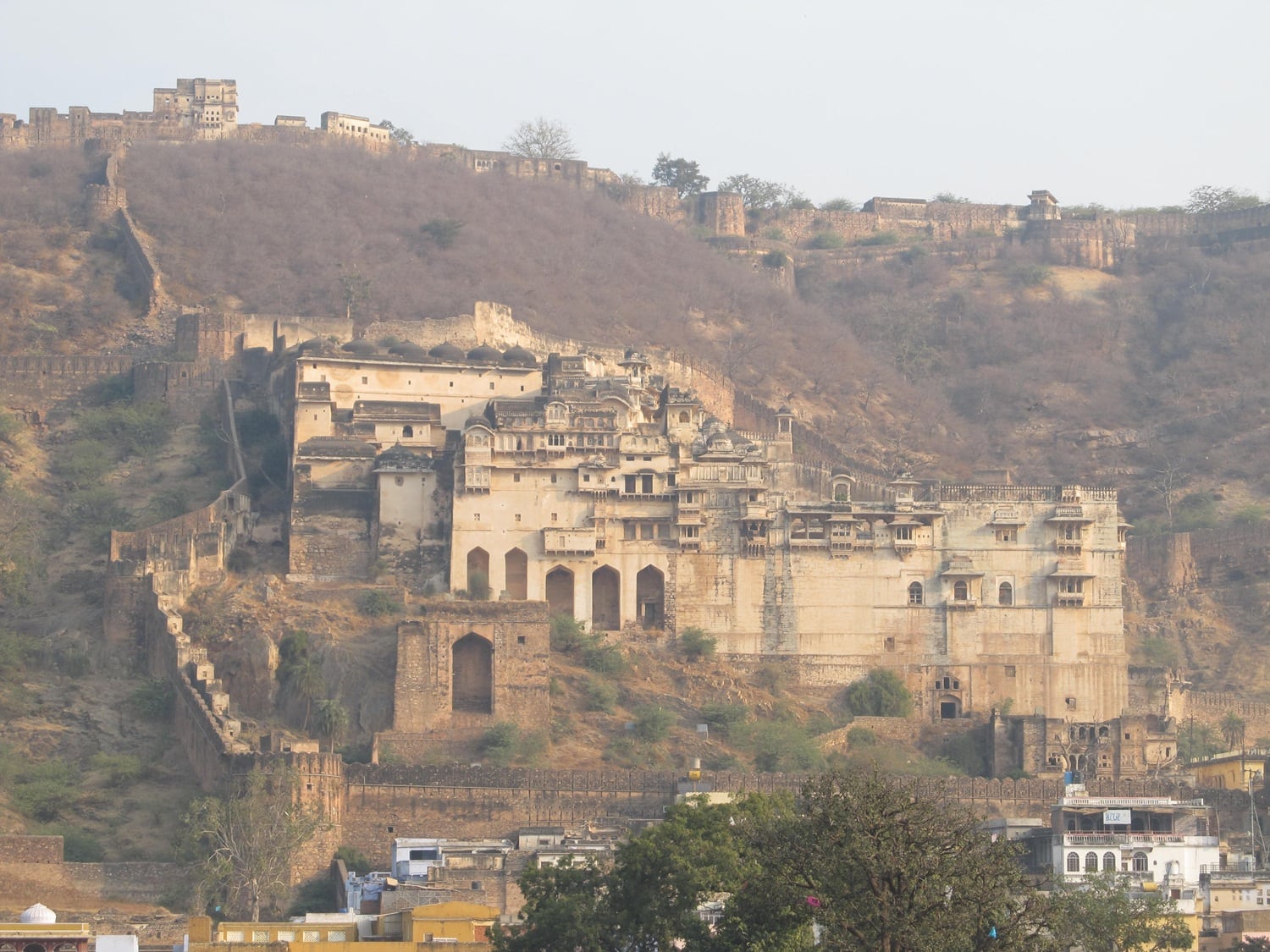
On World Water Day, as conversations around sustainability gain urgency, there is no place in India that symbolises water conservation as beautifully and as intricately as Bundi. Nestled in the Hadoti region of Rajasthan, Bundi arrests the visitor’s eye with its striking Taragarh Fort. And further captivates the mind with brilliant paintings inside the fort’s maze of palaces.
But beyond the arresting skyline and superb paintings is an even more compelling narrative — one carved in stone, shaped by ingenuity, and sustained by reverence: the story of its water architecture. In a region where water is sacred, Bundi is not just a town that stores water—it is one that honours it. Its baodis (stepwells), kunds (stepped tanks), and lakes are not merely utilitarian structures; they are architectural symphonies where geometry, devotion, and survival converge. Built over centuries by rulers, queens, nobles, and merchants, these structures transformed water harvesting into an art form—ensuring that every drop of rain was captured, preserved, and celebrated. Let's dive into a few examples of Bundi’s water legacy.
Rani ji ki Baodi: A Queen’s Legacy in Stone
The most iconic of Bundi’s stepwells, Rani ji ki Baodi stands as a monumental tribute to both water and womanhood. Commissioned in 1699 by Rani Nathavati Ji, the widowed queen of Rao Raja Anirudh Singh, this baodi is a masterclass in Rajput architecture. Descending several storeys into the earth, it is framed by ornate pillars, delicate arches, and sculpted niches that house deities and celestial figures.
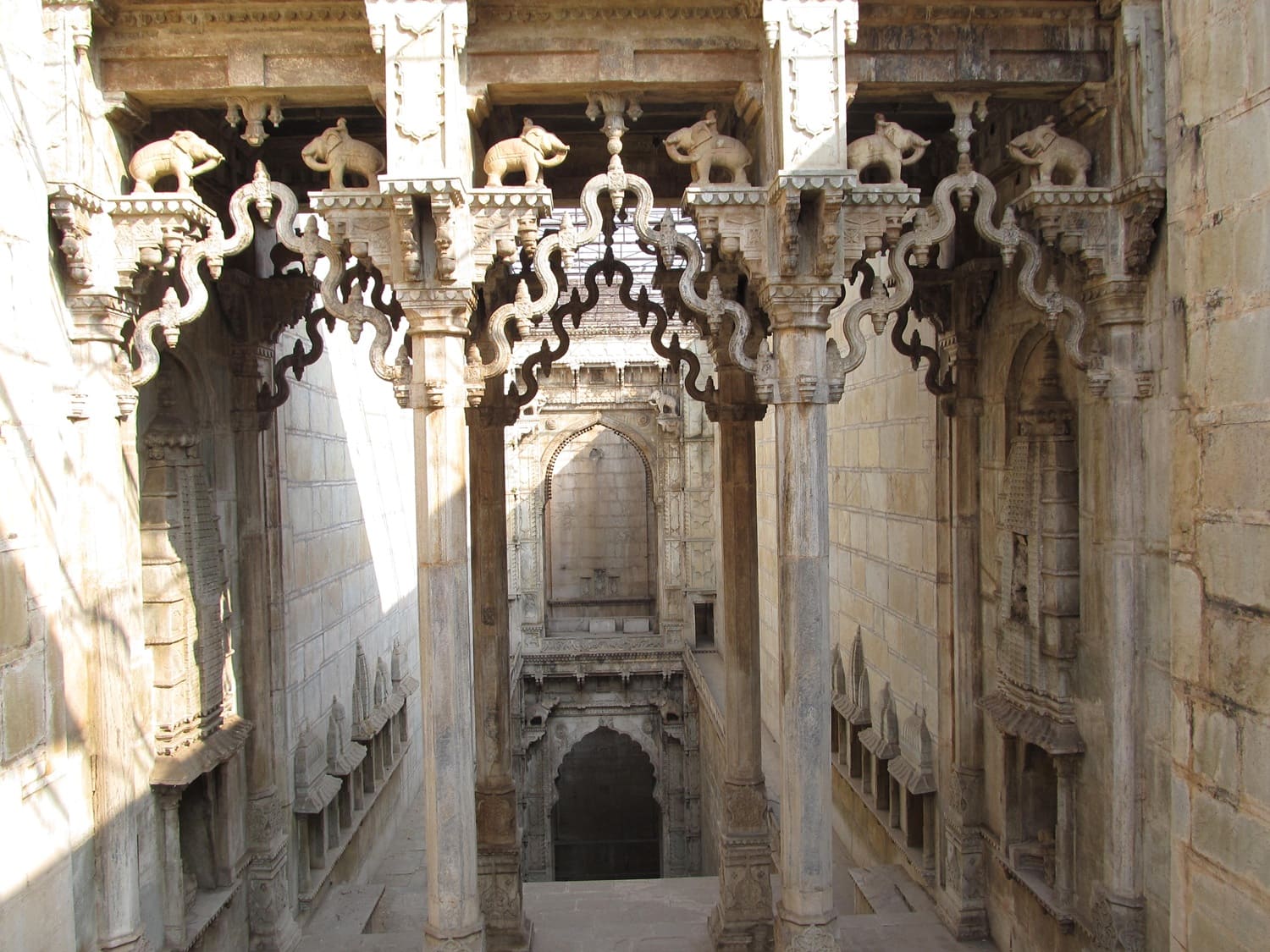
Unlike many stepwells that are austere in design, Rani ji ki Baodi is strikingly ornamental. Elephants guard its entrances, and multi-tiered pavilions create a play of light and shadow that changes through the day. More than a water reservoir, it functioned as a social and spiritual space—where women gathered, rituals were performed, and the act of drawing water became almost ceremonial. Today, it remains a powerful symbol of Bundi’s commitment to both aesthetics and sustainability.
Dabhai Kund: Geometry Meets Devotion
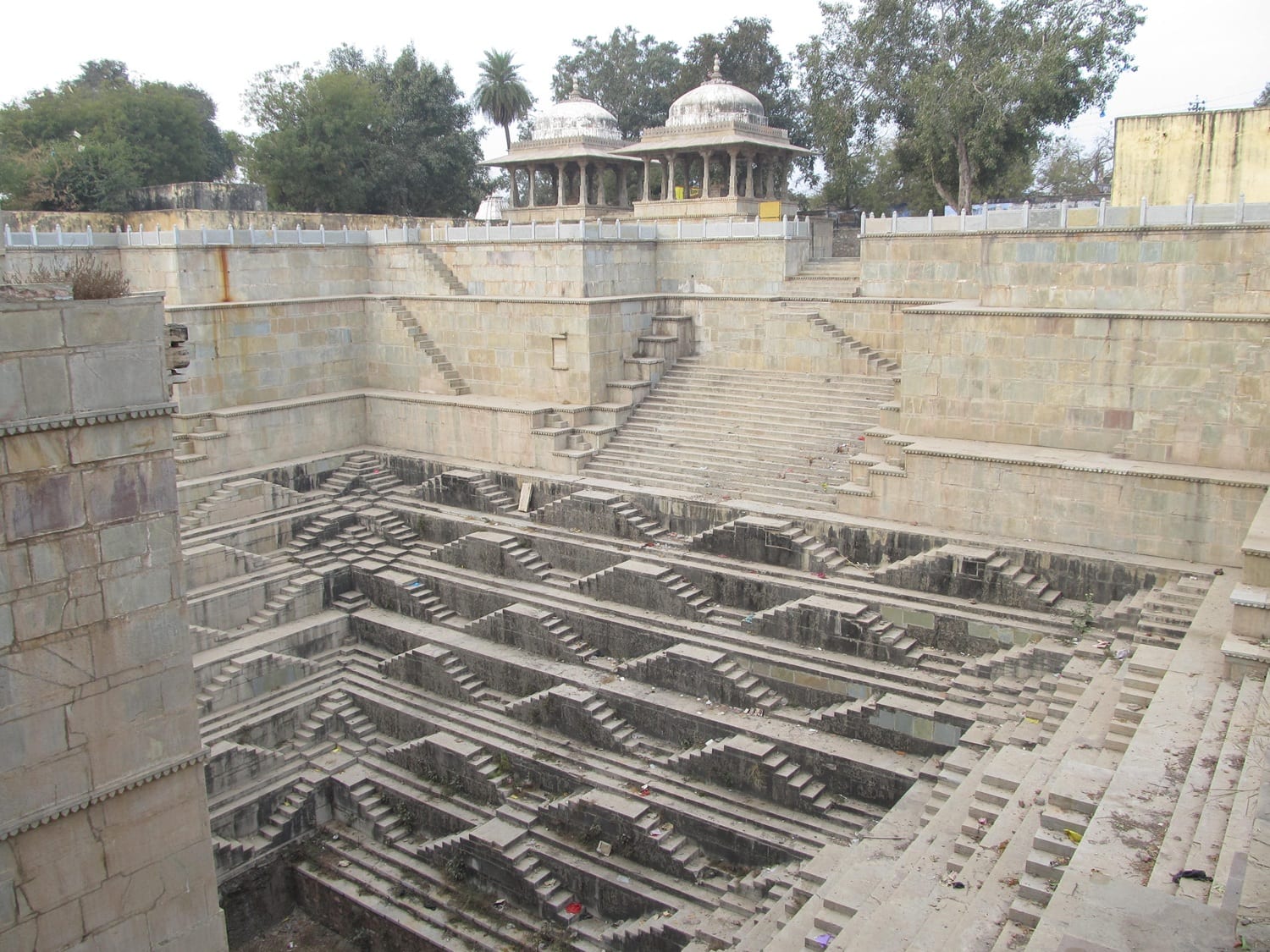
If the Rani ji ki Baodi is an art gallery, the 16th-17th century Dabhai Kund feels like a geometric composition, almost an inverted pyramid. What sets it apart is its striking crisscross pattern of steps that descend dramatically into the earth, forming a series of interlocking triangles. The effect is almost hypnotic—an architectural illusion that seems to shift as one moves along its edges. Beyond its aesthetic appeal, the design maximised water retention and accessibility, ensuring that even as water levels fluctuated, it remained reachable.
There are different versions about its patron builder, with some accounts stating that it was a junior queen of Raja Anirudh Singh, while others hold that it was a nobleman at the court who built it. There is also a quiet spirituality to the space. The descent into its depths feels almost meditative, as though one is moving from the chaos of the world above into a contemplative underworld shaped by water and stone.
Nagar Sagar Kund: Twin Reservoirs of Balance
In the heart of Bundi town lie the twin tanks of Nagar Sagar Kund—often overlooked, yet deeply significant in understanding the city’s water management system. These rectangular step tanks are positioned symmetrically and reflect a refined sense of urban planning. Built between 1871 and 1875 under the patronage of Queen Chandrabhanu, they were originally named Jamna Sagar and Ganga Sagar.
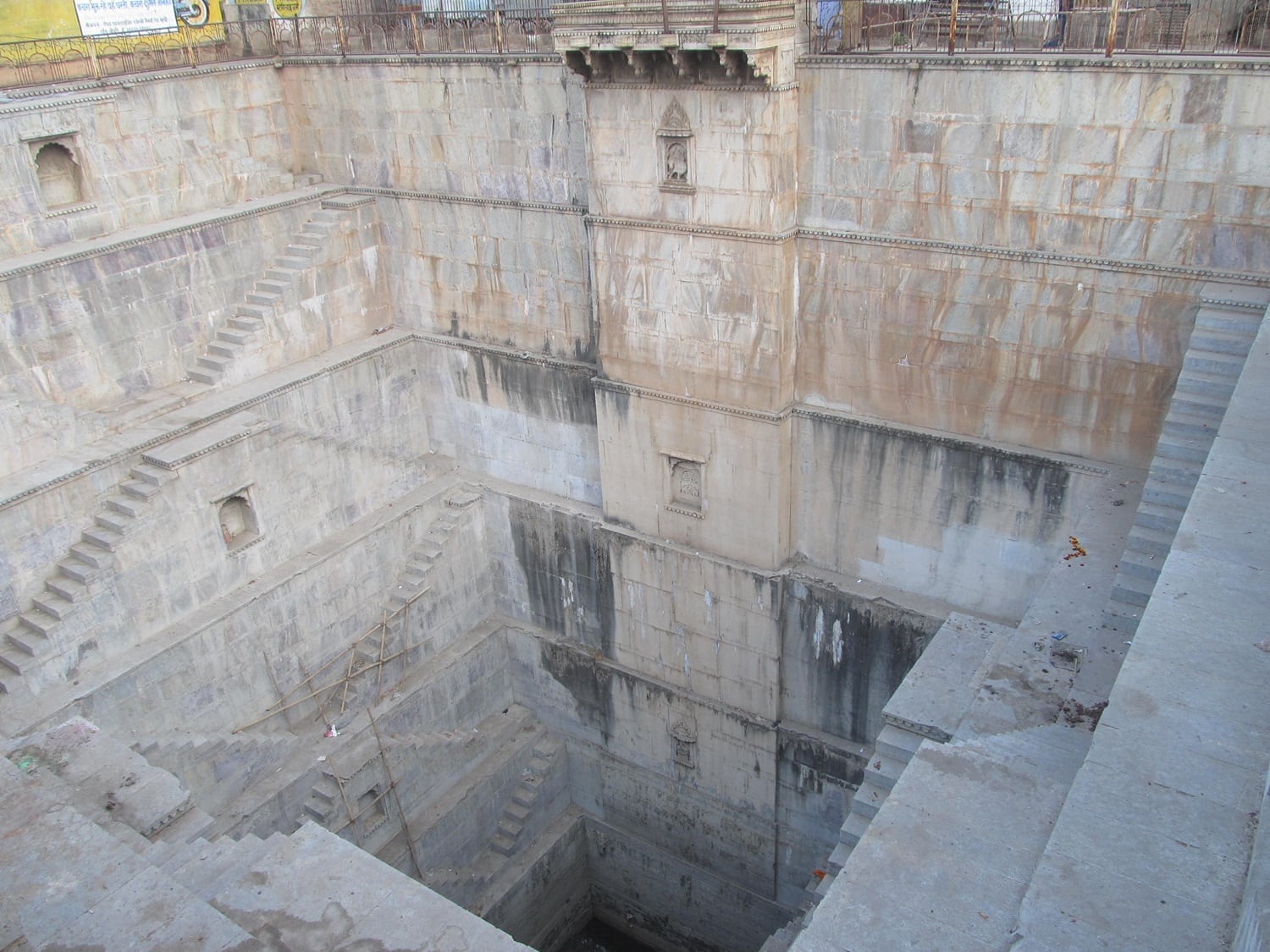
Within their depths, small shrines embedded within niches suggest that these tanks were not merely functional but also sacred. Their location within the town made them central to daily life—supplying water for domestic use while also serving as communal gathering spaces.
Bikaji ki Baodi: Quiet Grandeur of a Merchant’s Gift
Less frequented but equally evocative is Bikaji ki Baodi, believed to have been commissioned by a wealthy merchant named Bika Ji. This stepwell reflects the important role played by Bundi’s mercantile community in building and sustaining public infrastructure. This understated stepwell possesses a quiet grandeur, with its long corridors, arched niches, and descending steps creating a sense of depth and perspective that draws the eye inward. The structure exemplifies how even non-royal patrons contributed to the city’s sophisticated water systems, blending practicality with aesthetic sensibility.
An Ode to Water
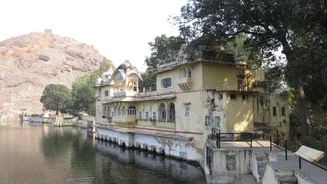
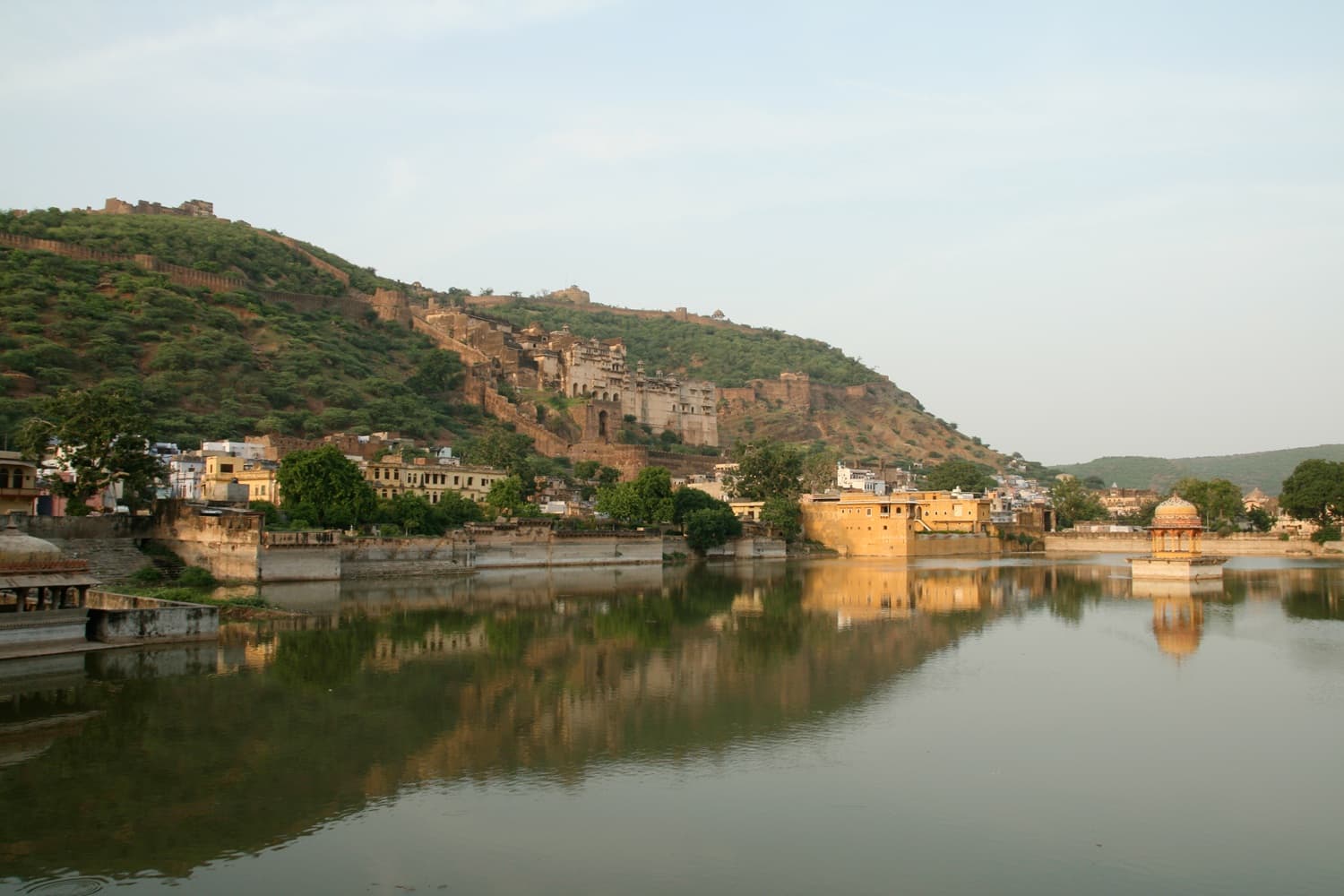
With nearly fifty structures dedicated to water, the list of Bundi’s baodis is a long one. The place also has many lakes. Foremost is the Nawal Sagar, an artificial lake which forms a visually stunning foreground to the Taragarh Fort. In the middle of the lake is a partially submerged temple dedicated to Varuna, the god of water. Outside the town, a hunting lodge stands along the banks of the Phool Sagar. Elsewhere, the Sukh Mahal is built alongside another lake. Palaces and water bodies truly go hand in hand in Bundi.
Today, on World Water Day, as cities grapple with water crises, Bundi offers a timeless blueprint: harvest rain where it falls, store it with care, and treat it with reverence. Its stepwells and lakes are not mere water bodies; they are symbols of a harmonious way of living with water and conserving it, rather than destroying sources of the life-giving liquid.
(The author is a heritage explorer with a penchant for seeking obscure sites. A brand consultant by profession, he tweets @HiddenHeritage. Views expressed in the above piece are personal and solely those of the author. They do not necessarily reflect Firstpost’s views.)
But beyond the arresting skyline and superb paintings is an even more compelling narrative — one carved in stone, shaped by ingenuity, and sustained by reverence: the story of its water architecture. In a region where water is sacred, Bundi is not just a town that stores water—it is one that honours it. Its baodis (stepwells), kunds (stepped tanks), and lakes are not merely utilitarian structures; they are architectural symphonies where geometry, devotion, and survival converge. Built over centuries by rulers, queens, nobles, and merchants, these structures transformed water harvesting into an art form—ensuring that every drop of rain was captured, preserved, and celebrated. Let's dive into a few examples of Bundi’s water legacy.
Rani ji ki Baodi: A Queen’s Legacy in Stone
The most iconic of Bundi’s stepwells, Rani ji ki Baodi stands as a monumental tribute to both water and womanhood. Commissioned in 1699 by Rani Nathavati Ji, the widowed queen of Rao Raja Anirudh Singh, this baodi is a masterclass in Rajput architecture. Descending several storeys into the earth, it is framed by ornate pillars, delicate arches, and sculpted niches that house deities and celestial figures.
The Rani ji ki Baodi, with classical embellishment
Unlike many stepwells that are austere in design, Rani ji ki Baodi is strikingly ornamental. Elephants guard its entrances, and multi-tiered pavilions create a play of light and shadow that changes through the day. More than a water reservoir, it functioned as a social and spiritual space—where women gathered, rituals were performed, and the act of drawing water became almost ceremonial. Today, it remains a powerful symbol of Bundi’s commitment to both aesthetics and sustainability.
Dabhai Kund: Geometry Meets Devotion
If the Rani ji ki Baodi is an art gallery, the 16th-17th century Dabhai Kund feels like a geometric composition, almost an inverted pyramid. What sets it apart is its striking crisscross pattern of steps that descend dramatically into the earth, forming a series of interlocking triangles. The effect is almost hypnotic—an architectural illusion that seems to shift as one moves along its edges. Beyond its aesthetic appeal, the design maximised water retention and accessibility, ensuring that even as water levels fluctuated, it remained reachable.
The Dabhai Kund in Bundi
There are different versions about its patron builder, with some accounts stating that it was a junior queen of Raja Anirudh Singh, while others hold that it was a nobleman at the court who built it. There is also a quiet spirituality to the space. The descent into its depths feels almost meditative, as though one is moving from the chaos of the world above into a contemplative underworld shaped by water and stone.
Nagar Sagar Kund: Twin Reservoirs of Balance
In the heart of Bundi town lie the twin tanks of Nagar Sagar Kund—often overlooked, yet deeply significant in understanding the city’s water management system. These rectangular step tanks are positioned symmetrically and reflect a refined sense of urban planning. Built between 1871 and 1875 under the patronage of Queen Chandrabhanu, they were originally named Jamna Sagar and Ganga Sagar.
One of the Nagar Sagar pair of stepwells in Bundi town
Within their depths, small shrines embedded within niches suggest that these tanks were not merely functional but also sacred. Their location within the town made them central to daily life—supplying water for domestic use while also serving as communal gathering spaces.
Bikaji ki Baodi: Quiet Grandeur of a Merchant’s Gift
Less frequented but equally evocative is Bikaji ki Baodi, believed to have been commissioned by a wealthy merchant named Bika Ji. This stepwell reflects the important role played by Bundi’s mercantile community in building and sustaining public infrastructure. This understated stepwell possesses a quiet grandeur, with its long corridors, arched niches, and descending steps creating a sense of depth and perspective that draws the eye inward. The structure exemplifies how even non-royal patrons contributed to the city’s sophisticated water systems, blending practicality with aesthetic sensibility.
An Ode to Water
With nearly fifty structures dedicated to water, the list of Bundi’s baodis is a long one. The place also has many lakes. Foremost is the Nawal Sagar, an artificial lake which forms a visually stunning foreground to the Taragarh Fort. In the middle of the lake is a partially submerged temple dedicated to Varuna, the god of water. Outside the town, a hunting lodge stands along the banks of the Phool Sagar. Elsewhere, the Sukh Mahal is built alongside another lake. Palaces and water bodies truly go hand in hand in Bundi.
The Nawal Sagar in Bundi
The Taragarh fort - Bundi's most striking heritage structure
Today, on World Water Day, as cities grapple with water crises, Bundi offers a timeless blueprint: harvest rain where it falls, store it with care, and treat it with reverence. Its stepwells and lakes are not mere water bodies; they are symbols of a harmonious way of living with water and conserving it, rather than destroying sources of the life-giving liquid.
(The author is a heritage explorer with a penchant for seeking obscure sites. A brand consultant by profession, he tweets @HiddenHeritage. Views expressed in the above piece are personal and solely those of the author. They do not necessarily reflect Firstpost’s views.)