







What is the story about?
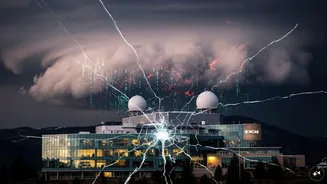
The Trump administration has opened a new front in Washington’s culture wars, this time by targeting one of the world’s most influential weather and climate research institutions. The move to dismantle the National Center for Atmospheric Research (NCAR) in Colorado have sparked alarm across the scientific community with experts warning that the action could weaken weather forecasting, disaster preparedness and even national security.
The proposal, confirmed by US media reports, comes as the administration brands the federally funded centre a hub of “climate alarmism”, reviving a long-running ideological battle over the role of climate science in public policy. But critics say the consequences would extend far beyond climate debates, striking at the backbone of modern weather prediction used in the US and around the world.
NCAR, headquartered in Boulder, has for decades served as a cornerstone of atmospheric and climate research, working closely with the National Oceanic and Atmospheric Administration (NOAA), universities and international agencies.
According to reports, the Trump administration is weighing plans to dismantle or sharply curtail the centre, arguing that its research agenda promotes what officials describe as exaggerated climate threats.
The move fits a broader pattern. Trump has repeatedly criticised climate science, rolled back environmental regulations and questioned the scientific consensus on global warming. But targeting NCAR marks a significant escalation, as the centre’s work underpins day-to-day weather forecasting not just long-term climate projections.
Scientists warn that framing NCAR as merely a climate advocacy body ignores its central role in operational meteorology. From tracking hurricanes to improving severe storm warnings, NCAR’s research feeds directly into tools used by forecasters across the US.
Founded in 1960, NCAR has been instrumental in developing some of the most widely used technologies in atmospheric science. Among its contributions are advanced climate and weather models and hurricane “dropsondes” instruments released from aircraft into storms to measure temperature, humidity, pressure and wind. These dropsondes are now a global standard for improving hurricane intensity and track forecasts.
Research published in leading meteorological journals shows that such innovations have significantly improved forecast accuracy, giving communities more time to prepare for extreme weather. Emergency managers rely on these forecasts to plan evacuations, position resources and reduce loss of life during hurricanes, floods, heatwaves and wildfires.
Scientists argue that weakening NCAR would create gaps that cannot easily be filled by private companies or fragmented university research. “You don’t just lose a building or a budget line,” one atmospheric researcher said. “You lose institutional memory, long-term datasets and collaborative systems that took decades to build.”
The proposal has triggered a wave of criticism from scientists and communicators, many of whom have taken to social media to sound the alarm. In a widely shared post on X, meteorologist Daniel Swain, known online as Weather West, warned that dismantling NCAR would undermine the foundations of modern weather prediction, calling it a move that would “harm public safety in ways that will only become obvious when it’s too late”.
Climate scientist Katharine Hayhoe echoed those concerns in a separate post, stressing that NCAR’s work is not abstract or ideological. She highlighted that research produced at the centre directly supports forecasts people rely on daily — from farmers planning crops to cities bracing for heatwaves and storms. Undermining that capacity, she argued, would leave the US less prepared in an era of increasingly volatile weather.
The concern is not limited to climate advocates. Former government scientists and emergency planners warn that any disruption to NCAR’s work would have knock-on effects for the military, aviation and disaster response agencies that depend on accurate, timely forecasts.
The administration’s plans are still taking shape, but the reaction underscores how deeply politicised climate and weather science have become in the US. Supporters of the move argue that federal research bodies should be streamlined and refocused, while critics see the proposal as ideologically driven and disconnected from practical realities.
For now, uncertainty hangs over NCAR’s future. But the episode has already ignited a broader debate about whether scientific institutions can function effectively when their legitimacy is challenged on political grounds.
As extreme weather events grow more frequent and costly, scientists warn that dismantling a key pillar of atmospheric research could leave the US flying blind. What began as a political statement against “climate alarmism” may, they argue, end up reshaping how and how well, the country predicts the storms ahead.
The proposal, confirmed by US media reports, comes as the administration brands the federally funded centre a hub of “climate alarmism”, reviving a long-running ideological battle over the role of climate science in public policy. But critics say the consequences would extend far beyond climate debates, striking at the backbone of modern weather prediction used in the US and around the world.
A new target in the climate wars
NCAR, headquartered in Boulder, has for decades served as a cornerstone of atmospheric and climate research, working closely with the National Oceanic and Atmospheric Administration (NOAA), universities and international agencies.
According to reports, the Trump administration is weighing plans to dismantle or sharply curtail the centre, arguing that its research agenda promotes what officials describe as exaggerated climate threats.
The move fits a broader pattern. Trump has repeatedly criticised climate science, rolled back environmental regulations and questioned the scientific consensus on global warming. But targeting NCAR marks a significant escalation, as the centre’s work underpins day-to-day weather forecasting not just long-term climate projections.
Scientists warn that framing NCAR as merely a climate advocacy body ignores its central role in operational meteorology. From tracking hurricanes to improving severe storm warnings, NCAR’s research feeds directly into tools used by forecasters across the US.
Why NCAR matters for forecasting and safety
Founded in 1960, NCAR has been instrumental in developing some of the most widely used technologies in atmospheric science. Among its contributions are advanced climate and weather models and hurricane “dropsondes” instruments released from aircraft into storms to measure temperature, humidity, pressure and wind. These dropsondes are now a global standard for improving hurricane intensity and track forecasts.
Research published in leading meteorological journals shows that such innovations have significantly improved forecast accuracy, giving communities more time to prepare for extreme weather. Emergency managers rely on these forecasts to plan evacuations, position resources and reduce loss of life during hurricanes, floods, heatwaves and wildfires.
Scientists argue that weakening NCAR would create gaps that cannot easily be filled by private companies or fragmented university research. “You don’t just lose a building or a budget line,” one atmospheric researcher said. “You lose institutional memory, long-term datasets and collaborative systems that took decades to build.”
Scientists push back, warn of ripple effects
The proposal has triggered a wave of criticism from scientists and communicators, many of whom have taken to social media to sound the alarm. In a widely shared post on X, meteorologist Daniel Swain, known online as Weather West, warned that dismantling NCAR would undermine the foundations of modern weather prediction, calling it a move that would “harm public safety in ways that will only become obvious when it’s too late”.
Climate scientist Katharine Hayhoe echoed those concerns in a separate post, stressing that NCAR’s work is not abstract or ideological. She highlighted that research produced at the centre directly supports forecasts people rely on daily — from farmers planning crops to cities bracing for heatwaves and storms. Undermining that capacity, she argued, would leave the US less prepared in an era of increasingly volatile weather.
The concern is not limited to climate advocates. Former government scientists and emergency planners warn that any disruption to NCAR’s work would have knock-on effects for the military, aviation and disaster response agencies that depend on accurate, timely forecasts.
Political fallout and what comes next
The administration’s plans are still taking shape, but the reaction underscores how deeply politicised climate and weather science have become in the US. Supporters of the move argue that federal research bodies should be streamlined and refocused, while critics see the proposal as ideologically driven and disconnected from practical realities.
For now, uncertainty hangs over NCAR’s future. But the episode has already ignited a broader debate about whether scientific institutions can function effectively when their legitimacy is challenged on political grounds.
As extreme weather events grow more frequent and costly, scientists warn that dismantling a key pillar of atmospheric research could leave the US flying blind. What began as a political statement against “climate alarmism” may, they argue, end up reshaping how and how well, the country predicts the storms ahead.