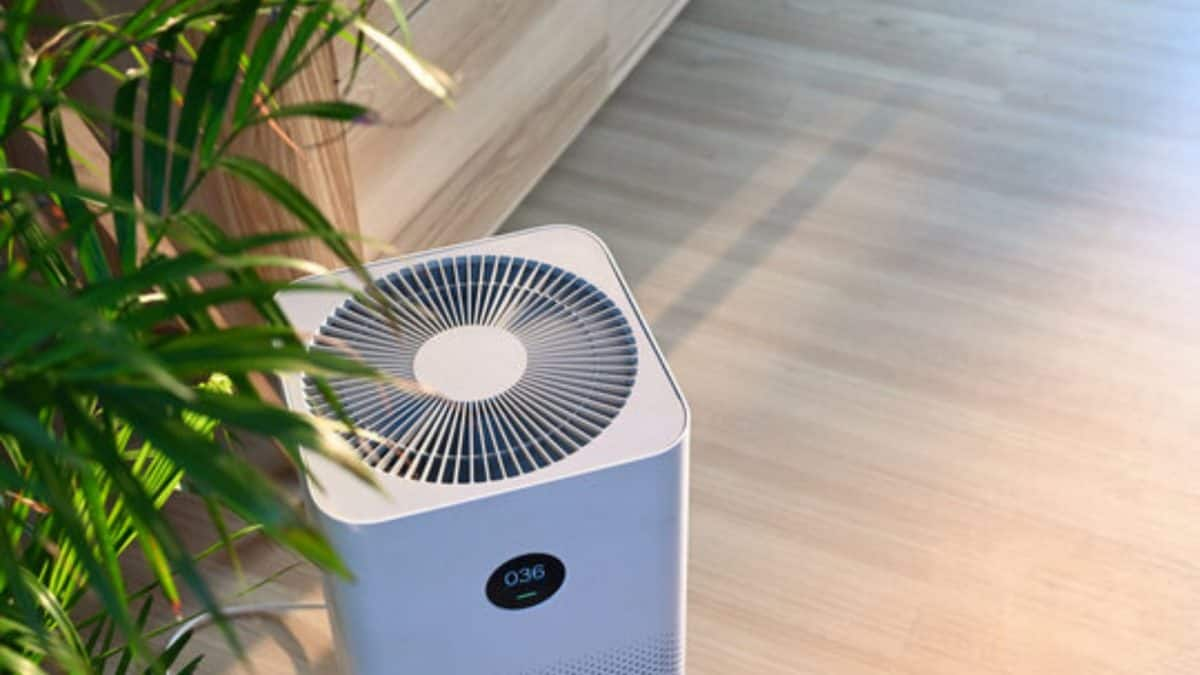









Even as courts push for urgent relief on air pollution, the central government has made its position clear on one key point: air purifiers cannot get a GST cut overnight.
According to CNN News18, all electronic items fall under the 18% GST slab, and the tax cannot be reduced suo moto for a single product. Any change, including a possible reduction on air purifiers, can only be considered at the next GST Council meeting, where the central government and states take decisions collectively.
This clarification comes just as the Delhi High Court sharply questioned the government on why air purifiers continue to attract the highest GST rate amid a public health crisis.
‘We breathe 21,000 times a day’ — Court’s sharp question
Hearing a public interest litigation (PIL) on Wednesday, the Delhi High Court issued a notice to the Centre, seeking its response on whether GST on air purifiers should be slashed by classifying them as medical devices.
Pulling no punches, the bench of Chief Justice Devendra Kumar Upadhyaya and Justice Tushar Rao Gedela said : “We breathe 21,000 times a day, calculate the harm,” highlighting the health risks of polluted air and questioning why a life-saving device was being taxed at 18%.
The court also expressed concern over the time sought by the central government to respond, asking why the matter couldn’t be addressed urgently given Delhi’s worsening air quality.
Also read | Delhi today, Beijing yesterday: Can India too turn the skies of its capital blue?
Emergency relief floated
The judges went a step further, suggesting that in an “air emergency” situation, the government could explore temporary relief measures, even hinting at provisions under the National Security Act if public health continued to be compromised.
The bench also asked why the issue couldn’t be taken up immediately by the GST Council, instead of waiting for the next scheduled meeting, given the extraordinary circumstances.
Why the PIL wants a GST cut
The PIL, filed by advocate Kapil Madan, argues that air purifiers are no longer luxury items but essential health equipment, especially for children, the elderly and those with respiratory conditions. It contends that air purifiers meet the criteria of medical devices under a 2020 act, which would bring the GST rate down to 5%.
The court also referred to recommendations by the Parliamentary Standing Committee on Environment, Forest and Climate Change, which had urged the government to sympathetically consider reducing or scrapping GST on air purifiers and HEPA filters.