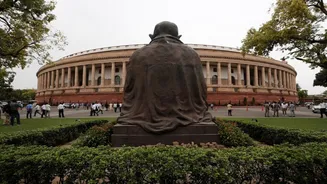

Among various other legislative functions, the Indian parliament plays a key role in the domain of foreign policy. Its Standing Committee on External Affairs, with distinguished members from across the political spectrum, is critical in this area, as are the ongoing debates on various issues of domestic and international importance.
Noted author KV Prasad, in his book, Indian Parliament Shaping Foreign Policy, underscores that under the Constitution, Parliament is vested with the power to make any law for the whole or any part of the territory of India for implementing any treaty, agreement, or convention with any country or countries or any decision made at any international conference, association, or other body.
Yet another area in which the parliament cultivates friendships with their foreign counterparts is through institutionalised linkages and even creating parliament friendship groups for a specific and more important partner country.
Moreover, in various international and multilateral organisations like the G20, Brics and the Commonwealth, the interactions among parliamentarians provide an exceptional impetus to further nurture the mutually beneficial relationships by creating yet another pillar of cooperation.
India, during her presidency, had hosted the 9th G20 Parliamentary Speakers' Summit (P20) in October 2023, which was the last inter-parliamentary conference hosted by the Parliament of India.
One of the key and possibly the largest institutional interactions is among the members of the Commonwealth countries. In 1969, the Speaker of Canada’s House of Commons had helped create ‘The Conference of Speakers and Presiding Officers of Commonwealth (CSPOC)’ and also hosts its secretariat.
The 27th CSPOC was held in Kampala, Uganda, in 2024, when the mantle was passed on to India even though the decision was taken at the 25th CSPOC in Canada.
The Parliament of India is hosting the 28th Conference of Speakers and Presiding Officers of the Commonwealth (CSPOC) at New Delhi from January 14 to 16, 2026. India had earlier hosted these in 2010, 1986 and 1971. Lok Sabha Speaker Om Birla is the chairperson of this conference, which will be attended by speakers and presiding officers of 53 Commonwealth countries and 14 autonomous parliaments from different parts of the world.
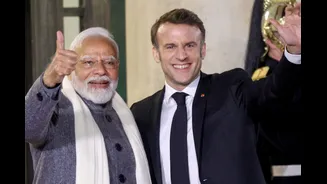
Prime Minister Modi will inaugurate the conference on January 15. An exhibition titled
The conference, comprising one of the highest representations, is expected to deliberate on various issues relevant to democracy and the parliamentary system itself, including the role of speakers and presiding officers in maintaining strong democratic institutions; artificial intelligence in Parliament; social media and its impact on Members of Parliament (MPs); innovative strategies to enhance public understanding of Parliament and citizen participation beyond voting; and security, health and wellbeing of MPs and parliamentary staff. So far, 67 speakers and presiding officers from 45 CSPOC countries and four autonomous parliaments are slated to visit Delhi to take part in the 28th CSPOC.
The world is going through a sharp technological shift, and the parliaments are not immune from this. Hence, it is not surprising that the CSPOC workshop sessions will be focusing specifically on the following areas:
- AI in parliament: Balancing innovation, oversight and adaptation.
- Social media and its impact on parliamentarians.
- Innovative strategies to enhance public understanding of Parliament and citizens’ participation beyond voting.
- Security, health and wellbeing of Members of Parliament and parliamentary staff.
CSPOC has emerged into a unique institution which upholds parliamentary independence and is non-partisan even as it derives a great deal from the Westminster system and traditions and underscores the protection of the neutrality and authority of speakers.
Through the shared constitutional traditions, the participants exchange best practices on procedure, privilege and governance. In addition, the forum plays an important role in supporting nascent and newer democratic institutions and parliaments while encouraging transparency, accountability and rule of law, as well as addressing the extraneous outreach of the executive and other branches of governance architecture. It is kind of a parliamentary diplomacy framework.
Observers often refer to CSPOC as a rare global platform dedicated exclusively to safeguarding the integrity, independence and effectiveness of parliaments by exchanging notes and interactions and collaboration among counterparts, ie, speakers, in a democratic manner, enhancing bilateral and multilateral partnerships.
This structured parliamentary cooperation has yielded adopted and declared consensus-based statements reaffirming separation of powers, parliamentary privileges and supremacy of elected legislatures as well as the exalted role of speakers in a democracy.
No doubt, under the Indian edition this year the parliamentary traditions will be further reinforced through reemphasis on established norms of democracy. India will continue to reiterate that multilateralism must be purposeful, growth must be equitable, technology must remain a public good, and global leadership must be humane, marked by people-centric growth through inclusivity and innovation.
(The author is the former Indian Ambassador to Jordan, Libya and Malta and is currently a Distinguished Fellow with Vivekananda International Foundation. Views expressed in the above piece are personal and solely those of the author. They do not necessarily reflect Firstpost’s views.)