


A senior Russian military official on Thursday handed what he claimed was part of a Ukrainian drone to a US military attache, saying it contained data showing that the Ukrainian military had targeted a Russian presidential residence earlier this week.
Moscow had accused Kyiv on Monday of attempting to strike a residence of President Vladimir Putin in the northern Novgorod region using 91 long-range attack drones.
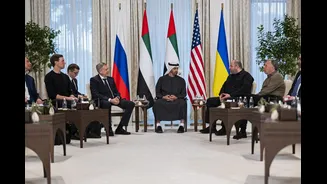
Russia said the incident would prompt a review of its negotiating stance in ongoing talks with the US on ending the war in Ukraine.
Ukraine and Western officials have disputed Russia’s account of the alleged strike.
A video posted on the Russian Defence Ministry’s Telegram channel showed Admiral Igor Kostyukov, head of the Main Directorate of the General Staff of Russia’s Armed Forces, handing over what he described as the drone’s control mechanism, recovered from downed fragments.
"The decryption of the content of the memory of the navigation controller of the drones carried out by specialists of Russia's special services confirms without question that the target of the attack was the complex of buildings of the Russian president's residence in Novgorod region," Reuters quoted Kostyukov as saying.
"We presume that this measure will do away with any questions and allow for the truth to be established."
The Ministry had earlier posted a statement on Telegram saying its findings would be turned over to the United States.
The Wall Street Journal reported on Wednesday that US national security officials had found Ukraine did not target Putin or one of his residences in a drone strike. Reuters could not immediately verify the report.
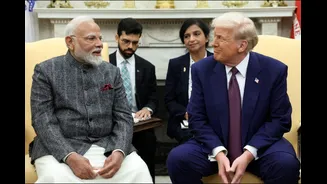
US President Donald Trump initially expressed sympathy for the Russian charge, telling reporters on Monday that Putin had informed him of the alleged incident and that he was "very angry" about it.
By Wednesday, Trump appeared more sceptical, sharing on social media a New York Post editorial accusing Russia of blocking peace in Ukraine.
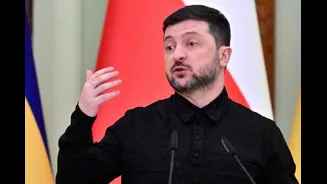
Ukraine has denied carrying out such an attack and described the accusation as part of a Russian disinformation campaign meant to drive a wedge between Kyiv and Washington after a weekend meeting between Trump and Ukraine's President Volodymyr Zelenskyy.
With inputs from agencies