





What is the story about?
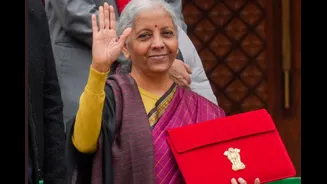
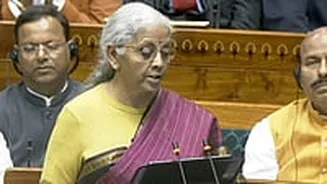
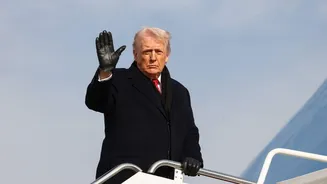
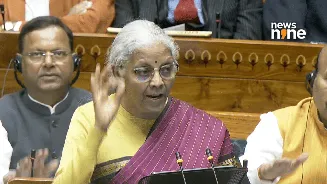
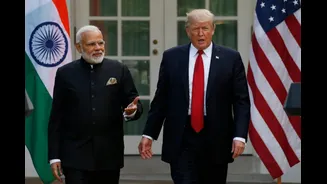
In the Union Budget 2026, the Union Finance Minister on Sunday proposed steps aimed at tackling US President Donald Trump’s tariffs. These proposals are the latest measures to offset the fallout of 50 per cent American tariffs — the highest in the world.
Firstly, Sitharaman proposed basic customs duty (BCD) exemptions on several intermediate goods that need to be imported by various manufacturers.
Sitharaman proposed to provide BCD exemption for the import of capital goods required for the processing of critical minerals in India. She also exempted biogas-related imports from BCD.
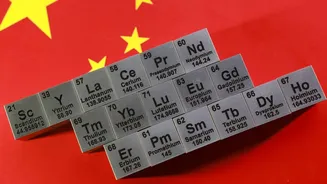
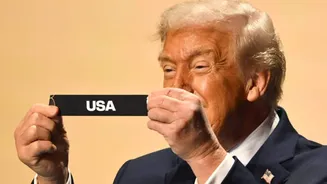
In his second term, Trump’s tariff war on the world has spiralled into a worldwide disruption of supply chains. In response to Trump’s tariffs, China has tightened its control of critical minerals and rare earths and weaponised natural resources — China controls around 90 per cent of the world’s rare earths production.
In addition to the critical minerals-related proposal, Sitharaman also proposed setting up Rare Earth Corridors in the mineral-rich states of Odisha, Kerala, Andhra Pradesh, and Tamil Nadu. The proposal follows a Rs 7,300‑crore scheme announced in November 2025 to support the indigenous production of rare earth magnets.
While the Narendra Modi government’s push for indigenisation predates Trump’s tariffs—with initiatives like Atmanirbhar Bharat, production-linked incentive (PLI) schemes, and the Make in India initiative—the urgency in the domains of critical minerals and rare earths is a result of global disruption from the tariff war.
Secondly, Sitharaman also proposed BCD exemption on components and parts required for the manufacture of civilian, training, and other aircraft.
“It is proposed to exempt basic customs duty on raw materials imported for manufacture of parts of aircraft to be used in maintenance, repair, or overhaul requirements by units in the defence sector,” said Sitharaman.
Currently, India imports almost all aircraft from either European or American manufacturers. But India has lately taken steps for the indigenous manufacturing of aircraft. India has signed an agreement with Russia’s aeroplane-maker UAC to make passenger planes in India.
Thirdly, for the electronics sector, Sitharaman proposed exempting BCD on specified parts used in the manufacture of microwave ovens, with the aim of deepening value addition in the consumer electronics sector.
Fourthly, with the objective of promoting seafood—which has been hit the hardest by Trump’s tariffs—Sitharaman proposed increasing the limit for duty-free imports of specified inputs used for processing seafood for export from the current 1 per cent to 3 per cent of the ‘free on board’ (FOB) value of last year’s exports.
“I propose to increase the limit for duty-free imports of specified inputs used for processing seafoods for export from the current 1 per cent to 3 per cent of the FOB value of the previous year’s export turnover. I also propose to allow duty-free imports of specified inputs, which is currently available for exports of leather or synthetic footwear, to exports of shoe uppers as well,” said Sitharaman.
Simply put, FOB refers to the value of exported goods at the Indian port before international shipping and insurance costs. Trump’s tariffs have squeezed the margins of exporters and made processing inputs —such as feed, chemicals, and packaging— costlier. Increasing duty-free imports of inputs from 1 per cent to 3 per cent of FOB value essentially lowers input costs and improves the competitiveness of Indian seafood exports.
Fifthly, Sitharaman proposed reducing the tariff rate on all dutiable goods imported for personal use from 20 per cent to 10 per cent.
Sixthly, similar to the seafood sector, Sitharaman proposed exempting duties on inputs for leather and synthetic footwear.
“I also propose to allow duty-free imports of specified inputs, which is currently available for exports of leather or synthetic footwear, to exports of shoe uppers as well,” said Sitharaman.
Seventhly, Sitharaman proposed extending the time period for export of the final product from the existing six months to one year for exporters of leather or textile garments, leather or synthetic footwear, and other leather products.
Eighthly, Sitharaman proposed BCD exemption on capital goods used for manufacturing lithium‑ion cells for batteries and critical minerals. She also proposed BCD exemption on the import of sodium antimonate for use in the manufacturing of solar glass.
Ninthly, Sitharaman proposed BCD exemption for the import of goods required for nuclear power projects till 2035, expanding the benefit to “all nuclear plants irrespective of their capacity". Tenthly
Tenthly, Sitharaman proposed five steps as part of an ‘Integrated Programme’ to bolster the textile sector—the second-largest employer in India after agriculture, and among the worst-hit sectors due to Trump’s tariffs:
Additionally, Sitharaman proposed setting up mega textile parks in “challenge mode”.
“They can also focus on bringing value addition to technical textiles,” said Sitharaman.
Firstly, Sitharaman proposed basic customs duty (BCD) exemptions on several intermediate goods that need to be imported by various manufacturers.
Sitharaman proposed to provide BCD exemption for the import of capital goods required for the processing of critical minerals in India. She also exempted biogas-related imports from BCD.
In his second term, Trump’s tariff war on the world has spiralled into a worldwide disruption of supply chains. In response to Trump’s tariffs, China has tightened its control of critical minerals and rare earths and weaponised natural resources — China controls around 90 per cent of the world’s rare earths production.
In addition to the critical minerals-related proposal, Sitharaman also proposed setting up Rare Earth Corridors in the mineral-rich states of Odisha, Kerala, Andhra Pradesh, and Tamil Nadu. The proposal follows a Rs 7,300‑crore scheme announced in November 2025 to support the indigenous production of rare earth magnets.
While the Narendra Modi government’s push for indigenisation predates Trump’s tariffs—with initiatives like Atmanirbhar Bharat, production-linked incentive (PLI) schemes, and the Make in India initiative—the urgency in the domains of critical minerals and rare earths is a result of global disruption from the tariff war.
How the Budget tackles Trump’s tariffs in 10 steps
Secondly, Sitharaman also proposed BCD exemption on components and parts required for the manufacture of civilian, training, and other aircraft.
“It is proposed to exempt basic customs duty on raw materials imported for manufacture of parts of aircraft to be used in maintenance, repair, or overhaul requirements by units in the defence sector,” said Sitharaman.
Currently, India imports almost all aircraft from either European or American manufacturers. But India has lately taken steps for the indigenous manufacturing of aircraft. India has signed an agreement with Russia’s aeroplane-maker UAC to make passenger planes in India.
Thirdly, for the electronics sector, Sitharaman proposed exempting BCD on specified parts used in the manufacture of microwave ovens, with the aim of deepening value addition in the consumer electronics sector.
Fourthly, with the objective of promoting seafood—which has been hit the hardest by Trump’s tariffs—Sitharaman proposed increasing the limit for duty-free imports of specified inputs used for processing seafood for export from the current 1 per cent to 3 per cent of the ‘free on board’ (FOB) value of last year’s exports.
“I propose to increase the limit for duty-free imports of specified inputs used for processing seafoods for export from the current 1 per cent to 3 per cent of the FOB value of the previous year’s export turnover. I also propose to allow duty-free imports of specified inputs, which is currently available for exports of leather or synthetic footwear, to exports of shoe uppers as well,” said Sitharaman.
Simply put, FOB refers to the value of exported goods at the Indian port before international shipping and insurance costs. Trump’s tariffs have squeezed the margins of exporters and made processing inputs —such as feed, chemicals, and packaging— costlier. Increasing duty-free imports of inputs from 1 per cent to 3 per cent of FOB value essentially lowers input costs and improves the competitiveness of Indian seafood exports.
Fifthly, Sitharaman proposed reducing the tariff rate on all dutiable goods imported for personal use from 20 per cent to 10 per cent.
Sixthly, similar to the seafood sector, Sitharaman proposed exempting duties on inputs for leather and synthetic footwear.
“I also propose to allow duty-free imports of specified inputs, which is currently available for exports of leather or synthetic footwear, to exports of shoe uppers as well,” said Sitharaman.
Seventhly, Sitharaman proposed extending the time period for export of the final product from the existing six months to one year for exporters of leather or textile garments, leather or synthetic footwear, and other leather products.
Eighthly, Sitharaman proposed BCD exemption on capital goods used for manufacturing lithium‑ion cells for batteries and critical minerals. She also proposed BCD exemption on the import of sodium antimonate for use in the manufacturing of solar glass.
Ninthly, Sitharaman proposed BCD exemption for the import of goods required for nuclear power projects till 2035, expanding the benefit to “all nuclear plants irrespective of their capacity". Tenthly
Tenthly, Sitharaman proposed five steps as part of an ‘Integrated Programme’ to bolster the textile sector—the second-largest employer in India after agriculture, and among the worst-hit sectors due to Trump’s tariffs:
- The National Fibre Scheme for self-reliance in natural fibres such as silk, wool, and jute, and in human-made and new-age fibres
- Textile Expansion and Employment Scheme to modernise traditional clusters with capital support for machinery, technology upgradation, and common testing and certification centres
- A National Handloom and Handicraft Programme to integrate and strengthen existing schemes and ensure targeted support for weavers and artisans
- Tex‑Eco Initiative to promote globally competitive and sustainable textiles and apparels
- Samarth 2.0 to modernise and upgrade the textile skilling ecosystem through collaboration with industry and academic institutions
Additionally, Sitharaman proposed setting up mega textile parks in “challenge mode”.
“They can also focus on bringing value addition to technical textiles,” said Sitharaman.