







What is the story about?
As India accelerates its push into artificial intelligence, preparations for the India AI Impact Summit 2026 have gathered momentum through seven regional AI conferences held across Meghalaya, Gujarat, Odisha, Madhya Pradesh, Uttar Pradesh, Rajasthan and Kerala.
Delegates from over 100 countries are set to participate in the India AI Impact Summit 2026. The event has drawn over 35,000 registrations globally, with international representation.
Organised under the India AI Mission in partnership with state governments, academic institutions and central ministries, the conferences aimed to align region-specific AI priorities with the country’s broader digital transformation agenda, while strengthening collaboration between local ecosystems and national policymakers.
This year the AI Impact Summit is being organised in India which is guided by three foundational pillars, which is referred as Sutras, which articulate the core principles guiding global cooperation on AI.
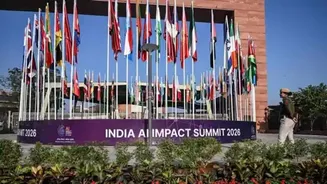
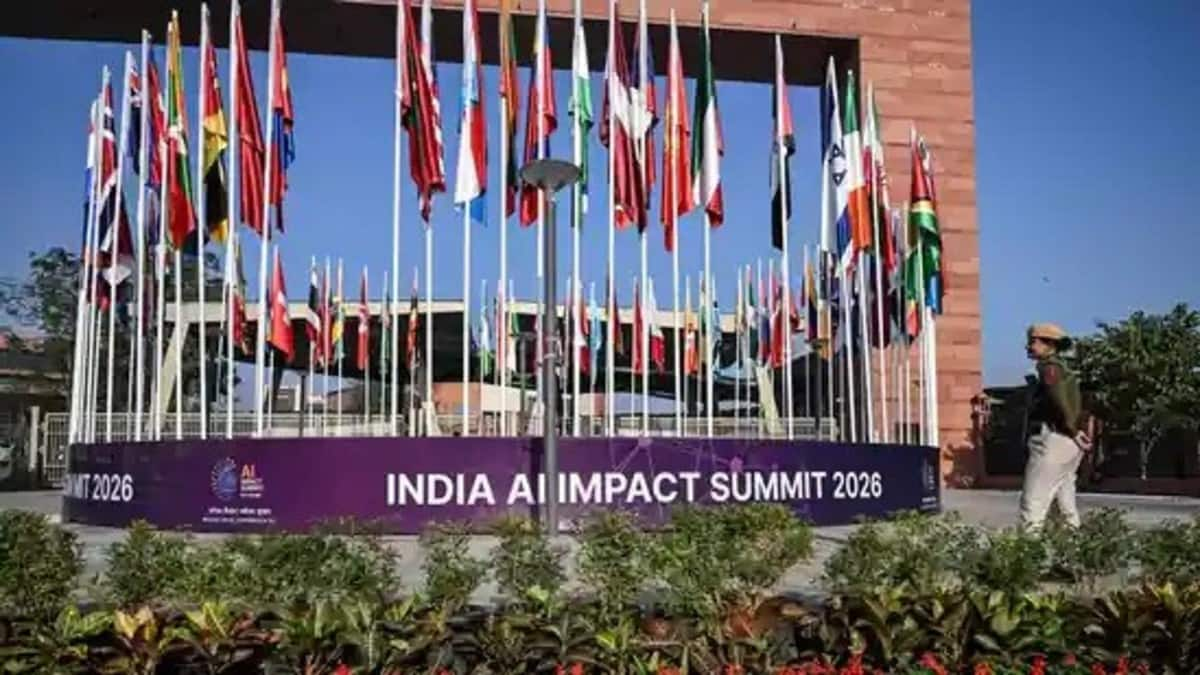
The AI-Impact Summit will take place in New Delhi from February 16 to 20, 2026. The Summit will mostly focus on the practical AI use cases in healthcare, agriculture, skilling, language technologies, innovation and digital infrastructure.
The Summit charts a path towards a future where the transformative power of AI serves humanity, drives inclusive growth, fosters social development, and promotes people-centric innovations that protect our planet.
The three pillars are People, Planet, and Progress. People focus on promoting a human-centric approach to AI by safeguarding rights, expanding access to services, and building trust across societies. Planet emphasises environmental sustainability through energy-efficient systems and responsible use of resources. Progress supports inclusive economic and technological growth through innovation, capacity building, and the use of AI to drive productivity.
Building upon the three foundational Sutras, the deliberations at the AI Impact Summit will be organised around seven interconnected Chakras, areas of multilateral cooperation designed to channel collective energy toward holistic societal transformation.
These Seven Chakras represent focused domains of international collaboration that translate the broader principles of People, Planet, and Progress into concrete areas of action: Human Capital, Inclusion for Social Empowerment, Safe and Trusted AI, Resilience, Innovation, and Efficiency, Science, Democratizing AI Resources, and AI for Economic Growth and Social Good.
The Summit will prove to be a turning point for the history of the Indian technological sector. The program has been launched to train one million young people in AI skills so that India’s youth are ready for the new technology era.
India is itself excelling in artificial intelligence and produces the finest tech minds, due to which the engineering workforce all across the world constitutes much of the Indian race.
Minister of State for Electronics and IT Jitin Prasada said the Centre has committed Rs 10,000 crore under the India AI Mission. “The objective is to enhance citizens’ incomes, improve ease of living, and boost the overall productivity of the nation through responsible and inclusive use of AI,” he said.
State leaders also remarked how AI is making a difference at the local level. Meghalaya Chief Minister Conrad K. Sangma said, “Every pregnant woman in Meghalaya is digitally tracked, enabling early identification of high-risk cases and timely interventions,” adding that this has helped reduce maternal mortality by 50 per cent.
Authorities said the regional approach ensures India’s AI strategy is shaped by on-ground needs, with state-level insights feeding directly into the India AI Impact Summit 2026.
Delegates from over 100 countries are set to participate in the India AI Impact Summit 2026. The event has drawn over 35,000 registrations globally, with international representation.
Organised under the India AI Mission in partnership with state governments, academic institutions and central ministries, the conferences aimed to align region-specific AI priorities with the country’s broader digital transformation agenda, while strengthening collaboration between local ecosystems and national policymakers.
This year the AI Impact Summit is being organised in India which is guided by three foundational pillars, which is referred as Sutras, which articulate the core principles guiding global cooperation on AI.
What is the AI Impact Summit?
The AI-Impact Summit will take place in New Delhi from February 16 to 20, 2026. The Summit will mostly focus on the practical AI use cases in healthcare, agriculture, skilling, language technologies, innovation and digital infrastructure.
The Summit charts a path towards a future where the transformative power of AI serves humanity, drives inclusive growth, fosters social development, and promotes people-centric innovations that protect our planet.
The three Sutras
The three pillars are People, Planet, and Progress. People focus on promoting a human-centric approach to AI by safeguarding rights, expanding access to services, and building trust across societies. Planet emphasises environmental sustainability through energy-efficient systems and responsible use of resources. Progress supports inclusive economic and technological growth through innovation, capacity building, and the use of AI to drive productivity.
The seven Chakras
Building upon the three foundational Sutras, the deliberations at the AI Impact Summit will be organised around seven interconnected Chakras, areas of multilateral cooperation designed to channel collective energy toward holistic societal transformation.
These Seven Chakras represent focused domains of international collaboration that translate the broader principles of People, Planet, and Progress into concrete areas of action: Human Capital, Inclusion for Social Empowerment, Safe and Trusted AI, Resilience, Innovation, and Efficiency, Science, Democratizing AI Resources, and AI for Economic Growth and Social Good.
How will it benefit India?
The Summit will prove to be a turning point for the history of the Indian technological sector. The program has been launched to train one million young people in AI skills so that India’s youth are ready for the new technology era.
India is itself excelling in artificial intelligence and produces the finest tech minds, due to which the engineering workforce all across the world constitutes much of the Indian race.
Minister of State for Electronics and IT Jitin Prasada said the Centre has committed Rs 10,000 crore under the India AI Mission. “The objective is to enhance citizens’ incomes, improve ease of living, and boost the overall productivity of the nation through responsible and inclusive use of AI,” he said.
State leaders also remarked how AI is making a difference at the local level. Meghalaya Chief Minister Conrad K. Sangma said, “Every pregnant woman in Meghalaya is digitally tracked, enabling early identification of high-risk cases and timely interventions,” adding that this has helped reduce maternal mortality by 50 per cent.
Authorities said the regional approach ensures India’s AI strategy is shaped by on-ground needs, with state-level insights feeding directly into the India AI Impact Summit 2026.