




What is the story about?
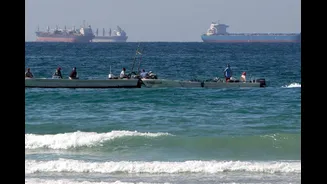
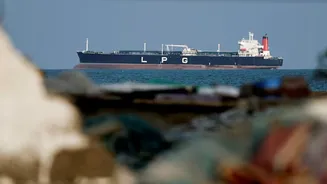
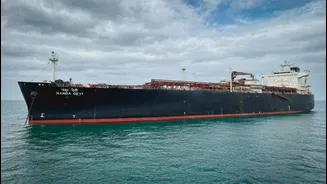
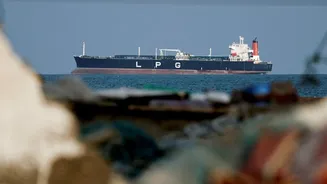
Two Indian-flagged liquefied petroleum gas (LPG) carriers that had been stranded in the Persian Gulf since the start of the West Asia conflict have successfully crossed the Strait of Hormuz and are now en route to India, with arrival expected by Saturday.
The vessels Jag Vasant and Pine Gas are carrying a combined cargo of around 92,000 tonnes of LPG, enough to meet roughly a day’s domestic demand. Their movement comes as a relief amid supply concerns triggered by disruptions in one of the world’s most critical energy chokepoints.
Rajesh Sinha, Special Secretary in the Ministry of Ports, Shipping and Waterways, confirmed there had been “some movement” of Indian vessels in the region on Monday. Both ships are currently sailing in close proximity and have not publicly declared their destination, instead signalling Indian ownership, a precaution increasingly adopted by vessels navigating the tense corridor.
Ship-tracking data shows the carriers followed a route along Iran’s coastline, passing near Qeshm and Larak islands a path believed to be approved by Iranian authorities. This route deviates from conventional shipping lanes closer to Oman, which have seen heightened risks following recent attacks.
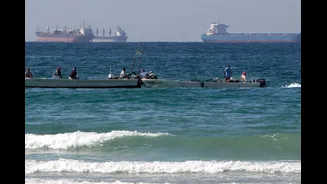
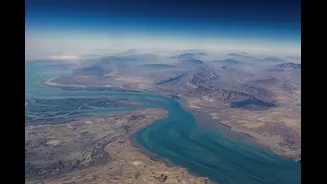
The Strait of Hormuz, a vital maritime passage connecting Gulf oil and gas producers to global markets, has been severely disrupted since US and Israeli strikes in late February. Iran has since tightened control over the waterway, with only a limited number of vessels — including those linked to India — securing safe passage through negotiated arrangements.
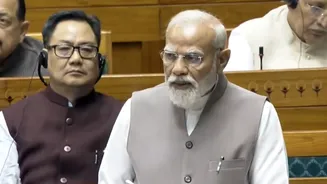
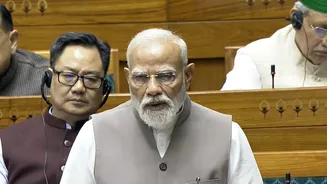
Diplomatic engagement appears to have played a role in facilitating the transit. Prime Minister Narendra Modi recently spoke with Iranian President Masoud Pezeshkian, underscoring the importance of keeping shipping lanes open. External Affairs Minister Subrahmanyam Jaishankar also held discussions with his Iranian counterpart Abbas Araghchi.
The two carriers had entered the Gulf just before hostilities escalated. Jag Vasant loaded LPG in Kuwait, while Pine Gas sourced its cargo from the UAE, and both remained stuck for weeks as tensions peaked.
Despite this breakthrough, five more Indian-flagged LPG carriers remain stranded in the Gulf. All seven vessels are chartered by state-run refiners Bharat Petroleum and Hindustan Petroleum.
Industry experts caution that while the current shipments offer temporary relief, they account for only a short window of India’s consumption needs. Authorities have already moved to prioritise LPG carriers at Indian ports to ensure faster unloading and distribution.
For now, the safe passage of the two vessels signals a cautious reopening of a critical energy route and highlights the delicate balance of diplomacy and navigation in a volatile region.
The vessels Jag Vasant and Pine Gas are carrying a combined cargo of around 92,000 tonnes of LPG, enough to meet roughly a day’s domestic demand. Their movement comes as a relief amid supply concerns triggered by disruptions in one of the world’s most critical energy chokepoints.
Some movement confirmed in the region
Rajesh Sinha, Special Secretary in the Ministry of Ports, Shipping and Waterways, confirmed there had been “some movement” of Indian vessels in the region on Monday. Both ships are currently sailing in close proximity and have not publicly declared their destination, instead signalling Indian ownership, a precaution increasingly adopted by vessels navigating the tense corridor.
Ship-tracking data shows the carriers followed a route along Iran’s coastline, passing near Qeshm and Larak islands a path believed to be approved by Iranian authorities. This route deviates from conventional shipping lanes closer to Oman, which have seen heightened risks following recent attacks.
Keeping shipping lanes open
The Strait of Hormuz, a vital maritime passage connecting Gulf oil and gas producers to global markets, has been severely disrupted since US and Israeli strikes in late February. Iran has since tightened control over the waterway, with only a limited number of vessels — including those linked to India — securing safe passage through negotiated arrangements.
Diplomatic engagement appears to have played a role in facilitating the transit. Prime Minister Narendra Modi recently spoke with Iranian President Masoud Pezeshkian, underscoring the importance of keeping shipping lanes open. External Affairs Minister Subrahmanyam Jaishankar also held discussions with his Iranian counterpart Abbas Araghchi.
The two carriers had entered the Gulf just before hostilities escalated. Jag Vasant loaded LPG in Kuwait, while Pine Gas sourced its cargo from the UAE, and both remained stuck for weeks as tensions peaked.
5 more Indian-flagged LPG carriers remain stranded
Despite this breakthrough, five more Indian-flagged LPG carriers remain stranded in the Gulf. All seven vessels are chartered by state-run refiners Bharat Petroleum and Hindustan Petroleum.
Industry experts caution that while the current shipments offer temporary relief, they account for only a short window of India’s consumption needs. Authorities have already moved to prioritise LPG carriers at Indian ports to ensure faster unloading and distribution.
For now, the safe passage of the two vessels signals a cautious reopening of a critical energy route and highlights the delicate balance of diplomacy and navigation in a volatile region.