




What is the story about?
Deposed Venezuelan leader Nicolas Maduro has argued that he should be immune from prosecution in the United States as a head of state.
Under customary international law, a serving head of state enjoys immunity from prosecution in another country’s courts — a principle long observed in the United States and globally.
For instance, in 2022, a US court dismissed a case against Saudi Crown Prince Mohammed bin Salman over the killing of journalist Jamal Khashoggi after the US government confirmed he had head-of-state immunity.
However, Maduro’s situation is more complex. For years, successive US administrations have maintained that he clung to power illegitimately.
In 2024, the Joe Biden administration declared that Opposition candidate Edmundo Gonzalez had won Venezuela’s election and accused Maduro-controlled authorities of fraudulently declaring him the victor. The Trump administration has maintained the same stance.
Yet the Trump administration may have weakened its position by engaging with Venezuelan Vice President Delcy Rodriguez, who took over as the country's interim leader after Maduro’s capture.
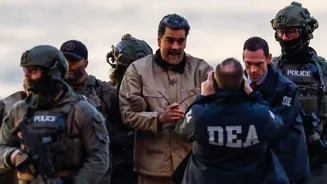
In his first court appearance on Monday, Maduro told the judge he remains the “head of a sovereign state” and is “entitled to the privileges and immunities” that come with that status. He described his extraction from Caracas to the United States as a “military abduction”.
While the Trump administration will challenge this claim, its de facto recognition of Rodriguez —formerly Maduro’s deputy— as Venezuela’s leader could complicate matters.
Maduro is likely to argue that he retains legitimacy or that the administration’s recognition of Rodriguez preserves his immunity, a Department of Justice source told the New York Post.
The administration will in turn argue that it has not recognised Maduro as Venezuela’s head of state for years. It will cite sham elections and electoral fraud that it says propped Maduro's regime. It is expected to invoke the precedent of Panamanian leader Manuel Noriega.
In 1989, after Panama declared a state of war with the United States and attacked US personnel, US forces invaded the country at the orders of then-President George HW Bush and captured Noriega and brought him to the United States to stand trial. Noriega claimed head-of-state immunity but the court rejected it by noting the United States had never recognised him as Panama’s leader.
If Maduro formally invokes immunity, Trump’s team is expected to make a similar argument.
Federal prosecutor Richard Gregorie, who successfully argued against Noriega’s claim, told The Post, “Who we recognise as the head of state is an Executive decision. Therefore, who we recognise as head of state is who the law says is head of state. The US has never recognised Maduro as head of state [since 2019]. He has always been a target of investigation… So I don’t see that that argument is going to succeed.”
Despite the lack of recognition, Trump’s case against Maduro’s immunity claim is not airtight.
The administration’s continued engagement with Rodriguez and her de facto recognition as Venezuela’s leader strengthens Maduro’s argument. If Rodriguez is legitimate —as implied by US engagement— then Maduro could claim legitimacy too since her authority stems from her role as his deputy. Moreover, Rodriguez has maintained that Maduro remains president and that she is merely officiating in his absence.
The Post reported that US officials fear Maduro will argue that engagement with Rodriguez amounts to recognition of his government and his status as head of state.
Legal scholars warn that immunity hinges less on moral clarity than on technical recognition, and any ambiguity could give Maduro an opening to delay or derail proceedings.
The question has raised alarms inside the Justice Department, where officials worry Maduro could mount a surprisingly strong case unless Trump’s team clearly and publicly disavows Rodriguez, the Justice Department source told The Post.
“DoJ could counter that the US has not recognised Maduro since 2019 and that no alternative authority can waive or confer immunity on him, making it wise to clearly recognise a legitimate opposition figure to foreclose any immunity argument based on ambiguity,” the source said.
Moreover, while courts often defer to the government’s position on recognition, they are not bound to do so and may independently decide whether someone qualifies as a legitimate head of state.
Under customary international law, a serving head of state enjoys immunity from prosecution in another country’s courts — a principle long observed in the United States and globally.
For instance, in 2022, a US court dismissed a case against Saudi Crown Prince Mohammed bin Salman over the killing of journalist Jamal Khashoggi after the US government confirmed he had head-of-state immunity.
However, Maduro’s situation is more complex. For years, successive US administrations have maintained that he clung to power illegitimately.
In 2024, the Joe Biden administration declared that Opposition candidate Edmundo Gonzalez had won Venezuela’s election and accused Maduro-controlled authorities of fraudulently declaring him the victor. The Trump administration has maintained the same stance.
Yet the Trump administration may have weakened its position by engaging with Venezuelan Vice President Delcy Rodriguez, who took over as the country's interim leader after Maduro’s capture.
Maduro makes his case for immunity
In his first court appearance on Monday, Maduro told the judge he remains the “head of a sovereign state” and is “entitled to the privileges and immunities” that come with that status. He described his extraction from Caracas to the United States as a “military abduction”.
While the Trump administration will challenge this claim, its de facto recognition of Rodriguez —formerly Maduro’s deputy— as Venezuela’s leader could complicate matters.
Maduro is likely to argue that he retains legitimacy or that the administration’s recognition of Rodriguez preserves his immunity, a Department of Justice source told the New York Post.
The administration will in turn argue that it has not recognised Maduro as Venezuela’s head of state for years. It will cite sham elections and electoral fraud that it says propped Maduro's regime. It is expected to invoke the precedent of Panamanian leader Manuel Noriega.
In 1989, after Panama declared a state of war with the United States and attacked US personnel, US forces invaded the country at the orders of then-President George HW Bush and captured Noriega and brought him to the United States to stand trial. Noriega claimed head-of-state immunity but the court rejected it by noting the United States had never recognised him as Panama’s leader.
If Maduro formally invokes immunity, Trump’s team is expected to make a similar argument.
Federal prosecutor Richard Gregorie, who successfully argued against Noriega’s claim, told The Post, “Who we recognise as the head of state is an Executive decision. Therefore, who we recognise as head of state is who the law says is head of state. The US has never recognised Maduro as head of state [since 2019]. He has always been a target of investigation… So I don’t see that that argument is going to succeed.”
But Trump’s case against immunity is not watertight
Despite the lack of recognition, Trump’s case against Maduro’s immunity claim is not airtight.
The administration’s continued engagement with Rodriguez and her de facto recognition as Venezuela’s leader strengthens Maduro’s argument. If Rodriguez is legitimate —as implied by US engagement— then Maduro could claim legitimacy too since her authority stems from her role as his deputy. Moreover, Rodriguez has maintained that Maduro remains president and that she is merely officiating in his absence.
The Post reported that US officials fear Maduro will argue that engagement with Rodriguez amounts to recognition of his government and his status as head of state.
Legal scholars warn that immunity hinges less on moral clarity than on technical recognition, and any ambiguity could give Maduro an opening to delay or derail proceedings.
The question has raised alarms inside the Justice Department, where officials worry Maduro could mount a surprisingly strong case unless Trump’s team clearly and publicly disavows Rodriguez, the Justice Department source told The Post.
“DoJ could counter that the US has not recognised Maduro since 2019 and that no alternative authority can waive or confer immunity on him, making it wise to clearly recognise a legitimate opposition figure to foreclose any immunity argument based on ambiguity,” the source said.
Moreover, while courts often defer to the government’s position on recognition, they are not bound to do so and may independently decide whether someone qualifies as a legitimate head of state.