







What is the story about?
India consumes hundreds of tonnes of gold every year, but produces almost none of it domestically.
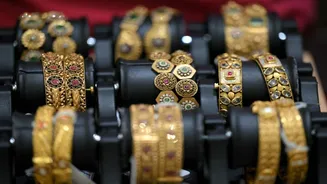
The country buys roughly 700 to 800 tonnes of gold annually, making it one of the world’s largest consumers of the precious metal. Yet India’s own mines produce barely 1 to 2 tonnes a year, leaving the country dependent on imports for more than 90 per cent of its gold requirement.
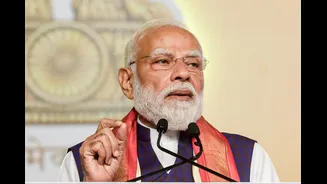
That heavy reliance on imported bullion is now back in sharp focus after Prime Minister Narendra Modi urged citizens to avoid “non-essential” gold purchases for the next year as part of a broader effort to conserve foreign exchange amid rising global uncertainty.
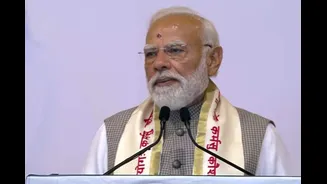
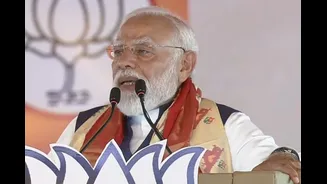
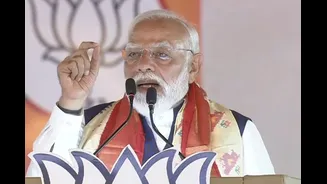
Addressing a rally in Hyderabad on Sunday, Modi appealed to people to reduce fuel consumption, revive work-from-home practices, avoid unnecessary foreign travel and support locally made products. But among all the measures he proposed, his appeal to slow gold buying stood out because it targeted one of India’s biggest import habits.
Gold remains one of India’s largest import expenses after crude oil and electronics. Unlike industrial imports that directly feed manufacturing and exports, most gold imports are driven by jewellery demand, household savings and investment buying.
That means India spends billions of dollars every month importing gold, creating pressure on the current account deficit and foreign exchange reserves.
The concern becomes especially acute when oil prices are already rising.
India imports nearly 90 per cent of its crude oil requirements, and the continuing tensions in West Asia have pushed up global energy prices and disrupted supply chains. Higher oil prices increase India’s import bill, weaken the rupee and add strain on dollar reserves. Large gold imports only worsen that pressure.
Gold accounts for nearly 9 per cent of India’s total import bill, making it one of the country’s largest foreign exchange outflows.
“In the current situation, we must place great emphasis on saving foreign exchange,” Modi said during his speech.
ALSO READ: Can Indians really cut gold buying? Modi takes aim at the country’s biggest import obsession
The government’s concern comes even as gold imports have slowed dramatically in recent months.
Imports reportedly fell from nearly 100 tonnes in January to around 65-66 tonnes in February, before slipping further to 20-22 tonnes in March. April imports are now estimated at just 15 tonnes — among the lowest monthly levels seen in decades outside the Covid pandemic period.
India likely spent around $1.3 billion on gold imports in April, far below the monthly average of roughly $6 billion during the previous financial year.
Industry executives say multiple factors are behind the slowdown, including supply disruptions, customs delays, tighter import controls and tax-related uncertainty.
Banks, which account for most of India’s bullion imports, reportedly halted shipments after customs authorities began demanding a 3 per cent integrated GST on imported gold.
Bullion dealers and market participants believe policymakers may be informally trying to slow imports to help narrow the trade deficit and support the rupee, which has been among Asia’s weaker-performing currencies this year.
Despite soaring prices and slowing imports, India’s appetite for gold remains remarkably strong.
Data from the World Gold Council (WGC) shows India’s total gold demand rose 10 per cent year-on-year to 151 tonnes during the March quarter, even as prices touched record highs.
More significantly, India’s gold market is undergoing a structural shift.
For the first time on record, investment demand for gold overtook jewellery demand in the March quarter.
Investment demand — including bars, coins and exchange-traded funds (ETFs) — surged 54 per cent year-on-year to 82 tonnes, while jewellery demand fell nearly 20 per cent to 66 tonnes as higher prices hurt affordability.
The shift suggests Indians are increasingly buying gold not merely for weddings and festivals, but as a financial hedge against uncertainty.
Bar and coin demand jumped 34 per cent to 62 tonnes, nearly matching jewellery demand. Gold ETF inflows also touched record highs during the quarter.
The WGC said investment demand now accounts for nearly 70 per cent of India’s total gold demand — a dramatic change for a market historically dominated by jewellery purchases.
India has attempted to curb gold imports several times in the past through higher import duties, restrictions and gold monetisation schemes. But demand has historically remained resilient because gold in India is not viewed merely as a luxury purchase.
For many households, it is savings, security and financial insurance rolled into one.
The challenge for policymakers now is even greater because economic uncertainty itself is pushing investors toward gold.
Weak equity market returns, inflation concerns, geopolitical tensions and rupee weakness have all strengthened gold’s appeal as a safe-haven asset.
The World Gold Council expects investment demand to remain strong in the coming quarters, supported by continuing global uncertainty and price momentum.
That creates a difficult contradiction for the government.
At a time when New Delhi wants Indians to reduce imports and conserve foreign exchange, millions of households increasingly see gold itself as protection against economic instability.
The country buys roughly 700 to 800 tonnes of gold annually, making it one of the world’s largest consumers of the precious metal. Yet India’s own mines produce barely 1 to 2 tonnes a year, leaving the country dependent on imports for more than 90 per cent of its gold requirement.
That heavy reliance on imported bullion is now back in sharp focus after Prime Minister Narendra Modi urged citizens to avoid “non-essential” gold purchases for the next year as part of a broader effort to conserve foreign exchange amid rising global uncertainty.
Addressing a rally in Hyderabad on Sunday, Modi appealed to people to reduce fuel consumption, revive work-from-home practices, avoid unnecessary foreign travel and support locally made products. But among all the measures he proposed, his appeal to slow gold buying stood out because it targeted one of India’s biggest import habits.
Why gold imports worry India
Gold remains one of India’s largest import expenses after crude oil and electronics. Unlike industrial imports that directly feed manufacturing and exports, most gold imports are driven by jewellery demand, household savings and investment buying.
That means India spends billions of dollars every month importing gold, creating pressure on the current account deficit and foreign exchange reserves.
The concern becomes especially acute when oil prices are already rising.
India imports nearly 90 per cent of its crude oil requirements, and the continuing tensions in West Asia have pushed up global energy prices and disrupted supply chains. Higher oil prices increase India’s import bill, weaken the rupee and add strain on dollar reserves. Large gold imports only worsen that pressure.
Gold accounts for nearly 9 per cent of India’s total import bill, making it one of the country’s largest foreign exchange outflows.
“In the current situation, we must place great emphasis on saving foreign exchange,” Modi said during his speech.
ALSO READ: Can Indians really cut gold buying? Modi takes aim at the country’s biggest import obsession
India’s gold imports are already falling sharply
The government’s concern comes even as gold imports have slowed dramatically in recent months.
Imports reportedly fell from nearly 100 tonnes in January to around 65-66 tonnes in February, before slipping further to 20-22 tonnes in March. April imports are now estimated at just 15 tonnes — among the lowest monthly levels seen in decades outside the Covid pandemic period.
India likely spent around $1.3 billion on gold imports in April, far below the monthly average of roughly $6 billion during the previous financial year.
Industry executives say multiple factors are behind the slowdown, including supply disruptions, customs delays, tighter import controls and tax-related uncertainty.
Banks, which account for most of India’s bullion imports, reportedly halted shipments after customs authorities began demanding a 3 per cent integrated GST on imported gold.
Bullion dealers and market participants believe policymakers may be informally trying to slow imports to help narrow the trade deficit and support the rupee, which has been among Asia’s weaker-performing currencies this year.
India is buying gold differently now
Despite soaring prices and slowing imports, India’s appetite for gold remains remarkably strong.
Data from the World Gold Council (WGC) shows India’s total gold demand rose 10 per cent year-on-year to 151 tonnes during the March quarter, even as prices touched record highs.
More significantly, India’s gold market is undergoing a structural shift.
For the first time on record, investment demand for gold overtook jewellery demand in the March quarter.
Investment demand — including bars, coins and exchange-traded funds (ETFs) — surged 54 per cent year-on-year to 82 tonnes, while jewellery demand fell nearly 20 per cent to 66 tonnes as higher prices hurt affordability.
The shift suggests Indians are increasingly buying gold not merely for weddings and festivals, but as a financial hedge against uncertainty.
Bar and coin demand jumped 34 per cent to 62 tonnes, nearly matching jewellery demand. Gold ETF inflows also touched record highs during the quarter.
The WGC said investment demand now accounts for nearly 70 per cent of India’s total gold demand — a dramatic change for a market historically dominated by jewellery purchases.
Why slowing gold buying may not be easy
India has attempted to curb gold imports several times in the past through higher import duties, restrictions and gold monetisation schemes. But demand has historically remained resilient because gold in India is not viewed merely as a luxury purchase.
For many households, it is savings, security and financial insurance rolled into one.
The challenge for policymakers now is even greater because economic uncertainty itself is pushing investors toward gold.
Weak equity market returns, inflation concerns, geopolitical tensions and rupee weakness have all strengthened gold’s appeal as a safe-haven asset.
The World Gold Council expects investment demand to remain strong in the coming quarters, supported by continuing global uncertainty and price momentum.
That creates a difficult contradiction for the government.
At a time when New Delhi wants Indians to reduce imports and conserve foreign exchange, millions of households increasingly see gold itself as protection against economic instability.