




What is the story about?
As the Iran war continues and other nations struggle, India continues to brace the oil shock.
As the price of crude oil has soared over the $104 (Rs 9,752) mark, several nations in Asia, including many of India’s neighbours, have taken steps such as capping domestic fuel prices, scrapping tariffs on fuel imports, and introducing a four-day work week.
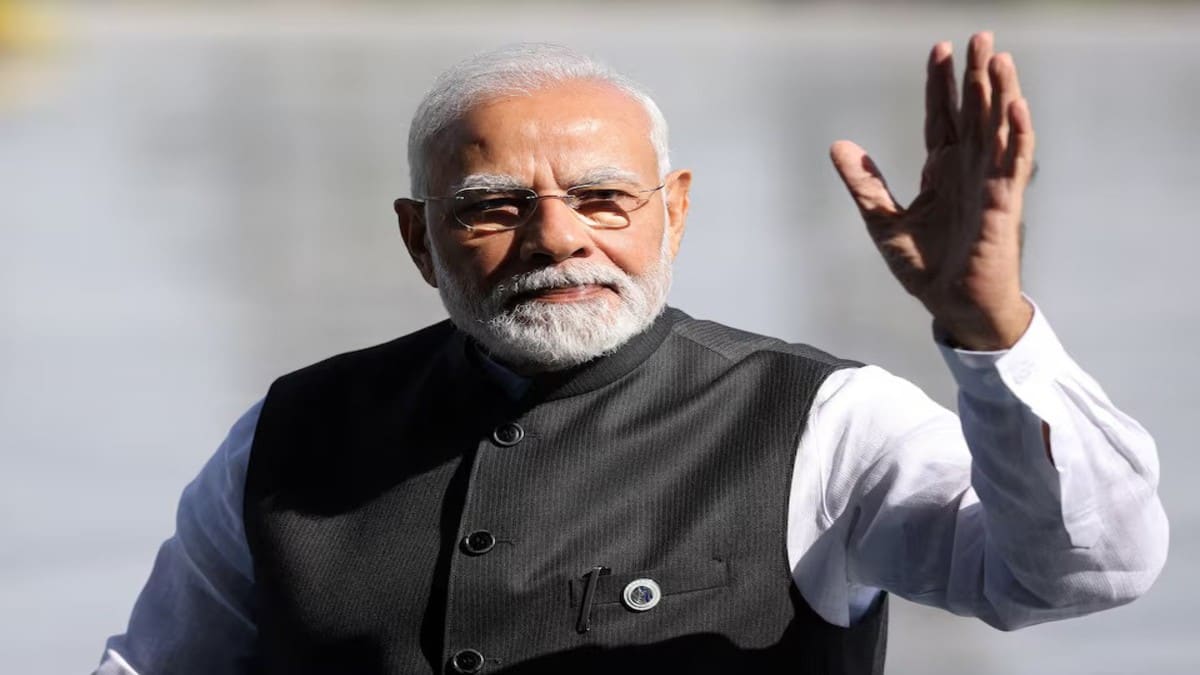
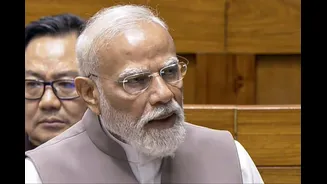
India, meanwhile, has largely remained insulated from the fallout of the war in West Asia. On Monday, Prime Minister Narendra Modi in the Lok Sabha expounded on India’s position and the outlook on the war.
But what did Modi say? How has India braced amid the oil shock? And what are other countries doing?
Let’s take a closer look.
First, let’s examine Prime Minister Narendra Modi’s speech in the Rajya Sabha today.
Modi said the government was making every effort to protect the public interest. “I urge citizens to be prepared for every challenge. The impact of this war may be long-lasting, but I assure the people that the government is alert and the nation’s interest remains paramount,” Modi was quoted as saying by
Hindustan Times.
He also urged all the states to work together, as they did during the Covid-19 pandemic. “The challenges ahead will test us. I urge all states to act proactively, as in difficult times it is labourers and the weaker sections who are affected the most. Steps must be taken to safeguard our migrant workers. State governments should also remain vigilant against black marketing, which tends to rise in such periods, and ensure that such practices do not take place,” Modi said.
He noted that India has brought home at least 3.75 lakh Indians.
“Any threat to human life in this war is not in the interest of humanity, so India is making constant efforts to encourage all sides to reach a peaceful solution as soon as possible. In times of crisis, the safety of Indians both in the country and abroad is our top priority. Since the war began, more than 3,75,000 Indians have safely returned to India. From Iran alone, more than 1,000 Indians have returned safely so far, including over 700 young people who were studying medicine. Our government is working with full sensitivity during this time of crisis,” Modi said.
Modi said though the Strait of Hormuz remains blocked, India is undertaking diplomatic efforts to try to get its ships home.
“Through diplomacy, India is trying to ensure safe commutation of the country’s ships even in a war situation. India has opted for a solution through dialogue to resolve this issue,” Modi said.
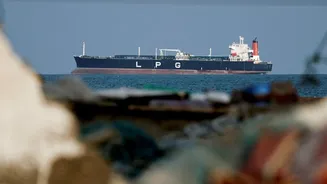
He noted that India is diversifying its sources of oil and gas and mentioned that recent shipments of crude oil and LPG have arrived from several nations. He also noted how India has expanded its energy imports from just over two dozen to 41 countries over the past decade.
“Irrespective of crisis, maintaining high economic growth is our responsibility,” Modi said as per Live Mint. “There is no other option for India but to become self-reliant.”
Modi on Monday addressed the Lok Sabha on the current West Asia conflict, outlining key aspects of the escalating crisis and India’s position on the issue. According to The Indian Express, Modi called the present situation “concerning”. He added that his speech in Parliament gives a gauge of the seriousness of the issue and its impact on people’s lives.
Modi said New Delhi enjoys “extensive trade relations” with “countries at war and affected by war” in West Asia and the Gulf. He also noted that the Strait of Hormuz, through which 20 per cent of the world’s energy passes, is “unacceptable”. He noted that India imports 60 per cent of its LPG requirements and that the Centre is boosting domestic production.
He also noted the Indians in the region, including those stranded at sea. This includes the 1 crore people living and working in the Gulf countries, many of whom are from Kerala, Uttar Pradesh, Bihar, and West Bengal. There are also around 700 Indian seafarers on nearly two dozen ships in the Strait of Hormuz.
Modi said diplomacy is the only way forward and called on all parties to put an end to the crisis. He noted that he had spoken to all the major leaders in the region, including Iran, Saudi Arabia, the UAE, Qatar, Oman, Kuwait, and Bahrain. He reiterated that India has always called for dialogue, diplomacy and peace, as it has done during the Russia-Ukraine war.
While many have condemned India’s “silence” on the death of the late Iranian Supreme Leader Ayatollah Ali Khamenei, Modi was once again reiterating how India is trying to balance its relations with Iran and its ties to the West. Modi urged a “unanimous and united voice from India’s Parliament on this crisis reaches the world”.
The Times of India quoted Modi saying India has a strategic petrol reserve of 53 lakh tonnes, with another 65 lakh tonnes in development. “Our government’s effort has been to ensure that supply is not severely affected,” Modi said.
The Prime Minister added that an inter-ministerial group is meeting every day to examine import-export issues. He said ethanol blending saves about 4.5 crore barrels of crude oil annually, while railway electrification has reduced diesel use by 180 crore litres per year.
He said metro expansion and plans for 15,000 electric buses have also reduced dependence on fossil fuels. Likening the situation to Covid-19, Modi said India has adequate stocks of foodgrain and strong emergency plans. He also called India’s coal stocks “adequate”. Modi noted that renewable capacity has crossed 250 GW, alongside solar, biogas and hydropower.
Meanwhile, NDTV quoted junior Petroleum Minister Suresh Gopi as telling Parliament that India’s strategic reserves currently hold an estimated 3.372 million tonnes. Gopi, citing data from Indian Strategic Petroleum Reserve, said this is around two-thirds of its capacity.
India's SPRs, comprising an underground facility in Andhra Pradesh and two more in Karnataka, can hold around 5.33 million tonnes. A 100 per cent capacity would cover around 9.5 days during serious events like the Iran war.
Gopi added that SPRs with unrefined or crude oil, and ready-to-use fuel including “stores with oil marketing companies”, stand at 74 days. Gopi added that India's SPR capacity is being expanded by 6.5 million tonnes, with a fourth facility in Odisha which can hold four million tonnes, and storage in Karnataka being increased to 2.5 million tonnes.
Pakistan has taken strict measures to deal with the shock. This includes cancelling its Republic Day celebrations, fuel conservation steps, limiting non-essential travel and encouraging work-from-home.
China is using price controls and caps to prevent sharp increases for consumers, while also restricting fuel exports, including gasoline, diesel and jet fuel.
Beijing is also ramping up coal usage and alternative energy sources to reduce immediate dependence on imported oil. China, which has large strategic petroleum reserves, is also diversifying imports away from the Gulf.
Bangladesh had temporarily suspended fuel rationing to allow smooth travel prior to Eid. Authorities are now trying to obtain fuel from India, China and other partners.
Nepal, which is heavily dependent on imports, has increased prices of petrol and diesel. The state-run Nepal Oil Corporation has said this is required in order to pay Indian Oil Corporation and keep supply going.
Sri Lanka is arguably in the most difficult position. The government has responded by imposing fuel rationing, sharp price hikes, and restrictions on daily activity, including reduced work schedules in some sectors.
Sri Lanka is also turning to emergency coal imports and other stopgap energy sources. Authorities are also trying to tamp down demand via planned power cuts and usage limits.
South Korea has relaxed limits on coal-based power amid tightening LNG supplies. It is also raising the utilisation rate of nuclear power plants to about 80 per cent. Authorities have capped domestic fuel prices and are considering introducing energy vouchers to support vulnerable households.
Japan is tapping its national oil reserves. Tokyo has vowed to release 80 million barrels, a record, from its national oil reserves—around 45 days of supply. Tokyo has also asked Australia, its largest supplier of LNG, to increase its output.
Indonesia is aiming to increase spending on fuel subsidies to keep domestic prices stable. It is also fast-tracking its B50 biodiesel programme, which blends 50 per cent palm-oil biodiesel with conventional diesel.
Vietnam has tapped its fuel price stabilisation fund to stop domestic oil prices increasing. The government has also ordered banks to finance fuel traders to allow them to buy additional supplies. Vietnam is also considering expanding national petroleum reserves and has told airlines to prepare for possible flight reductions.
Thailand and the Philippines are looking at buying Russian oil to diversify supply sources. Thailand is also planning to keep cooking gas prices frozen and promote the use of biodiesel via subsidies. The Philippines has ordered a four-day work week for some government offices.
1) Why has crude oil reached $104 (Rs I 9,752)?
Prices have surged due to supply disruptions caused by the Iran war, particularly around the Strait of Hormuz.
2) How is India handling the oil price surge?
India is using strategic reserves, diversifying imports, boosting domestic production, and relying on diplomacy to secure supplies.
3) Which countries are most affected by the Iran war?
Countries such as Sri Lanka, Pakistan, and Nepal are facing the toughest challenges due to high import dependence and economic constraints.
With inputs from agenciess
As the price of crude oil has soared over the $104 (Rs 9,752) mark, several nations in Asia, including many of India’s neighbours, have taken steps such as capping domestic fuel prices, scrapping tariffs on fuel imports, and introducing a four-day work week.
India, meanwhile, has largely remained insulated from the fallout of the war in West Asia. On Monday, Prime Minister Narendra Modi in the Lok Sabha expounded on India’s position and the outlook on the war.
But what did Modi say? How has India braced amid the oil shock? And what are other countries doing?
Let’s take a closer look.
How India has braced amid oil shock
First, let’s examine Prime Minister Narendra Modi’s speech in the Rajya Sabha today.
Modi said the government was making every effort to protect the public interest. “I urge citizens to be prepared for every challenge. The impact of this war may be long-lasting, but I assure the people that the government is alert and the nation’s interest remains paramount,” Modi was quoted as saying by
He also urged all the states to work together, as they did during the Covid-19 pandemic. “The challenges ahead will test us. I urge all states to act proactively, as in difficult times it is labourers and the weaker sections who are affected the most. Steps must be taken to safeguard our migrant workers. State governments should also remain vigilant against black marketing, which tends to rise in such periods, and ensure that such practices do not take place,” Modi said.
He noted that India has brought home at least 3.75 lakh Indians.
“Any threat to human life in this war is not in the interest of humanity, so India is making constant efforts to encourage all sides to reach a peaceful solution as soon as possible. In times of crisis, the safety of Indians both in the country and abroad is our top priority. Since the war began, more than 3,75,000 Indians have safely returned to India. From Iran alone, more than 1,000 Indians have returned safely so far, including over 700 young people who were studying medicine. Our government is working with full sensitivity during this time of crisis,” Modi said.
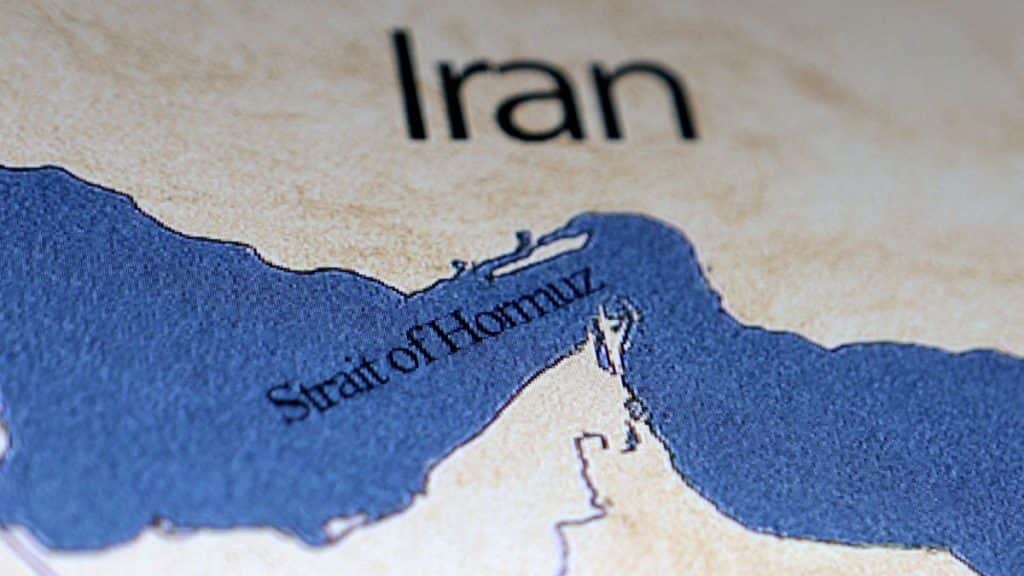
Modi said though the Strait of Hormuz remains blocked, India is undertaking diplomatic efforts to try to get its ships home.
A map showing the Strait of Hormuz and Iran. Photo: File/Reuters
“Through diplomacy, India is trying to ensure safe commutation of the country’s ships even in a war situation. India has opted for a solution through dialogue to resolve this issue,” Modi said.
'No option but to become self-reliant'
He noted that India is diversifying its sources of oil and gas and mentioned that recent shipments of crude oil and LPG have arrived from several nations. He also noted how India has expanded its energy imports from just over two dozen to 41 countries over the past decade.
“Irrespective of crisis, maintaining high economic growth is our responsibility,” Modi said as per Live Mint. “There is no other option for India but to become self-reliant.”
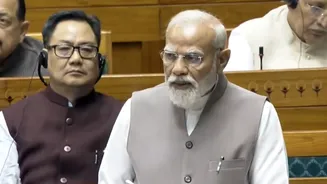
Modi on Monday addressed the Lok Sabha on the current West Asia conflict, outlining key aspects of the escalating crisis and India’s position on the issue. According to The Indian Express, Modi called the present situation “concerning”. He added that his speech in Parliament gives a gauge of the seriousness of the issue and its impact on people’s lives.
Modi said New Delhi enjoys “extensive trade relations” with “countries at war and affected by war” in West Asia and the Gulf. He also noted that the Strait of Hormuz, through which 20 per cent of the world’s energy passes, is “unacceptable”. He noted that India imports 60 per cent of its LPG requirements and that the Centre is boosting domestic production.
He also noted the Indians in the region, including those stranded at sea. This includes the 1 crore people living and working in the Gulf countries, many of whom are from Kerala, Uttar Pradesh, Bihar, and West Bengal. There are also around 700 Indian seafarers on nearly two dozen ships in the Strait of Hormuz.
Modi said diplomacy is the only way forward and called on all parties to put an end to the crisis. He noted that he had spoken to all the major leaders in the region, including Iran, Saudi Arabia, the UAE, Qatar, Oman, Kuwait, and Bahrain. He reiterated that India has always called for dialogue, diplomacy and peace, as it has done during the Russia-Ukraine war.
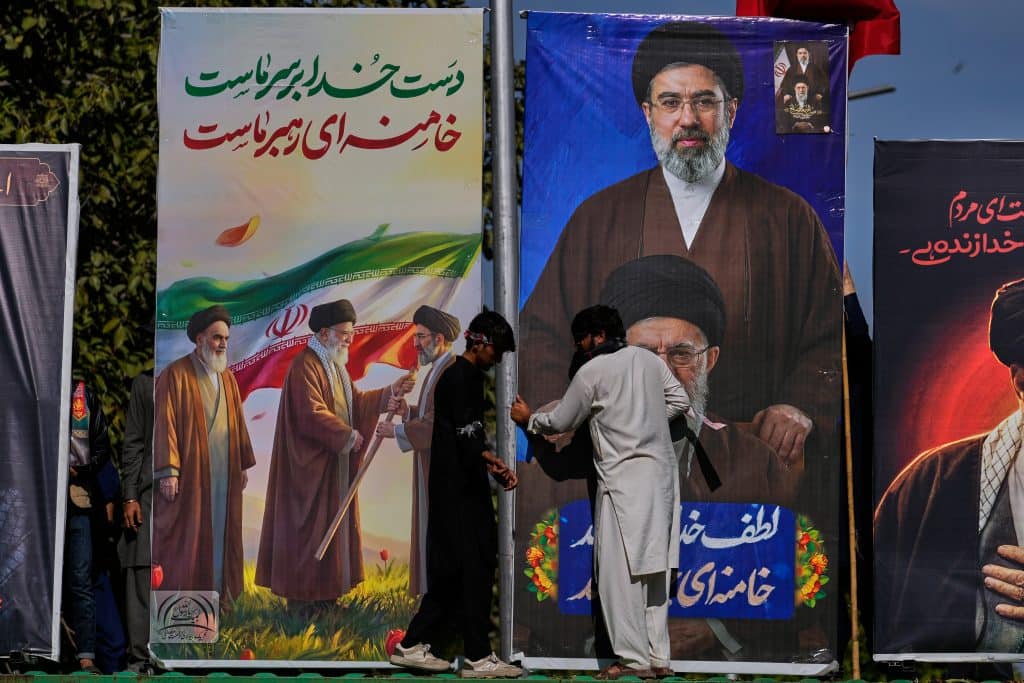
While many have condemned India’s “silence” on the death of the late Iranian Supreme Leader Ayatollah Ali Khamenei, Modi was once again reiterating how India is trying to balance its relations with Iran and its ties to the West. Modi urged a “unanimous and united voice from India’s Parliament on this crisis reaches the world”.
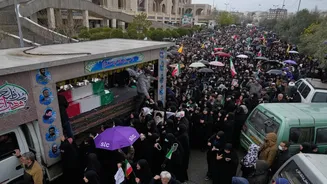
Shiite Muslims adjust huge billboards of Iranian supreme leaders Ayatollah Mojtaba Khamenei and his late father Ayatollah Ali Khamenei during the annual Al-Quds Day rally to show the importance of Jerusalem to Muslims and in solidarity with Palestinian and Iranian people, in Islamabad, Pakistan, Friday, March 13, 2026. AP
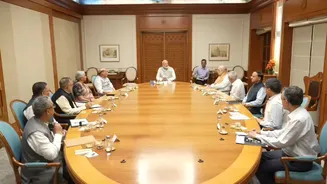
The Times of India quoted Modi saying India has a strategic petrol reserve of 53 lakh tonnes, with another 65 lakh tonnes in development. “Our government’s effort has been to ensure that supply is not severely affected,” Modi said.
The Prime Minister added that an inter-ministerial group is meeting every day to examine import-export issues. He said ethanol blending saves about 4.5 crore barrels of crude oil annually, while railway electrification has reduced diesel use by 180 crore litres per year.
He said metro expansion and plans for 15,000 electric buses have also reduced dependence on fossil fuels. Likening the situation to Covid-19, Modi said India has adequate stocks of foodgrain and strong emergency plans. He also called India’s coal stocks “adequate”. Modi noted that renewable capacity has crossed 250 GW, alongside solar, biogas and hydropower.
'SPR at two-thirds capacity'
Meanwhile, NDTV quoted junior Petroleum Minister Suresh Gopi as telling Parliament that India’s strategic reserves currently hold an estimated 3.372 million tonnes. Gopi, citing data from Indian Strategic Petroleum Reserve, said this is around two-thirds of its capacity.
India's SPRs, comprising an underground facility in Andhra Pradesh and two more in Karnataka, can hold around 5.33 million tonnes. A 100 per cent capacity would cover around 9.5 days during serious events like the Iran war.
Gopi added that SPRs with unrefined or crude oil, and ready-to-use fuel including “stores with oil marketing companies”, stand at 74 days. Gopi added that India's SPR capacity is being expanded by 6.5 million tonnes, with a fourth facility in Odisha which can hold four million tonnes, and storage in Karnataka being increased to 2.5 million tonnes.
How other countries are struggling
Pakistan
Pakistan has taken strict measures to deal with the shock. This includes cancelling its Republic Day celebrations, fuel conservation steps, limiting non-essential travel and encouraging work-from-home.
China
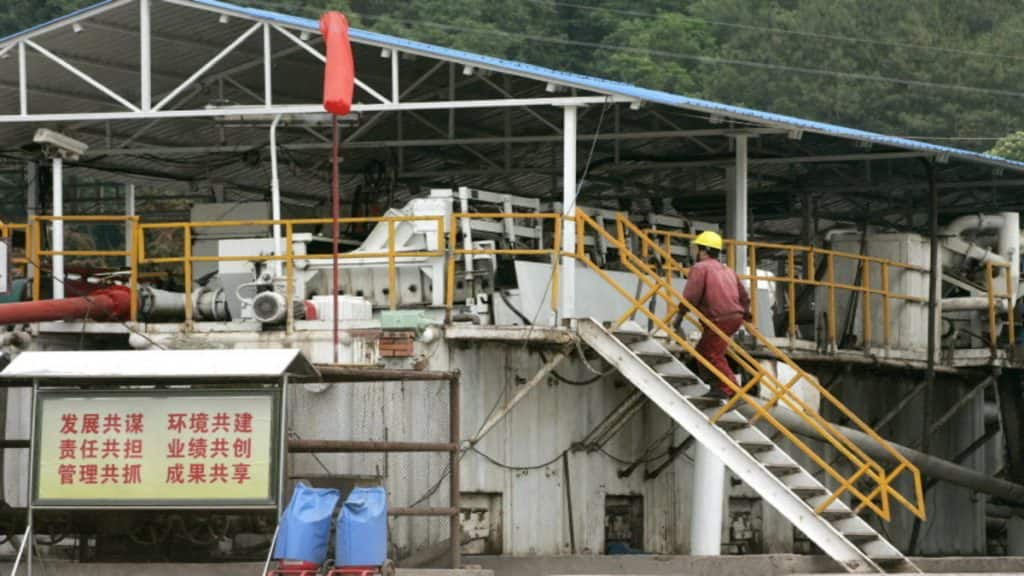
China is using price controls and caps to prevent sharp increases for consumers, while also restricting fuel exports, including gasoline, diesel and jet fuel.
A worker makes his way onto an operation space at an exploration site in the Longgang gas field in Lishan, in southwest China's Sichuan province. (File/AFP)
Beijing is also ramping up coal usage and alternative energy sources to reduce immediate dependence on imported oil. China, which has large strategic petroleum reserves, is also diversifying imports away from the Gulf.
Bangladesh
Bangladesh had temporarily suspended fuel rationing to allow smooth travel prior to Eid. Authorities are now trying to obtain fuel from India, China and other partners.
Nepal
Nepal, which is heavily dependent on imports, has increased prices of petrol and diesel. The state-run Nepal Oil Corporation has said this is required in order to pay Indian Oil Corporation and keep supply going.
Sri Lanka
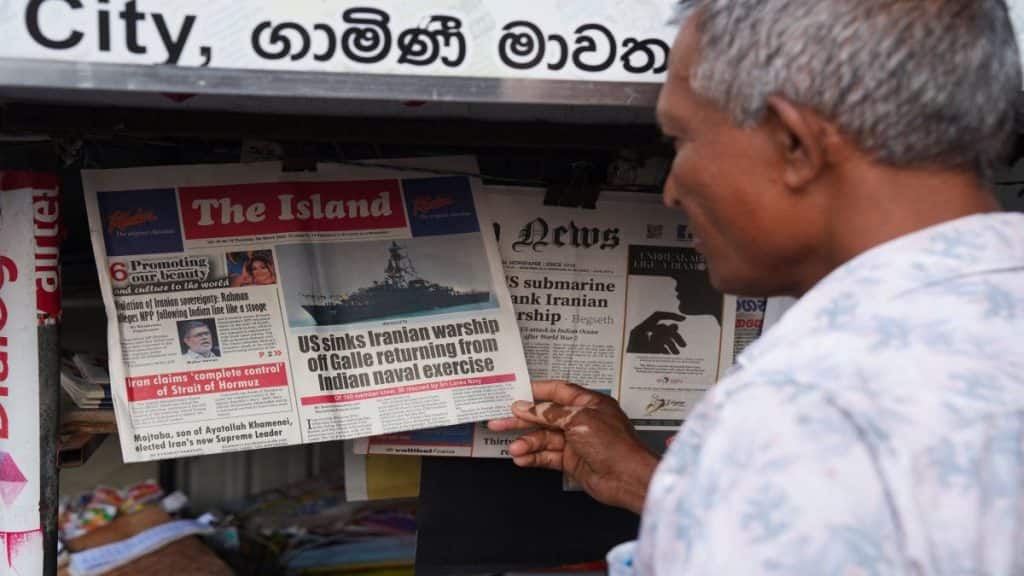
Sri Lanka is arguably in the most difficult position. The government has responded by imposing fuel rationing, sharp price hikes, and restrictions on daily activity, including reduced work schedules in some sectors.
A man checks the local newspaper, follwoing a submarine attack on the Iranian military ship, Iris Dena, off the coast of Sri Lanka, in Galle, Sri Lanka. Reuters
Sri Lanka is also turning to emergency coal imports and other stopgap energy sources. Authorities are also trying to tamp down demand via planned power cuts and usage limits.
South Korea
South Korea has relaxed limits on coal-based power amid tightening LNG supplies. It is also raising the utilisation rate of nuclear power plants to about 80 per cent. Authorities have capped domestic fuel prices and are considering introducing energy vouchers to support vulnerable households.
Japan
Japan is tapping its national oil reserves. Tokyo has vowed to release 80 million barrels, a record, from its national oil reserves—around 45 days of supply. Tokyo has also asked Australia, its largest supplier of LNG, to increase its output.
Indonesia
Indonesia is aiming to increase spending on fuel subsidies to keep domestic prices stable. It is also fast-tracking its B50 biodiesel programme, which blends 50 per cent palm-oil biodiesel with conventional diesel.
Vietnam
Vietnam has tapped its fuel price stabilisation fund to stop domestic oil prices increasing. The government has also ordered banks to finance fuel traders to allow them to buy additional supplies. Vietnam is also considering expanding national petroleum reserves and has told airlines to prepare for possible flight reductions.
Thailand and Philippines
Thailand and the Philippines are looking at buying Russian oil to diversify supply sources. Thailand is also planning to keep cooking gas prices frozen and promote the use of biodiesel via subsidies. The Philippines has ordered a four-day work week for some government offices.
FAQs
1) Why has crude oil reached $104 (Rs I 9,752)?
Prices have surged due to supply disruptions caused by the Iran war, particularly around the Strait of Hormuz.
2) How is India handling the oil price surge?
India is using strategic reserves, diversifying imports, boosting domestic production, and relying on diplomacy to secure supplies.
3) Which countries are most affected by the Iran war?
Countries such as Sri Lanka, Pakistan, and Nepal are facing the toughest challenges due to high import dependence and economic constraints.
With inputs from agenciess