








What is the story about?
For years, trade negotiations between India and the European Union were viewed largely through the lens of tariffs, market access, and export numbers. But the most consequential outcome of the newly signed India–EU Free Trade Agreement (FTA) may lie elsewhere. “Co-creation—not trade volumes alone—may be the most underestimated outcome of this agreement,” Sonia Prashar, Secretary General of the Federation of European Business in India (FEBI), told Firstpost.
“This agreement enables joint manufacturing, shared R&D, global capability centers, green hydrogen projects, and digital innovation hubs serving global markets,” Prashar said. “If leveraged fully, the FTA positions India and Europe not just as trading partners but as co-architects of future technologies and sustainable value chains. That is the real long-term dividend.”
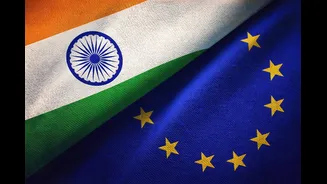
Signed after nearly two decades of intermittent negotiations, the India–EU FTA marks a decisive shift in the economic relationship between the two sides, moving it beyond tariff reductions towards deeper industrial integration, technology collaboration, and supply-chain resilience.
European firms have long flagged India’s tariffs, non-tariff barriers, and compliance complexity as major constraints. According to Prashar, the FTA delivers its biggest breakthroughs in manufacturing-heavy sectors where these frictions were most acute.
“These include machinery and capital goods, automotive and mobility, electronics and electricals, chemicals, pharmaceuticals, and medical devices,” she said. “Equally important are non-tariff gains—simplified compliance, customs facilitation, and regulatory predictability—which matter deeply for advanced manufacturing, clean technologies, and digital industries.”
For many European companies, the agreement is less about headline tariff cuts and more about making India a reliable, scalable base for global operations. Addressing scepticism built after years of stalled talks, Prashar pointed to three tangible outcomes expected within the first year of implementation.
“First, immediate improvement in market access and sourcing flexibility—68 percent of EU companies expect better market access, and 60 per cent anticipate smoother supply chain integration,” she said. “Second, investment acceleration, with 75 per cent of respondents saying the FTA will directly increase their investments. Third, operational ease: 52 per cent expect measurable gains from easier compliance, particularly around customs, certifications, and regulatory clarity.”
“These are measurable outcomes companies can track within the first 12 months,” she added. In the near term, the biggest gains are expected in manufacturing and supply chains, followed by energy and renewables, automotive and mobility, electronics and industrial services.
“These are sectors where European companies are already deeply invested and where nearly 69 per cent are planning further manufacturing expansion in India,” Prashar said. Digital services, global capability centers, and sustainability-linked investments are expected to follow quickly, especially where talent and skills are the key drivers.
The FTA’s conclusion after nearly 20 years of negotiations was made possible by two decisive shifts, Prashar said.
“First, geopolitical reality: Europe and India now see each other as essential partners for economic security and supply-chain resilience,” she said. “Second, India’s economic maturity. India is no longer negotiating from potential alone, but from scale, stability, and execution capability.”
The agreement is already unlocking planned investments rather than speculative interest. Around 75 per cent of EU firms say the FTA will directly increase their investments in India, with more than a quarter preparing investments exceeding €100 million.
“Capital will flow selectively,” Prashar cautioned. “States and sectors that deliver fast approvals, stable regulation, and strong infrastructure will attract investment first. The FTA removes structural barriers; execution will determine speed.”
Three years from now, success will be visible across trade volumes, investment flows, and employment outcomes, she said. EU exports to India are expected to double, bilateral trade should move decisively higher, and EU foreign direct investment should accelerate further.
“But the most important shift,” Prashar said, “will be India’s transformation from a consumption market into a manufacturing, R&D, and services hub for Europe. The metric to watch is not just jobs created, but value-added jobs in technology, manufacturing, and clean energy.”
“This agreement enables joint manufacturing, shared R&D, global capability centers, green hydrogen projects, and digital innovation hubs serving global markets,” Prashar said. “If leveraged fully, the FTA positions India and Europe not just as trading partners but as co-architects of future technologies and sustainable value chains. That is the real long-term dividend.”
Signed after nearly two decades of intermittent negotiations, the India–EU FTA marks a decisive shift in the economic relationship between the two sides, moving it beyond tariff reductions towards deeper industrial integration, technology collaboration, and supply-chain resilience.
European firms have long flagged India’s tariffs, non-tariff barriers, and compliance complexity as major constraints. According to Prashar, the FTA delivers its biggest breakthroughs in manufacturing-heavy sectors where these frictions were most acute.
“These include machinery and capital goods, automotive and mobility, electronics and electricals, chemicals, pharmaceuticals, and medical devices,” she said. “Equally important are non-tariff gains—simplified compliance, customs facilitation, and regulatory predictability—which matter deeply for advanced manufacturing, clean technologies, and digital industries.”
For many European companies, the agreement is less about headline tariff cuts and more about making India a reliable, scalable base for global operations. Addressing scepticism built after years of stalled talks, Prashar pointed to three tangible outcomes expected within the first year of implementation.
“First, immediate improvement in market access and sourcing flexibility—68 percent of EU companies expect better market access, and 60 per cent anticipate smoother supply chain integration,” she said. “Second, investment acceleration, with 75 per cent of respondents saying the FTA will directly increase their investments. Third, operational ease: 52 per cent expect measurable gains from easier compliance, particularly around customs, certifications, and regulatory clarity.”
“These are measurable outcomes companies can track within the first 12 months,” she added. In the near term, the biggest gains are expected in manufacturing and supply chains, followed by energy and renewables, automotive and mobility, electronics and industrial services.
“These are sectors where European companies are already deeply invested and where nearly 69 per cent are planning further manufacturing expansion in India,” Prashar said. Digital services, global capability centers, and sustainability-linked investments are expected to follow quickly, especially where talent and skills are the key drivers.
The FTA’s conclusion after nearly 20 years of negotiations was made possible by two decisive shifts, Prashar said.
“First, geopolitical reality: Europe and India now see each other as essential partners for economic security and supply-chain resilience,” she said. “Second, India’s economic maturity. India is no longer negotiating from potential alone, but from scale, stability, and execution capability.”
The agreement is already unlocking planned investments rather than speculative interest. Around 75 per cent of EU firms say the FTA will directly increase their investments in India, with more than a quarter preparing investments exceeding €100 million.
“Capital will flow selectively,” Prashar cautioned. “States and sectors that deliver fast approvals, stable regulation, and strong infrastructure will attract investment first. The FTA removes structural barriers; execution will determine speed.”
Three years from now, success will be visible across trade volumes, investment flows, and employment outcomes, she said. EU exports to India are expected to double, bilateral trade should move decisively higher, and EU foreign direct investment should accelerate further.
“But the most important shift,” Prashar said, “will be India’s transformation from a consumption market into a manufacturing, R&D, and services hub for Europe. The metric to watch is not just jobs created, but value-added jobs in technology, manufacturing, and clean energy.”