







What is the story about?
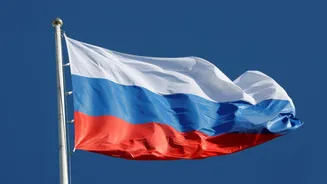
Russia has reportedly begun sending military-related supplies to Iran through the Caspian Sea, according to a European government document obtained by
NBC News and confirmed by a Western official. The shipments reportedly include TNT, drone components and ammunition, while satellite imagery analysed by experts suggests they may also contain components used in ballistic missile production.
The reported transfers come as Iran seeks to rebuild military stocks depleted during its war with the US and Israel.
The shipments mark a change in the military relationship between Moscow and Tehran. Iran had previously supplied Russia with large quantities of Shahed-type drones for its war in Ukraine, while the latest reports indicate Russia is now helping Iran replenish its military capabilities.
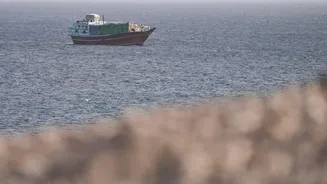
The Caspian Sea is bordered by Russia, Iran, Kazakhstan, Turkmenistan and Azerbaijan. Under international convention, its waters fall exclusively within the jurisdiction of those five countries.
This makes the route difficult for Western naval forces to monitor. Allied warships cannot intercept cargo moving between Russian and Iranian ports, while vessels can switch off their Automatic Identification System transponders.
The route therefore avoids maritime chokepoints that the United States can monitor.
The reported shipments follow Israeli strikes earlier this year on Bandar Anzali, an Iranian port on the Caspian Sea that had been identified as part of the military supply route.
The Times of Israel reported that those strikes damaged port infrastructure and Iranian naval assets.
Iran used and lost significant parts of its drone arsenal during the recent conflict, while US and Israeli strikes also targeted its missile and military infrastructure.
The reported Russian supplies could help Tehran restore parts of its depleted arsenal. However, available reporting does not establish the volume of material transferred or the extent of Iran’s military reconstruction.
Iran’s Ministry of Defence and Armed Forces Logistics (MODAFL) has gradually started replacing some domestically produced ballistic missile components with parts manufactured in Russia and China.
The imported components are believed to be intended mainly for the Islamic Revolutionary Guard Corps Aerospace Force.
The transfers form part of wider military cooperation between Iran, Russia and China under Tehran’s “Look East” strategy.
Russia has reportedly provided satellite imagery to help Iranian forces monitor military sites and improve targeting. China has also expanded its support through BeiDou navigation integration, radar and surveillance systems, and materials linked to solid-propellant missile production.
The cooperation has reduced Iran’s reliance on Western technology.
Western intelligence has not publicly quantified the extent of Iran’s reconstruction. However, reports suggest Israeli intelligence was also surprised by the speed at which Iran rebuilt some of its missile stock.
Neither Moscow nor Tehran has publicly commented on the specific shipments. Russian officials have consistently denied providing military material to Iran beyond what had previously been acknowledged.
The reported transfers come as Iran seeks to rebuild military stocks depleted during its war with the US and Israel.
A shift in Russia-Iran military ties
The shipments mark a change in the military relationship between Moscow and Tehran. Iran had previously supplied Russia with large quantities of Shahed-type drones for its war in Ukraine, while the latest reports indicate Russia is now helping Iran replenish its military capabilities.
The Caspian Sea is bordered by Russia, Iran, Kazakhstan, Turkmenistan and Azerbaijan. Under international convention, its waters fall exclusively within the jurisdiction of those five countries.
This makes the route difficult for Western naval forces to monitor. Allied warships cannot intercept cargo moving between Russian and Iranian ports, while vessels can switch off their Automatic Identification System transponders.
The route therefore avoids maritime chokepoints that the United States can monitor.
The reported shipments follow Israeli strikes earlier this year on Bandar Anzali, an Iranian port on the Caspian Sea that had been identified as part of the military supply route.
The Times of Israel reported that those strikes damaged port infrastructure and Iranian naval assets.
Supplies could help Iran rebuild its arsenal
Iran used and lost significant parts of its drone arsenal during the recent conflict, while US and Israeli strikes also targeted its missile and military infrastructure.
The reported Russian supplies could help Tehran restore parts of its depleted arsenal. However, available reporting does not establish the volume of material transferred or the extent of Iran’s military reconstruction.
Iran’s Ministry of Defence and Armed Forces Logistics (MODAFL) has gradually started replacing some domestically produced ballistic missile components with parts manufactured in Russia and China.
The imported components are believed to be intended mainly for the Islamic Revolutionary Guard Corps Aerospace Force.
Russia, China deepen military cooperation with Iran
The transfers form part of wider military cooperation between Iran, Russia and China under Tehran’s “Look East” strategy.
Russia has reportedly provided satellite imagery to help Iranian forces monitor military sites and improve targeting. China has also expanded its support through BeiDou navigation integration, radar and surveillance systems, and materials linked to solid-propellant missile production.
The cooperation has reduced Iran’s reliance on Western technology.
Western intelligence has not publicly quantified the extent of Iran’s reconstruction. However, reports suggest Israeli intelligence was also surprised by the speed at which Iran rebuilt some of its missile stock.
Neither Moscow nor Tehran has publicly commented on the specific shipments. Russian officials have consistently denied providing military material to Iran beyond what had previously been acknowledged.