







What is the story about?
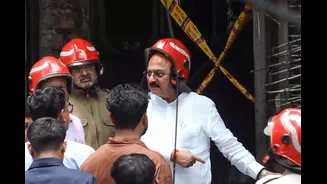
Delhi continues to reel from the Malviya Nagar fire that broke out at a B&B, killing 21 people, mostly foreign nationals. A day later, another major fire incident has been reported, this time in a hospital in Bihar’s Muzaffarpur district.
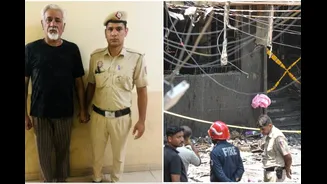
Amid the plumes of smoke, officials are carrying out evacuation efforts to move patients to safety. Meanwhile, in the Indian capital, authorities have now arrested the owner of the five-storey hotel building where the blaze broke out, on suspicion of possible violations of safety regulations at the property.
The two back-to-back fires are making many question: Does India not take fire safety seriously?
On Thursday morning, emergency responders rushed to Prasad Hospital in Bihar’s Muzaffarpur district after they received reports that a fire had broken out there. By the time they reached the spot, four people had already died. The authorities are working against time to evacuate the other patients in the hospital.
According to Fire Officer RN Pandey, they received a call about the blaze around 3 am. By the time firefighters reached the hospital, the ICU was completely engulfed in thick smoke. He further stated that most hospital employees were absent from the scene when rescue teams arrived.
“We rescued around 15-20 patients, of which two died on the spot,” he told NDTV.
Preliminary reports suggest that a short circuit may have caused the fire, though the exact cause is yet to be officially confirmed. More than 20 patients were reportedly injured in the incident and were safely evacuated from the building. Several of the rescued patients are reportedly in critical condition.
The critically ill patients have been moved to hospitals nearby, and authorities are trying to determine their condition.
Subrat Kumar Sen, DM of the district, told India Today that the officials are confirming the data of those perished and been injured. “The ICU in charge of the hospital is also gravely injured. He is also admitted to a nearby hospital. We have to confirm the proper data about how many lives are lost. Currently, we have identified three as dead,” he said.
He further added, “At first look, it seems like a short circuit at the oxygen unit and the monitor system. An investigation is underway. We will carry out the necessary procedures to find out the real reason for the fire breakout.”
The fire in Bihar comes just a day after flames engulfed a multi-storey building in south Delhi, killing 21 people. Many of the victims were foreigners — including people from South Asian and African countries — who had travelled to the capital for medical treatment or to accompany relatives undergoing care.
The blaze took place at Flourish Stay B&B in Hauz Rani, a congested locality in Malviya Nagar, and it took officials many hours to douse the flames.
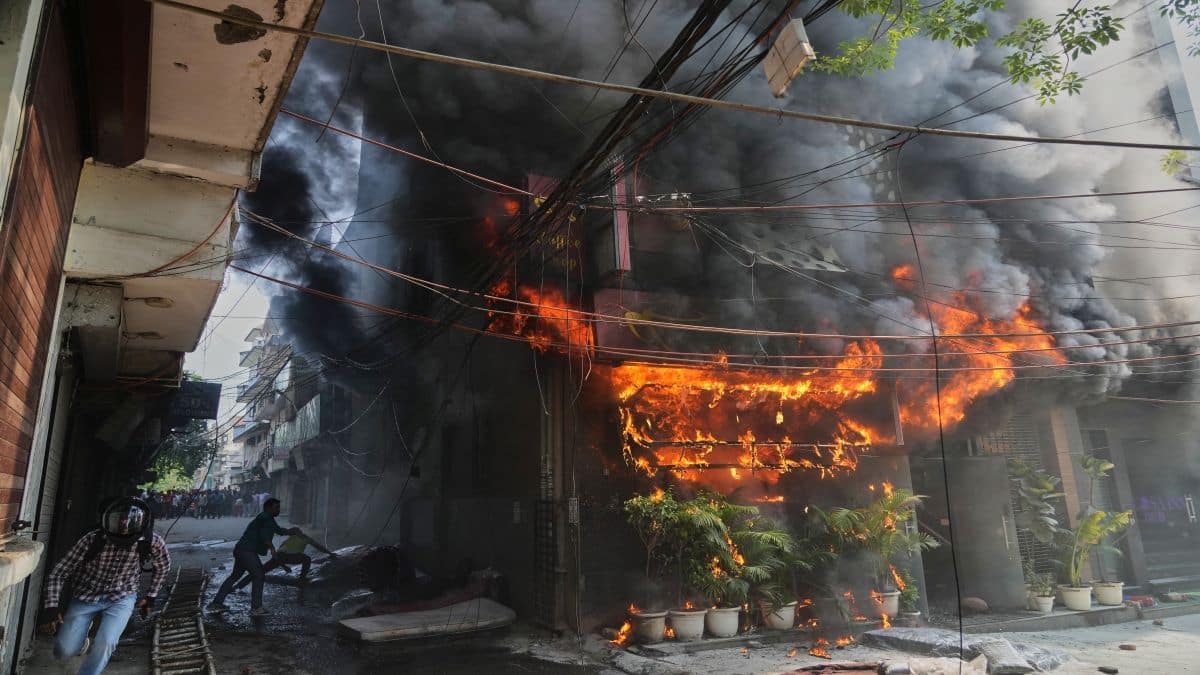
Following the fire, the police found glaring regulatory lapses. The police said that the B&B had only one entry and exit point despite the large number of people staying at the place. Moreover, the hotel had been granted a licence by the Delhi government to run a Bed and Breakfast with six rooms. However, the establishment was allegedly operating 25 rooms, including rooms in the basement. According to preliminary findings and eyewitness accounts, several victims likely died due to suffocation, especially those trapped in the basement area.
The back-to-back fires in Bihar and Delhi highlight a major problem in India — the country doesn’t take fire safety. In fact, fires are most common in India, claiming thousands of lives each year.
Official data finds that in 2024, 5,888 lives were lost, which comes to a value of 16 lives lost every day. In the previous year, India saw 6,891 deaths owing to fire accidents. In 2022, fire deaths were pegged at 7,435, whereas in 2021, it was 8,348 and 9,110 in 2020.
In the last few years, the country has seen some huge fire tragedies. For instance, earlier in April, at least 13 people died, and several others were injured in an explosion at a facility preparing materials for the Thiruvambady wing for Thrissur Pooram.

Before that, in March, a fire broke out in a commercial-cum-residential building in southwest Delhi’s Palam Colony. The blaze killed nine members of a family, including three children.
Last December, at least 25 people died in Goa following a fire at a popular nightclub, Birch by Romeo Lane, in the village of Arpora. The blaze broke out when a gas cylinder exploded at the nightclub. In the aftermath, Goa ordered an investigation into the case and audits of all the nightclubs in the area. The Goa Police also arrested five people in the case and detained the sarpanch of the panchayat in which the club was located. The owners of the club,
Saurabh Luthra and Gaurav Luthra, fled to Thailand to evade arrest. However, they were later arrested and brought to India.
On May 26, 2024, seven newborn babies were casualties at a children’s hospital in Delhi, with preliminary assessments suggesting that a short circuit, exacerbated by the presence of excessive oxygen cylinders, may have been the cause.
A day before the fire at the Delhi hospital, a blaze broke out in a Gujarat gaming zone, claiming 33 lives.
Such instances reveal India’s abysmal fire preparedness.
According to experts, fires remain a cause of concern in the country because of the negligence to fire norms.
Building safety compliance remains abysmal across India. The fire services have long faced huge gaps in the numbers of stations, personnel, and equipment. Government audits after mass-casualty disasters unearth glaring shortcomings, with little follow-up.
Many of the fires — such as the one in the Bihar hospital — are caused by short circuits, an alarming prospect as India faces an intense period of heatwaves that strains electrical wires. RC Sharma, a former fire service chief in Delhi, told the
New York Times that one major problem is that fire regulations go unenforced. Another is that fire-response resources have failed to keep up with urbanisation that is happening rapidly and often without regard to safety.
Last year, Srinivas Valluri, national president of Fire and Security Association of India, noted that India is grappling with a 96 per cent shortage of fire infrastructure, with inadequate fire stations, outdated equipment, and poor maintenance across most states.
A Times of India report has him saying, “For every 50,000 people, there should be one fire station. We do not meet even a fraction of that requirement. Whatever infrastructure exists is poorly maintained. Many fire trucks do not even have diesel due to a lack of funds.”
As SA Abbasi, an emeritus professor at Pondicherry University, and the lead author of a report on fire compliance in hospitals, noted, Lapses and laxity continue to be the norms rather than exceptions.”
With inputs from agencies
Amid the plumes of smoke, officials are carrying out evacuation efforts to move patients to safety. Meanwhile, in the Indian capital, authorities have now arrested the owner of the five-storey hotel building where the blaze broke out, on suspicion of possible violations of safety regulations at the property.
The two back-to-back fires are making many question: Does India not take fire safety seriously?
Fire breaks out in Bihar hospital
On Thursday morning, emergency responders rushed to Prasad Hospital in Bihar’s Muzaffarpur district after they received reports that a fire had broken out there. By the time they reached the spot, four people had already died. The authorities are working against time to evacuate the other patients in the hospital.
According to Fire Officer RN Pandey, they received a call about the blaze around 3 am. By the time firefighters reached the hospital, the ICU was completely engulfed in thick smoke. He further stated that most hospital employees were absent from the scene when rescue teams arrived.
“We rescued around 15-20 patients, of which two died on the spot,” he told NDTV.
Muzaffarpur, Bihar: A major fire broke out at a private Prasad Hospital. Senior district officials, including the DM, SP, Municipal Commissioner, and Civil Surgeon, reached the spot to oversee relief efforts. Grieving family members gathered outside the hospital, while heavy… pic.twitter.com/041d6eODKx
— IANS (@ians_india) June 4, 2026
Preliminary reports suggest that a short circuit may have caused the fire, though the exact cause is yet to be officially confirmed. More than 20 patients were reportedly injured in the incident and were safely evacuated from the building. Several of the rescued patients are reportedly in critical condition.
The critically ill patients have been moved to hospitals nearby, and authorities are trying to determine their condition.
Subrat Kumar Sen, DM of the district, told India Today that the officials are confirming the data of those perished and been injured. “The ICU in charge of the hospital is also gravely injured. He is also admitted to a nearby hospital. We have to confirm the proper data about how many lives are lost. Currently, we have identified three as dead,” he said.
VIDEO | Muzaffarpur, Bihar: DM Subrata Kumar Sen on fire at ICU of a private hospital, says, "A total of 15 patients were admitted at the facility, and we have so far obtained records for 13 of them. Some patients were also being treated in the CCU. They have now been shifted and… pic.twitter.com/I0c8HYOsMO
— Press Trust of India (@PTI_News) June 4, 2026
He further added, “At first look, it seems like a short circuit at the oxygen unit and the monitor system. An investigation is underway. We will carry out the necessary procedures to find out the real reason for the fire breakout.”
Blaze rips through hotel in Delhi
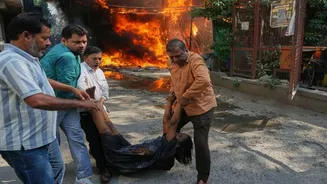
The fire in Bihar comes just a day after flames engulfed a multi-storey building in south Delhi, killing 21 people. Many of the victims were foreigners — including people from South Asian and African countries — who had travelled to the capital for medical treatment or to accompany relatives undergoing care.
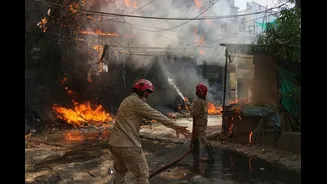
The blaze took place at Flourish Stay B&B in Hauz Rani, a congested locality in Malviya Nagar, and it took officials many hours to douse the flames.
Local people attempt to douse a fire at a hotel in New Delhi, India. AP
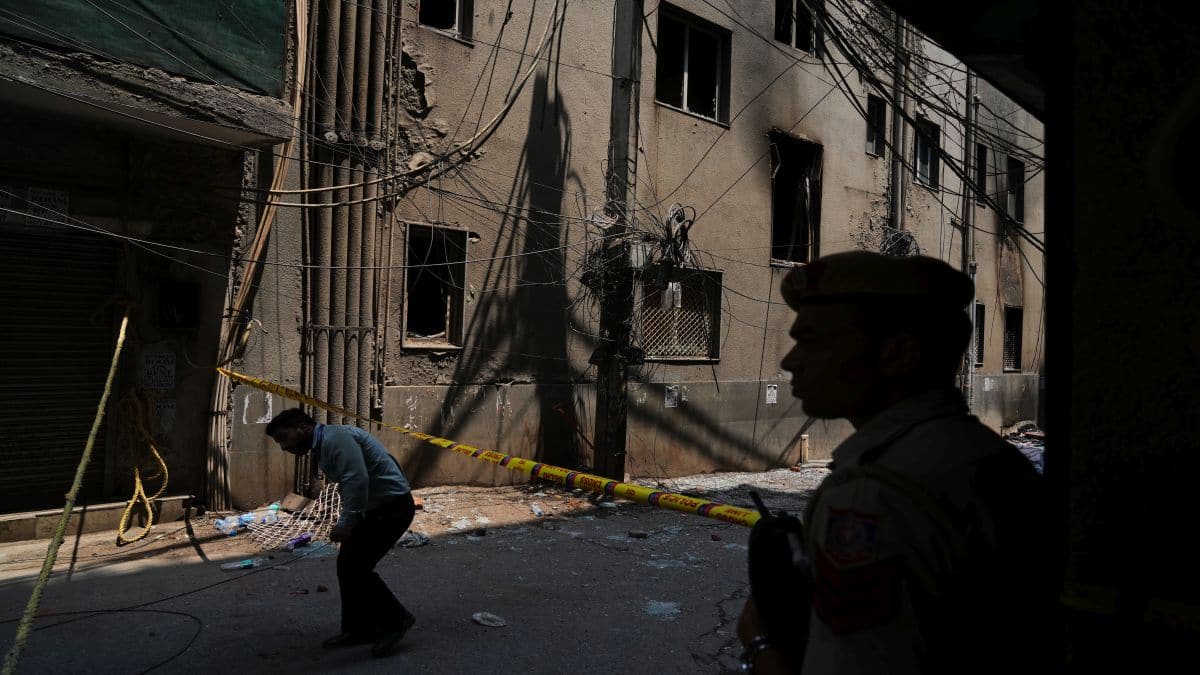
Following the fire, the police found glaring regulatory lapses. The police said that the B&B had only one entry and exit point despite the large number of people staying at the place. Moreover, the hotel had been granted a licence by the Delhi government to run a Bed and Breakfast with six rooms. However, the establishment was allegedly operating 25 rooms, including rooms in the basement. According to preliminary findings and eyewitness accounts, several victims likely died due to suffocation, especially those trapped in the basement area.
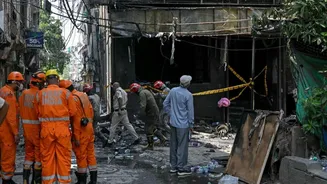
A policeman stands guard as a local walks past a restaurant and hotel building that caught fire early in the morning in New Delhi, on Wednesday, June 3, 2026. AP
Fire accidents in India
The back-to-back fires in Bihar and Delhi highlight a major problem in India — the country doesn’t take fire safety. In fact, fires are most common in India, claiming thousands of lives each year.
Official data finds that in 2024, 5,888 lives were lost, which comes to a value of 16 lives lost every day. In the previous year, India saw 6,891 deaths owing to fire accidents. In 2022, fire deaths were pegged at 7,435, whereas in 2021, it was 8,348 and 9,110 in 2020.
In the last few years, the country has seen some huge fire tragedies. For instance, earlier in April, at least 13 people died, and several others were injured in an explosion at a facility preparing materials for the Thiruvambady wing for Thrissur Pooram.
The burned remains of the Birch by Romeo Lane nightclub, sealed for investigation after a fire that killed multiple people, in Goa in December 2025. Reuters
Before that, in March, a fire broke out in a commercial-cum-residential building in southwest Delhi’s Palam Colony. The blaze killed nine members of a family, including three children.
Last December, at least 25 people died in Goa following a fire at a popular nightclub, Birch by Romeo Lane, in the village of Arpora. The blaze broke out when a gas cylinder exploded at the nightclub. In the aftermath, Goa ordered an investigation into the case and audits of all the nightclubs in the area. The Goa Police also arrested five people in the case and detained the sarpanch of the panchayat in which the club was located. The owners of the club,
On May 26, 2024, seven newborn babies were casualties at a children’s hospital in Delhi, with preliminary assessments suggesting that a short circuit, exacerbated by the presence of excessive oxygen cylinders, may have been the cause.
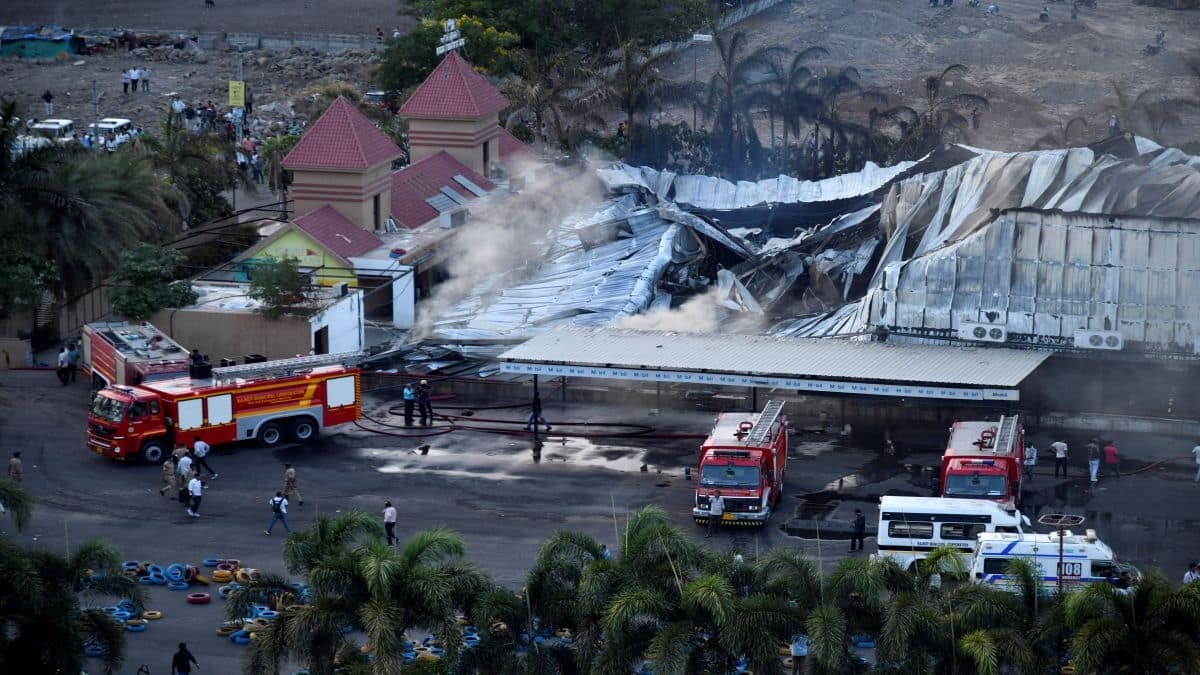
A view shows a burned gaming zone after a fire, in Rajkot, in the western state of Gujarat, on May 25, 2024. Reuters
A day before the fire at the Delhi hospital, a blaze broke out in a Gujarat gaming zone, claiming 33 lives.
Such instances reveal India’s abysmal fire preparedness.
India’s lax approach to fire safety
According to experts, fires remain a cause of concern in the country because of the negligence to fire norms.
Building safety compliance remains abysmal across India. The fire services have long faced huge gaps in the numbers of stations, personnel, and equipment. Government audits after mass-casualty disasters unearth glaring shortcomings, with little follow-up.
Many of the fires — such as the one in the Bihar hospital — are caused by short circuits, an alarming prospect as India faces an intense period of heatwaves that strains electrical wires. RC Sharma, a former fire service chief in Delhi, told the
Last year, Srinivas Valluri, national president of Fire and Security Association of India, noted that India is grappling with a 96 per cent shortage of fire infrastructure, with inadequate fire stations, outdated equipment, and poor maintenance across most states.
A Times of India report has him saying, “For every 50,000 people, there should be one fire station. We do not meet even a fraction of that requirement. Whatever infrastructure exists is poorly maintained. Many fire trucks do not even have diesel due to a lack of funds.”
As SA Abbasi, an emeritus professor at Pondicherry University, and the lead author of a report on fire compliance in hospitals, noted, Lapses and laxity continue to be the norms rather than exceptions.”
With inputs from agencies