








What is the story about?
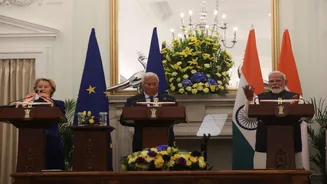
“We did it. We delivered the mother of all deals,” notes European Commission President Ursula von der Leyen as the European Union finally sealed a free trade agreement (FTA) with India.
“We are not only making our economies stronger. We are also delivering security for our people in an increasingly insecure world. Today, the world’s two largest economies and democracies launched their first-ever security and defence partnership... Europe and India have a long history of cooperation in the defence industry,” added von der Leyen, hailing the historic and ambitious trade deal between the two sides.
While the deal has been sealed, it’s not signed off on yet. To be formally signed later this year, the implementation is expected to begin next year. The pact will require approval from the Indian Cabinet and ratification by the European Parliament before it can come into force — a process that typically takes between 12 and 24 months.
According to experts, the India-EU FTA will help boost Indian exports to the 27-member bloc — they are expected to rise by Rs 6.4 lakh crore — as it will widen market access across sectors, benefiting smaller industry, farmers, students, and skilled professionals by easing tariffs and regulatory barriers.
While the gains will be broad-based benefiting many sectors in India, some states will see larger benefits. Here’s how.
Before we take a look at how Indian states will benefit from the trade deal, here’s a better understanding of what it entails. As per the
agreement, Indian tariffs on 30 per cent of goods traded with EU to fall to zero immediately, whereas levies on over 90 per cent of EU exports will be eliminated or reduced.
As soon as the agreement comes into effect, the EU will scrap all tariffs on 90 per cent of Indian goods, and partial cuts and quotas will be put into place for about six per cent of Indian goods.
The India-EU FTA will also see tariffs being significantly slashed for many EU products, making items such as luxury cars, food products like chocolates and breads, and raw materials such as plastics cheaper for the Indian market.
The India-EU FTA, the largest ever trade deal for both sides, is the latest such deal for India. It has signed 19 other such pacts with different nations and trading blocs. Similarly, for the EU, this FTA is designed to offset the impact of US President Donald Trump’s tariffs and reduce reliance on China.
Now, that we have understood broadly how the FTA with the EU is a huge win for India, let’s take a closer look at how some states stand to gain more from the deal.
Uttar Pradesh: The northern state is expected to see a jump in employment, driven by its labour-intensive base in leather and crafts. Leather footwear exporters from Kanpur and Agra can ramp up their shipments whereas Saharanpur will see benefits from furniture and handicraft exports. Noida’s electronics manufacturing and Western UP’s agri-products also gain, widening the state’s export basket.
Punjab: This state is likely to benefit through MSME clusters, with Ludhiana expected to expand garments and knitwear exports, while Jalandhar is poised to push sports goods deeper into EU markets.
Maharashtra: The western state stands to benefit largely from the India-EU FTA. That’s because tariffs on textiles will go from 12 per cent to zero, and electronics will go from 14 per cent to nil on 99.6 per cent of exports, boosting exports. Pharma units in Thane-Raigad, and gems and jewellery exporters in Mumbai, also stand to benefit.
Gujarat: The textile sector in the western state’s city of Surat stands to gain from the India-EU trade deal. Moreover, Bharuch-Vadodara can increase chemical exports as tariffs will fall from 12.8 per cent to zero per cent. Also, owing to the FTA, Rajkot could see a surge in export of engineering goods and electronics, and Veraval through higher marine exports that support coastal livelihoods and processing units.
Rajasthan: The craft clusters in this state will gain from improved access. Jewellery from Jaipur, wooden furniture and handicrafts from Jodhpur, along with sports goods, Bandhej textiles and leather products, are expected to see stronger EU demand.
Karnataka: For the southern state, the India-EU FTA is expected to boost manufacturing as well as export-oriented services. Engineering goods, electronics and pharmaceuticals from the Bengaluru-Tumkaru belt will witness a boost while Bengaluru’s apparel exporters will also benefit.
Andhra Pradesh: The coastal export economy in the state will see a massive jump in both volume and value addition. A rise in shrimp and seafood exports from Vishakhapatnam and Kakinada can benefit local fisheries, processing and cold-chain jobs, the pharmaceutical sector and electronic exports from Vishakhapatnam will also reap the benefits of the trade agreement.
Telangana: The Hyderabad-Warangal corridor is set to drive mass employment through expanded textile exports, while Hyderabad may scale up in high-tech sectors like pharma and electronics.
Tamil Nadu: The southern state will reap huge benefits from the India-EU FTA across various sectors. For instance, Tiruppur’s apparel industry will see a larger market whereas Vellore-Ambur’s leather and footwear sector will also stand to gain as tariffs have been reduced from 17 per cent to zero. Engineering and electronics corridors in Chennai and Coimbatore are set to deepen EU linkages.
Kerala: The food and spice industry of Kerala will benefit greatly from the trade deal. Kochi and Alappuzha can expand shrimp and tuna export, while Idukki and Wayanad can ramp up their spice exports to the EU market.
West Bengal: This state can leverage its exports of Darjeeling tea. Moreover, seafood exports from Digha and Haldia can ramp up. The traditional handicrafts industry will also flourish with preferential access to EU markets.
Assam: The tea business from Dibrugarh-Jorhat will see great benefits from the FTA. Additionally, the spice industry from upper Assam, the bamboo-based furniture, handicrafts from Barpeta and Nalbari, and niche pharmaceutical exports are all poised to witness a substantial growth.
The fineprint of the India-EU FTA reveals that some sectors will stand to gain more than others. For India, sectors such as textiles, apparel, leather, pharmaceuticals, engineering goods, and IT services will reap greater gains from the trade deal.
Speaking on the textile industry, DBS Bank economist Radhika Rao noted that the readymade garments industry, in particular, had been at a disadvantage before the deal, as peers such as Vietnam, Bangladesh and Pakistan enjoyed duty-free access to the EU market.
On the other hand, sectors such as automobiles, luxury goods, machinery, chemicals, and clean-tech in Europe will gain from the trade agreement.
All in all, it truly appears that the India-EU trade deal is a win-win for both sides.
With inputs from agencies
“We are not only making our economies stronger. We are also delivering security for our people in an increasingly insecure world. Today, the world’s two largest economies and democracies launched their first-ever security and defence partnership... Europe and India have a long history of cooperation in the defence industry,” added von der Leyen, hailing the historic and ambitious trade deal between the two sides.
While the deal has been sealed, it’s not signed off on yet. To be formally signed later this year, the implementation is expected to begin next year. The pact will require approval from the Indian Cabinet and ratification by the European Parliament before it can come into force — a process that typically takes between 12 and 24 months.
According to experts, the India-EU FTA will help boost Indian exports to the 27-member bloc — they are expected to rise by Rs 6.4 lakh crore — as it will widen market access across sectors, benefiting smaller industry, farmers, students, and skilled professionals by easing tariffs and regulatory barriers.
While the gains will be broad-based benefiting many sectors in India, some states will see larger benefits. Here’s how.
What’s in the India-EU FTA?
Before we take a look at how Indian states will benefit from the trade deal, here’s a better understanding of what it entails. As per the
As soon as the agreement comes into effect, the EU will scrap all tariffs on 90 per cent of Indian goods, and partial cuts and quotas will be put into place for about six per cent of Indian goods.
The India-EU FTA will also see tariffs being significantly slashed for many EU products, making items such as luxury cars, food products like chocolates and breads, and raw materials such as plastics cheaper for the Indian market.
The India-EU FTA, the largest ever trade deal for both sides, is the latest such deal for India. It has signed 19 other such pacts with different nations and trading blocs. Similarly, for the EU, this FTA is designed to offset the impact of US President Donald Trump’s tariffs and reduce reliance on China.
Which Indian states gain the most? How?
Now, that we have understood broadly how the FTA with the EU is a huge win for India, let’s take a closer look at how some states stand to gain more from the deal.
Uttar Pradesh: The northern state is expected to see a jump in employment, driven by its labour-intensive base in leather and crafts. Leather footwear exporters from Kanpur and Agra can ramp up their shipments whereas Saharanpur will see benefits from furniture and handicraft exports. Noida’s electronics manufacturing and Western UP’s agri-products also gain, widening the state’s export basket.
Punjab: This state is likely to benefit through MSME clusters, with Ludhiana expected to expand garments and knitwear exports, while Jalandhar is poised to push sports goods deeper into EU markets.
Maharashtra: The western state stands to benefit largely from the India-EU FTA. That’s because tariffs on textiles will go from 12 per cent to zero, and electronics will go from 14 per cent to nil on 99.6 per cent of exports, boosting exports. Pharma units in Thane-Raigad, and gems and jewellery exporters in Mumbai, also stand to benefit.
Gujarat: The textile sector in the western state’s city of Surat stands to gain from the India-EU trade deal. Moreover, Bharuch-Vadodara can increase chemical exports as tariffs will fall from 12.8 per cent to zero per cent. Also, owing to the FTA, Rajkot could see a surge in export of engineering goods and electronics, and Veraval through higher marine exports that support coastal livelihoods and processing units.
Rajasthan: The craft clusters in this state will gain from improved access. Jewellery from Jaipur, wooden furniture and handicrafts from Jodhpur, along with sports goods, Bandhej textiles and leather products, are expected to see stronger EU demand.
The India-EU trade deal is likely to benefit New Delhi greatly. Certain states will see larger benefits from the FTA. Representational image/AI generated
Karnataka: For the southern state, the India-EU FTA is expected to boost manufacturing as well as export-oriented services. Engineering goods, electronics and pharmaceuticals from the Bengaluru-Tumkaru belt will witness a boost while Bengaluru’s apparel exporters will also benefit.
Andhra Pradesh: The coastal export economy in the state will see a massive jump in both volume and value addition. A rise in shrimp and seafood exports from Vishakhapatnam and Kakinada can benefit local fisheries, processing and cold-chain jobs, the pharmaceutical sector and electronic exports from Vishakhapatnam will also reap the benefits of the trade agreement.
Telangana: The Hyderabad-Warangal corridor is set to drive mass employment through expanded textile exports, while Hyderabad may scale up in high-tech sectors like pharma and electronics.
Tamil Nadu: The southern state will reap huge benefits from the India-EU FTA across various sectors. For instance, Tiruppur’s apparel industry will see a larger market whereas Vellore-Ambur’s leather and footwear sector will also stand to gain as tariffs have been reduced from 17 per cent to zero. Engineering and electronics corridors in Chennai and Coimbatore are set to deepen EU linkages.
Kerala: The food and spice industry of Kerala will benefit greatly from the trade deal. Kochi and Alappuzha can expand shrimp and tuna export, while Idukki and Wayanad can ramp up their spice exports to the EU market.
West Bengal: This state can leverage its exports of Darjeeling tea. Moreover, seafood exports from Digha and Haldia can ramp up. The traditional handicrafts industry will also flourish with preferential access to EU markets.
Assam: The tea business from Dibrugarh-Jorhat will see great benefits from the FTA. Additionally, the spice industry from upper Assam, the bamboo-based furniture, handicrafts from Barpeta and Nalbari, and niche pharmaceutical exports are all poised to witness a substantial growth.
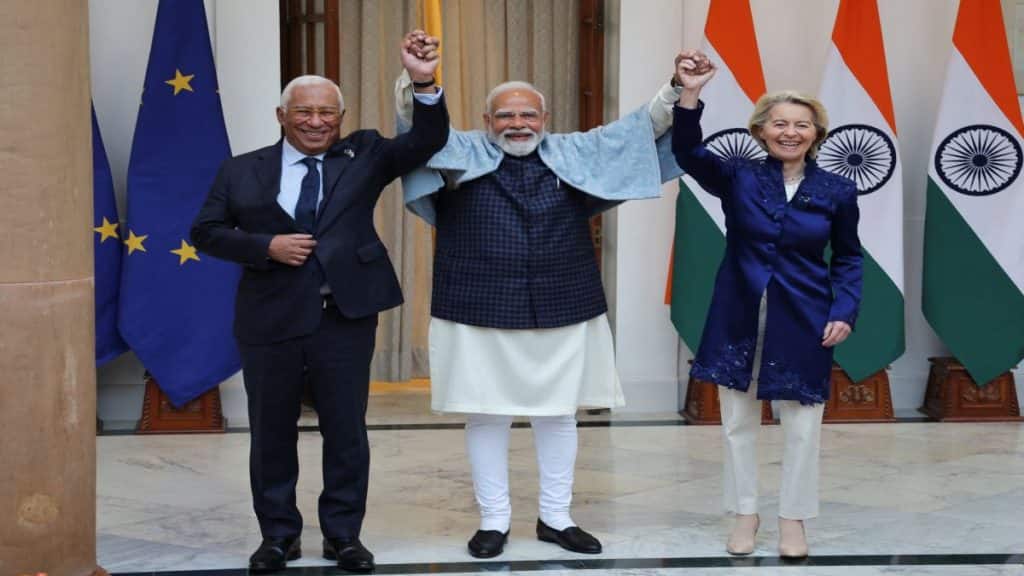
The India-EU FTA comes after years of negotiations. While agreed upon, it is yet to be signed and ratified, a process that could take between 12 and 24 months. File image/Reuters
Which sectors gain the most from India-EU FTA?
The fineprint of the India-EU FTA reveals that some sectors will stand to gain more than others. For India, sectors such as textiles, apparel, leather, pharmaceuticals, engineering goods, and IT services will reap greater gains from the trade deal.
Speaking on the textile industry, DBS Bank economist Radhika Rao noted that the readymade garments industry, in particular, had been at a disadvantage before the deal, as peers such as Vietnam, Bangladesh and Pakistan enjoyed duty-free access to the EU market.
On the other hand, sectors such as automobiles, luxury goods, machinery, chemicals, and clean-tech in Europe will gain from the trade agreement.
All in all, it truly appears that the India-EU trade deal is a win-win for both sides.
With inputs from agencies