






What is the story about?
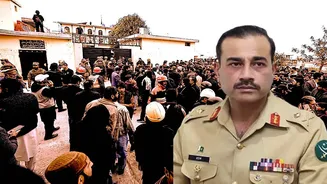
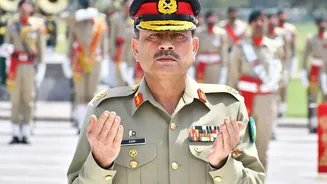
As US President Donald Trump's threats to intervene in Iran have threatened regional stability, Pakistan Army chief Field Marshal Asim Munir has convened a high-level meeting to discuss the situation and assess its options, according to CNN-News 18.
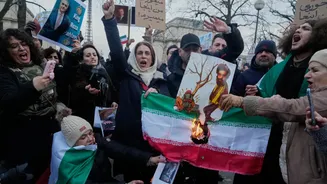
Trump has reportedly been briefed about military options to intervene in Iran amid ongoing nationwide protests. As Iran already stands battered from bombardment from Israel and the United States, a new offensive could substantially destabilise the regime and the fallout could extend well beyond the country.
As the country's disputed border with Afghanistan is already tensed and prone to frequent clashes, officials warned that Pakistan could not afford its border with Iran to become volatile as well, according to the report.
At the same time, they also discussed how any conflict could affect the US-Pakistan relationship that improved massively in Trump's second term, the report said.
Munir was joined in the meeting by Lieutenant General Asim Malik, who holds the dual charge of ISI chief and National Security Adviser, and Southern Army Commander Lt General Rahat Naseem, and other senior officers like the Director General of Military Intelligence, the Chief of General Staff to the Chief of Army Staff, the ISI’s Director General (Analysis), and other senior generals.
Sources said a key concern was that Trump could seek access to Pakistan's airspace or military bases in case the United States strikes Iran.
Such a demand could put Pakistan in a difficult position. Denying such a request would mean annoying Trump and risking the improvement in bilateral relationship. At the same time, accepting such a request would risk alienating the country's Shia population and the Islamic world at large.
Pakistan has around 20 per cent Shia Muslims who sympathise with Iran — Iran is a Shia-majority state. Sources said that Munir is concerned that a US attack on Iran —and pressure on Pakistan to facilitate such an attack— could foment unrest in Pakistan.
As Pakistan has already been rocked by rising violence —2025 was the deadliest year in a decade— new unrest could be catastrophic.
Pakistani officials fear that any attack on Iran or a potential regime-change scenario could trigger widespread protests across Pakistan and create additional pressure along the Pakistan-Iran border due to potential inflow of refugees, according to the report.
Sources said Munir directed senior commanders and the ISI chief to remain on high alert and closely monitor developments.
Munir also tasked the ISI chief with strengthening diplomatic and security-level contacts with counterparts in Iran, Turkey, Qatar, the United Arab Emirates (UAE), Saudi Arabia, and the United States to assess the evolving situation and explore avenues for de-escalation, according to sources.
The report further said that intelligence assessments suggest that Pakistan has joined Saudi Arabia, Qatar, and Turkey in conveying to the Trump administration that a strike on Iran could destabilise the entire region.
Trump has reportedly been briefed about military options to intervene in Iran amid ongoing nationwide protests. As Iran already stands battered from bombardment from Israel and the United States, a new offensive could substantially destabilise the regime and the fallout could extend well beyond the country.
As the country's disputed border with Afghanistan is already tensed and prone to frequent clashes, officials warned that Pakistan could not afford its border with Iran to become volatile as well, according to the report.
At the same time, they also discussed how any conflict could affect the US-Pakistan relationship that improved massively in Trump's second term, the report said.
Munir was joined in the meeting by Lieutenant General Asim Malik, who holds the dual charge of ISI chief and National Security Adviser, and Southern Army Commander Lt General Rahat Naseem, and other senior officers like the Director General of Military Intelligence, the Chief of General Staff to the Chief of Army Staff, the ISI’s Director General (Analysis), and other senior generals.
Munir braces for complications from Trump's Iran attack
Sources said a key concern was that Trump could seek access to Pakistan's airspace or military bases in case the United States strikes Iran.
Such a demand could put Pakistan in a difficult position. Denying such a request would mean annoying Trump and risking the improvement in bilateral relationship. At the same time, accepting such a request would risk alienating the country's Shia population and the Islamic world at large.
Pakistan has around 20 per cent Shia Muslims who sympathise with Iran — Iran is a Shia-majority state. Sources said that Munir is concerned that a US attack on Iran —and pressure on Pakistan to facilitate such an attack— could foment unrest in Pakistan.
As Pakistan has already been rocked by rising violence —2025 was the deadliest year in a decade— new unrest could be catastrophic.
Pakistani officials fear that any attack on Iran or a potential regime-change scenario could trigger widespread protests across Pakistan and create additional pressure along the Pakistan-Iran border due to potential inflow of refugees, according to the report.
Sources said Munir directed senior commanders and the ISI chief to remain on high alert and closely monitor developments.
Munir also tasked the ISI chief with strengthening diplomatic and security-level contacts with counterparts in Iran, Turkey, Qatar, the United Arab Emirates (UAE), Saudi Arabia, and the United States to assess the evolving situation and explore avenues for de-escalation, according to sources.
The report further said that intelligence assessments suggest that Pakistan has joined Saudi Arabia, Qatar, and Turkey in conveying to the Trump administration that a strike on Iran could destabilise the entire region.