





What is the story about?
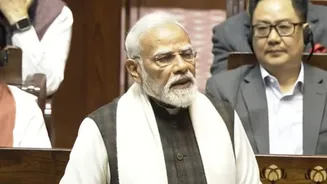
The Rajya Sabha has taken up the Centre’s bill to open up nuclear energy to private players.
This comes days after the Lok Sabha passed the Sustainable Harnessing and Advancement of Nuclear Energy for Transforming India (Shanti) Bill, 2025, by voice vote amid a walkout by the Opposition.
“The Bill seeks to provide for a pragmatic civil liability regime for nuclear damage and to confer statutory status to the Atomic Energy Regulatory Board,” Minister of State in the PMO Jitendra Singh said in the Lok Sabha.
But what do we know about the Shanti Bill? Why is India’s politics divided over the nuclear liability of private players?
Let’s take a closer look
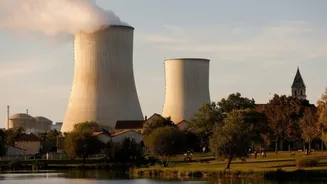
The bill aims to repeal and replace the Atomic Energy Act, 1962 and the Civil Liability for Nuclear Damage Act, 2010. It will allow private companies and joint ventures to build and run nuclear power plants.
Until now, nuclear power has been exclusively the domain of the Indian government under the Atomic Energy Act, 1962. However, certain processes, including uranium enrichment, spent fuel management, reprocessing and heavy water production, will remain in the hands of the Indian government and its entities.
The bill also envisages the setting up of the Atomic Energy Regulatory Board (AERB). The board will affix safety standards, conduct inspections, limit radiation and ensure that private players are in compliance.
The board is also empowered to take action, including cancelling licences and implementing fines, against companies that are found violating safety standards or acting against the public interest. The AERB will be able to fine companies anywhere from Rs 5 lakh for minor breaches to Rs 1 crore for serious offences.
The government has also proposed setting up a Nuclear Damage Claims Commission, which will determine the compensation in case of an adverse incident.
The government argues that allowing the private sector into the nuclear space will:
The Modi government has already said it wants to increase the production of nuclear energy to 100 gigawatts (GW) by 2047. India currently generates just eight GW of nuclear power. This equates to a meagre 1.6 percent of the total energy from over 25 nuclear reactors across India’s seven power plants.
Under the Civil Liability for Nuclear Damage Act (CLND), 2010, a nuclear plant operator could sue the supplier for compensation in the following scenarios:
However, the Shanti Bill changes this.
Now, the operator can only sue the supplier if it is expressly mentioned in the contract. The liability of the supplier is no longer part of the law. Instead, it must be established in the terms of a contract between the operator and the supplier.
The bill caps the maximum liability per incident at 300 million Special Drawing Rights (SDRs), which is in line with international standards. SDRs are an international unit of value created by the International Monetary Fund (IMF). SDRs are a basket of global currencies, including the US dollar, euro, pound sterling and Japanese yen. This would be equivalent to around Rs 3,000 crore to Rs 3,500 crore, depending on the exchange rate.
If the liability exceeds the cap, the government will step in and pay the compensation from public funds. The government also assumes responsibility in case there is an incident stemming from an act of terror, war or natural disasters.
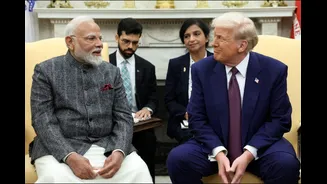
The Shanti Bill mandates that operators keep insurance or liability funds from around $11 million (around Rs 99 crore) to $330 million (around Rs 2,979 crore), depending on reactor size. A number of players, including Tata Power, Adani Power, and Reliance Industries, have already displayed interest in entering the field. Westinghouse, GE-Hitachi, France’s EDF and Russia’s Rosatom are just some of the global players who have hinted at openness to a joint venture with Indian firms.
The Opposition has demanded that the bill be sent to a Joint Parliamentary Committee (JPC) for review. Many MPs have expressed worry that the bill would let private companies off the hook in the wake of any disasters. They also question whether enough safeguards have been built into the bill to prevent disasters.
Congress MP Shashi Tharoor is among those raising his voice against the bill. Tharoor has called it a “dangerous leap into privatised nuclear expansion”. Tharoor claimed the bill’s liability cap of $460 million (around Rs 4,153 crore) is far too low to compensate for potential damage from a nuclear accident. Tharoor also mentioned the famed disasters at Fukushima and Chernobyl.
“We cannot allow the pursuit of capital to override the non-negotiable requirements of public safety, environmental protection and victim justice,” Tharoor said. “This is dangerous… it creates a backdoor to the entire framework through which any facility can escape oversight if the government deems it convenient.”
Congress MP Manoj Tewari also entered the fray. “…if a nuclear accident takes place, since we are dependent on foreign suppliers, shouldn’t the supplier be liable,” Tewari queried.
The Opposition has pointed to the 1984 Bhopal gas tragedy as an example of how things could go wrong. Samajwadi Party MP Pushpendra Saroj was quoted as saying, “We clearly remember what happened with the Bhopal gas tragedy in 1984, and now the Shanti Bill justifies what went wrong during the 1984 tragedy.”
Aditya Yadav, another Samajwadi Party MP, flagged concerns about foreign countries, particularly the US and France, investing in nuclear power plants in India without proper safeguards. DMK MP Arun Nehru, also pointing to the Bhopal gas tragedy, called the bill’s name an oxymoron. TMC MP Saugata Roy said that the liability cap should be a minimum of $500 million (around Rs 4,514 crore).
Singh, however, hit back at the Opposition, saying, “Our government has defined the bill properly, and we have given more authorisation and independence to private parties involved.”
“If we have to be a global player, we have to follow global benchmarks and global strategies. The world is moving towards clean energy. We too have set a target of 100 GW of nuclear energy capacity by 2047,” Singh added.
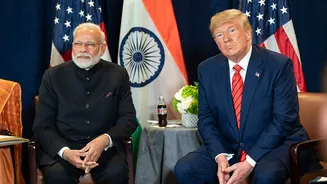
The government has also dismissed concerns about foreign players, saying that foreign investment in nuclear energy does not equate to foreign control of the sector.
With inputs from agencies
This comes days after the Lok Sabha passed the Sustainable Harnessing and Advancement of Nuclear Energy for Transforming India (Shanti) Bill, 2025, by voice vote amid a walkout by the Opposition.
“The Bill seeks to provide for a pragmatic civil liability regime for nuclear damage and to confer statutory status to the Atomic Energy Regulatory Board,” Minister of State in the PMO Jitendra Singh said in the Lok Sabha.
But what do we know about the Shanti Bill? Why is India’s politics divided over the nuclear liability of private players?
Let’s take a closer look
A brief look at the Shanti Bill
The bill aims to repeal and replace the Atomic Energy Act, 1962 and the Civil Liability for Nuclear Damage Act, 2010. It will allow private companies and joint ventures to build and run nuclear power plants.
Until now, nuclear power has been exclusively the domain of the Indian government under the Atomic Energy Act, 1962. However, certain processes, including uranium enrichment, spent fuel management, reprocessing and heavy water production, will remain in the hands of the Indian government and its entities.
The bill also envisages the setting up of the Atomic Energy Regulatory Board (AERB). The board will affix safety standards, conduct inspections, limit radiation and ensure that private players are in compliance.
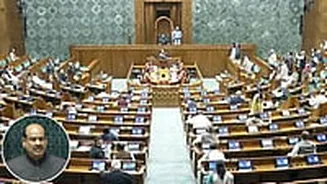
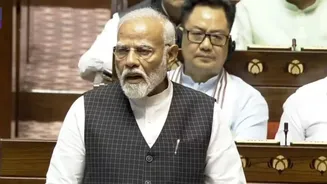
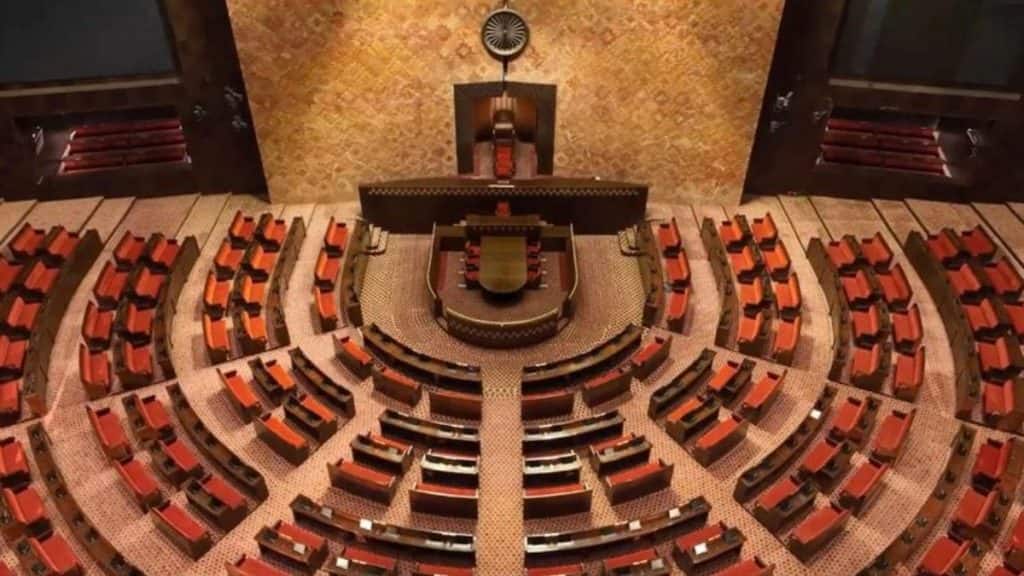
This comes days after the Lok Sabha passed the Sustainable Harnessing and Advancement of Nuclear Energy for Transforming India (Shanti) Bill, 2025, by voice vote amid a walkout by the Opposition. PTI
The board is also empowered to take action, including cancelling licences and implementing fines, against companies that are found violating safety standards or acting against the public interest. The AERB will be able to fine companies anywhere from Rs 5 lakh for minor breaches to Rs 1 crore for serious offences.
The government has also proposed setting up a Nuclear Damage Claims Commission, which will determine the compensation in case of an adverse incident.
The government argues that allowing the private sector into the nuclear space will:
- Increase foreign investment
- Create jobs
- Help India meet its increasing clean energy goals
- Lower India’s reliance on carbon sources
- Improve the country’s self-sufficiency
The Modi government has already said it wants to increase the production of nuclear energy to 100 gigawatts (GW) by 2047. India currently generates just eight GW of nuclear power. This equates to a meagre 1.6 percent of the total energy from over 25 nuclear reactors across India’s seven power plants.
What changes?
Under the Civil Liability for Nuclear Damage Act (CLND), 2010, a nuclear plant operator could sue the supplier for compensation in the following scenarios:
- If it specified that the supplier was responsible under the terms of the written contract
- If the accident was caused by faulty supplies or negligence
- If a nuclear accident occurred because the supplier provided defective equipment, poor-quality material, or sub-standard services. This held true even if it was not expressly mentioned in the contract
- If there was intentional wrongdoing
- If the accident resulted from a deliberate act meant to cause damage
- The government had contended that the provisions of the Nuclear Damage Act (CLND), 2010, were discouraging private players from investing in India’s nuclear energy sector.
However, the Shanti Bill changes this.
Now, the operator can only sue the supplier if it is expressly mentioned in the contract. The liability of the supplier is no longer part of the law. Instead, it must be established in the terms of a contract between the operator and the supplier.
The bill caps the maximum liability per incident at 300 million Special Drawing Rights (SDRs), which is in line with international standards. SDRs are an international unit of value created by the International Monetary Fund (IMF). SDRs are a basket of global currencies, including the US dollar, euro, pound sterling and Japanese yen. This would be equivalent to around Rs 3,000 crore to Rs 3,500 crore, depending on the exchange rate.
If the liability exceeds the cap, the government will step in and pay the compensation from public funds. The government also assumes responsibility in case there is an incident stemming from an act of terror, war or natural disasters.
The Shanti Bill mandates that operators keep insurance or liability funds from around $11 million (around Rs 99 crore) to $330 million (around Rs 2,979 crore), depending on reactor size. A number of players, including Tata Power, Adani Power, and Reliance Industries, have already displayed interest in entering the field. Westinghouse, GE-Hitachi, France’s EDF and Russia’s Rosatom are just some of the global players who have hinted at openness to a joint venture with Indian firms.
What the Opposition is saying
The Opposition has demanded that the bill be sent to a Joint Parliamentary Committee (JPC) for review. Many MPs have expressed worry that the bill would let private companies off the hook in the wake of any disasters. They also question whether enough safeguards have been built into the bill to prevent disasters.
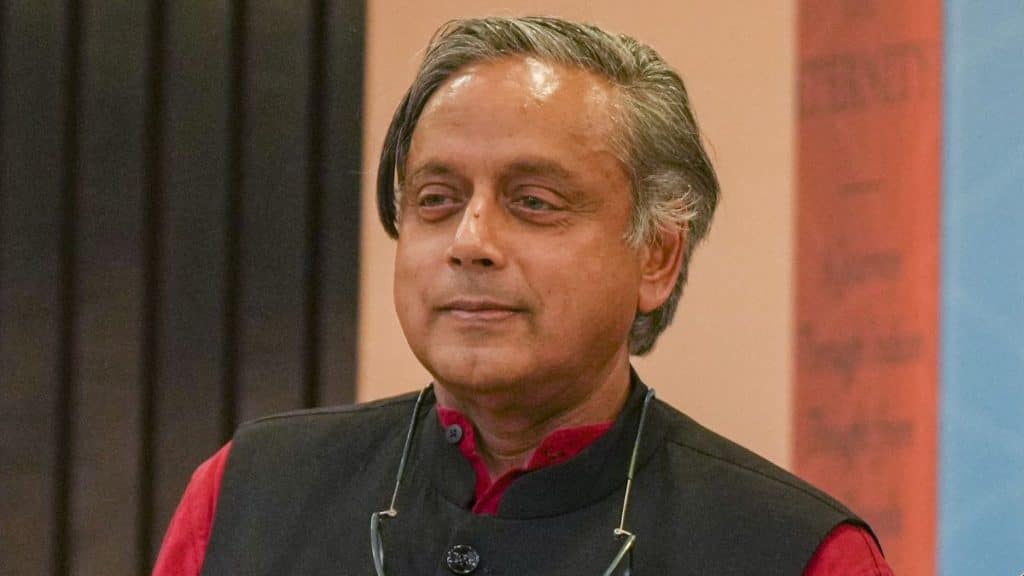
Congress MP Shashi Tharoor is among those raising his voice against the bill. Tharoor has called it a “dangerous leap into privatised nuclear expansion”. Tharoor claimed the bill’s liability cap of $460 million (around Rs 4,153 crore) is far too low to compensate for potential damage from a nuclear accident. Tharoor also mentioned the famed disasters at Fukushima and Chernobyl.
“We cannot allow the pursuit of capital to override the non-negotiable requirements of public safety, environmental protection and victim justice,” Tharoor said. “This is dangerous… it creates a backdoor to the entire framework through which any facility can escape oversight if the government deems it convenient.”
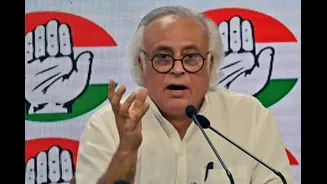
(File) Congress MP Shashi Tharoor is among those opposing the bill.
Congress MP Manoj Tewari also entered the fray. “…if a nuclear accident takes place, since we are dependent on foreign suppliers, shouldn’t the supplier be liable,” Tewari queried.
The Opposition has pointed to the 1984 Bhopal gas tragedy as an example of how things could go wrong. Samajwadi Party MP Pushpendra Saroj was quoted as saying, “We clearly remember what happened with the Bhopal gas tragedy in 1984, and now the Shanti Bill justifies what went wrong during the 1984 tragedy.”
Aditya Yadav, another Samajwadi Party MP, flagged concerns about foreign countries, particularly the US and France, investing in nuclear power plants in India without proper safeguards. DMK MP Arun Nehru, also pointing to the Bhopal gas tragedy, called the bill’s name an oxymoron. TMC MP Saugata Roy said that the liability cap should be a minimum of $500 million (around Rs 4,514 crore).
Singh, however, hit back at the Opposition, saying, “Our government has defined the bill properly, and we have given more authorisation and independence to private parties involved.”
“If we have to be a global player, we have to follow global benchmarks and global strategies. The world is moving towards clean energy. We too have set a target of 100 GW of nuclear energy capacity by 2047,” Singh added.
The government has also dismissed concerns about foreign players, saying that foreign investment in nuclear energy does not equate to foreign control of the sector.
With inputs from agencies