






What is the story about?
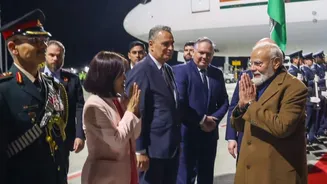
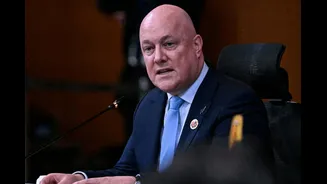
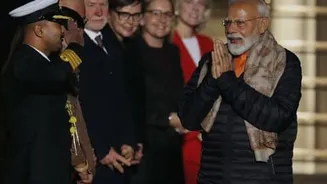
In the final leg of the three-nation visit, Prime Minister Narendra Modi on Friday arrived in New Zealand, with Prime Minister Christopher Luxon receiving him at the Auckland airport. His itinerary includes bilateral talks and a community event.
Sharing photos of his reception by Luxon, Modi declared that the visit would be "historic" — he is the first Prime Minister of India to visit the country since late Prime Minister Rajiv Gandhi's visit in 1986.
"This visit is historic, being the first Prime Ministerial visit to New Zealand in four decades. I look forward to holding talks with Prime Minister Luxon and discussing the complete range of the India-NZ friendship. I will also be addressing a community programme tomorrow in Auckland," said Modi.
After Indonesia and Australia, New Zealand is the final leg of his three-nation visit. The visit comes weeks after India and New Zealand signed a free trade agreement, which eliminates duties on 100 per cent of Indian exports and offers New Zealand tariff-free market access to 70 per cent of goods.
The visit has also come at a time when India is ramping up engagement with like-minded countries in the Indo-Pacific to secure its interests. As US President Donald Trump has essentially retreated from the theatres, middle powers across the region are converging to tackle China's hegemonic designs.
Shortly before Modi's arrival, New Zealand said it would explore joining the Australia-Fiji mutual defence agreement, which is widely seen as being aimed at ensuring collective defence at a time when China is seeking to woo island nations to expand the footprint in the region.
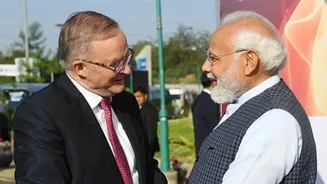
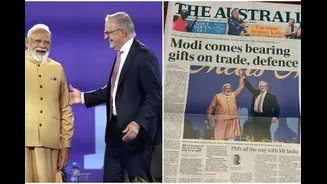
During the Australia visit, Modi and Prime Minister Anthony Albanese declared to significantly enhance military cooperation and security partnership. They pledged to increase military interoperability and information-sharing through expanded aircraft deployments in each other’s territories and closer ties between military personnel, including through exchanges, education and training, and liaison roles.
Sharing photos of his reception by Luxon, Modi declared that the visit would be "historic" — he is the first Prime Minister of India to visit the country since late Prime Minister Rajiv Gandhi's visit in 1986.
"This visit is historic, being the first Prime Ministerial visit to New Zealand in four decades. I look forward to holding talks with Prime Minister Luxon and discussing the complete range of the India-NZ friendship. I will also be addressing a community programme tomorrow in Auckland," said Modi.
After Indonesia and Australia, New Zealand is the final leg of his three-nation visit. The visit comes weeks after India and New Zealand signed a free trade agreement, which eliminates duties on 100 per cent of Indian exports and offers New Zealand tariff-free market access to 70 per cent of goods.
Reached Auckland a short while ago. Thankful to Prime Minister Luxon for the welcome at the airport.
This visit is historic, being the first Prime Ministerial visit to New Zealand in four decades. I look forward to holding talks with Prime Minister Luxon and discussing the… pic.twitter.com/qhUfkaFfHF
— Narendra Modi (@narendramodi) July 10, 2026
The visit has also come at a time when India is ramping up engagement with like-minded countries in the Indo-Pacific to secure its interests. As US President Donald Trump has essentially retreated from the theatres, middle powers across the region are converging to tackle China's hegemonic designs.
Shortly before Modi's arrival, New Zealand said it would explore joining the Australia-Fiji mutual defence agreement, which is widely seen as being aimed at ensuring collective defence at a time when China is seeking to woo island nations to expand the footprint in the region.
During the Australia visit, Modi and Prime Minister Anthony Albanese declared to significantly enhance military cooperation and security partnership. They pledged to increase military interoperability and information-sharing through expanded aircraft deployments in each other’s territories and closer ties between military personnel, including through exchanges, education and training, and liaison roles.