





What is the story about?
As graduation season unfolds across American universities, a new challenge has emerged for technology executives invited to deliver commencement speeches: navigating student hostility towards artificial intelligence without getting booed off stage.
What was once a ceremonial victory lap for business leaders has, in some cases, become a public referendum on Silicon Valley’s AI ambitions. Students entering an uncertain labour market are increasingly confronting the very executives championing technologies they fear could reshape or eliminate their future careers.
The growing tension has even earned a nickname in tech circles: the “boo strategy”.
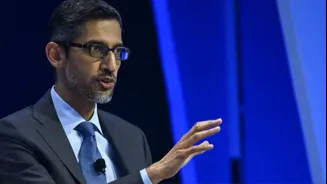
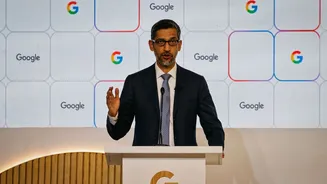
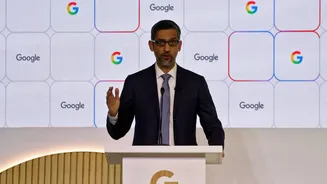
The phrase recently surfaced on the popular tech podcast Hard Fork, where the hosts asked Sundar Pichai how he planned to avoid backlash during his upcoming commencement speech at Stanford University.
The question was not hypothetical.
Earlier this year, students heckled former Eric Schmidt during a speech at the University of Arizona after he spoke positively about AI. At Middle Tennessee State University, Scott Borchetta faced criticism after discussing how AI could influence music and media industries.
For graduates preparing to enter an increasingly volatile jobs market, the optimism often expressed by tech executives can sound detached from reality.
Pichai acknowledged the concerns during the podcast conversation, saying people are “rightfully” anxious about the future AI may create. “Humans aren't evolved to process that much change,” he said, describing the technological transformation underway as unprecedented in scale.
Still, the Google chief struck an optimistic tone. “I've always been extraordinarily optimistic about the next generation,” Pichai said, adding that AI does not change that belief. Rather than delivering reassurances, he suggested his speech would focus on personal experience and perspective.
“These graduates are actually both going to be a big part of driving that progress and also dealing with the impact,” he added.
Pichai may encounter a friendlier audience at Stanford, located in the centre of Silicon Valley and known for producing some of the world’s most sought-after AI talent. Yet outside elite tech campuses, public unease around AI continues to grow.
A recent study by Pew Research Center found that nearly half of Americans feel more concerned than excited about AI becoming part of daily life. Opposition to the rapid expansion of AI infrastructure is also rising, with communities across the United States pushing back against the construction of energy-intensive data centres required to power modern AI systems.
The anxiety is not entirely theoretical. Several major companies have openly linked AI-driven efficiency gains to workforce reductions this year. Meanwhile, graduates are encountering a tougher hiring environment, with AI tools also contributing to longer and more complex recruitment processes. The unemployment rate for recent graduates reached its highest level in four years at the beginning of 2026.
Even as criticism grows, some industry leaders continue to frame AI as a transformational opportunity rather than a threat.
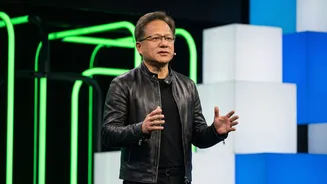
At a commencement ceremony earlier this month at Carnegie Mellon University, Jensen Huang told students that AI would ultimately benefit humanity, including those just beginning their careers.
“Now it's your time to realise your dreams,” Huang said. “The timing could not be more perfect.”
Whether graduates agree may determine how carefully future CEOs craft their next commencement address.
What was once a ceremonial victory lap for business leaders has, in some cases, become a public referendum on Silicon Valley’s AI ambitions. Students entering an uncertain labour market are increasingly confronting the very executives championing technologies they fear could reshape or eliminate their future careers.
The growing tension has even earned a nickname in tech circles: the “boo strategy”.
Commencement speeches meet AI anxiety
The phrase recently surfaced on the popular tech podcast Hard Fork, where the hosts asked Sundar Pichai how he planned to avoid backlash during his upcoming commencement speech at Stanford University.
The question was not hypothetical.
Earlier this year, students heckled former Eric Schmidt during a speech at the University of Arizona after he spoke positively about AI. At Middle Tennessee State University, Scott Borchetta faced criticism after discussing how AI could influence music and media industries.
For graduates preparing to enter an increasingly volatile jobs market, the optimism often expressed by tech executives can sound detached from reality.
Pichai acknowledged the concerns during the podcast conversation, saying people are “rightfully” anxious about the future AI may create. “Humans aren't evolved to process that much change,” he said, describing the technological transformation underway as unprecedented in scale.
Still, the Google chief struck an optimistic tone. “I've always been extraordinarily optimistic about the next generation,” Pichai said, adding that AI does not change that belief. Rather than delivering reassurances, he suggested his speech would focus on personal experience and perspective.
“These graduates are actually both going to be a big part of driving that progress and also dealing with the impact,” he added.
Silicon Valley optimism vs public fear
Pichai may encounter a friendlier audience at Stanford, located in the centre of Silicon Valley and known for producing some of the world’s most sought-after AI talent. Yet outside elite tech campuses, public unease around AI continues to grow.
A recent study by Pew Research Center found that nearly half of Americans feel more concerned than excited about AI becoming part of daily life. Opposition to the rapid expansion of AI infrastructure is also rising, with communities across the United States pushing back against the construction of energy-intensive data centres required to power modern AI systems.
The anxiety is not entirely theoretical. Several major companies have openly linked AI-driven efficiency gains to workforce reductions this year. Meanwhile, graduates are encountering a tougher hiring environment, with AI tools also contributing to longer and more complex recruitment processes. The unemployment rate for recent graduates reached its highest level in four years at the beginning of 2026.
Even as criticism grows, some industry leaders continue to frame AI as a transformational opportunity rather than a threat.
At a commencement ceremony earlier this month at Carnegie Mellon University, Jensen Huang told students that AI would ultimately benefit humanity, including those just beginning their careers.
“Now it's your time to realise your dreams,” Huang said. “The timing could not be more perfect.”
Whether graduates agree may determine how carefully future CEOs craft their next commencement address.