





What is the story about?
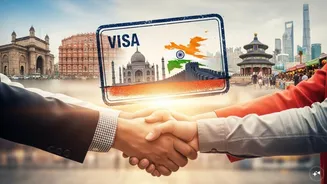
India has streamlined its business visa process to facilitate the movement of foreign engineers and technicians, aiming to attract more Chinese professionals. By cutting red tape and accelerating the issuance of Chinese business visas, India takes a significant step towards strengthening economic and professional ties between the two Asian giants.
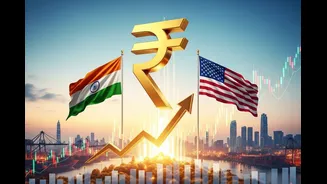
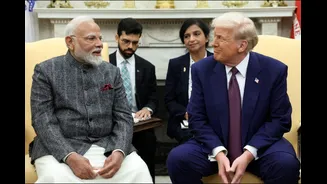
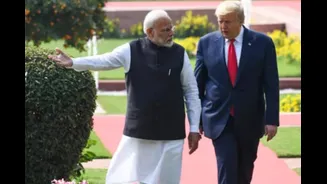
As India's relations with the US strained under Donald Trump's tariff regime, the country is now more open to enhancing bilateral economic engagement with China. Amid the US-China trade wars, India’s decision to ease visa rules for Chinese professionals offers a vital boost to its economic ambitions.
The reform simplifies the business visa regime for foreign engineers and technicians, particularly those from China, facilitating the movement of specialists needed for factory installations, maintenance, and production lines, while also benefiting Indian companies importing machinery and technical equipment from China. Most Indian businesses rely on Chinese professionals for such services. The removal of red tape follows Prime Minister Narendra Modi’s visit to China earlier this year, his first in seven years.
India must balance national security with economic imperatives to thrive as a global powerhouse. By welcoming skilled talent across borders, the country strengthens its sovereignty through self-reliance built on collaboration. This marks a strategic evolution.
India had virtually halted all Chinese visits as bilateral relations deteriorated amid rising border tensions along the Line of Actual Control (LAC) in eastern Ladakh, culminating in the 2020 Galwan clash—the first deadly confrontation between the two countries since 1975. However, relations between the neighbours have gradually improved through diplomacy and dialogue, with both nations recently agreeing to resume direct flights for the first time since 2020.
Tight visa restrictions for Chinese professionals previously caused significant losses to Indian electronics makers, who depend on critical machinery from China. According to reports, many Chinese companies struggled to obtain Indian visas. This reform provides a targeted boost, fostering technology transfer that could enhance the skills of the Indian workforce—for example, imagine Chinese engineers training Indian counterparts at a Hyderabad EV plant. The move acts as a multiplier: faster project rollouts mean quicker revenue, job creation, and greater supply chain resilience against external shocks.
Prime Minister Modi’s cautious engagement with China signals strategic maturity. By strengthening economic ties, India positions itself as a bridge in a fractured world, attracting investment and accelerating its pivot to high-value manufacturing. The Department for Promotion of Industry and Internal Trade (DPIIT)’s digital module ensures transparency, reducing corruption risks and building trust. In an age of AI and renewables, no nation innovates in isolation.
Critics may point to lingering border tensions and espionage concerns, while nationalists might argue it risks undermining India’s self-reliance by over-relying on foreign expertise.
Yet this visa reform embodies pragmatic progress. As India charts its rise, leaders and policymakers should continue to take bold steps cautiously, while citizens embrace the collaborative spirit that propels nations forward. True strength lies not in walls, but in bridges wisely built.
(The writer is a columnist. His articles have appeared in various publications like The Independent, The Globe and Mail, South China Morning Post, The Straits Times, etc. Views expressed in the above piece are personal and solely those of the author. They do not necessarily reflect Firstpost’s views.)
As India's relations with the US strained under Donald Trump's tariff regime, the country is now more open to enhancing bilateral economic engagement with China. Amid the US-China trade wars, India’s decision to ease visa rules for Chinese professionals offers a vital boost to its economic ambitions.
The reform simplifies the business visa regime for foreign engineers and technicians, particularly those from China, facilitating the movement of specialists needed for factory installations, maintenance, and production lines, while also benefiting Indian companies importing machinery and technical equipment from China. Most Indian businesses rely on Chinese professionals for such services. The removal of red tape follows Prime Minister Narendra Modi’s visit to China earlier this year, his first in seven years.
India must balance national security with economic imperatives to thrive as a global powerhouse. By welcoming skilled talent across borders, the country strengthens its sovereignty through self-reliance built on collaboration. This marks a strategic evolution.
India had virtually halted all Chinese visits as bilateral relations deteriorated amid rising border tensions along the Line of Actual Control (LAC) in eastern Ladakh, culminating in the 2020 Galwan clash—the first deadly confrontation between the two countries since 1975. However, relations between the neighbours have gradually improved through diplomacy and dialogue, with both nations recently agreeing to resume direct flights for the first time since 2020.
Tight visa restrictions for Chinese professionals previously caused significant losses to Indian electronics makers, who depend on critical machinery from China. According to reports, many Chinese companies struggled to obtain Indian visas. This reform provides a targeted boost, fostering technology transfer that could enhance the skills of the Indian workforce—for example, imagine Chinese engineers training Indian counterparts at a Hyderabad EV plant. The move acts as a multiplier: faster project rollouts mean quicker revenue, job creation, and greater supply chain resilience against external shocks.
Prime Minister Modi’s cautious engagement with China signals strategic maturity. By strengthening economic ties, India positions itself as a bridge in a fractured world, attracting investment and accelerating its pivot to high-value manufacturing. The Department for Promotion of Industry and Internal Trade (DPIIT)’s digital module ensures transparency, reducing corruption risks and building trust. In an age of AI and renewables, no nation innovates in isolation.
Critics may point to lingering border tensions and espionage concerns, while nationalists might argue it risks undermining India’s self-reliance by over-relying on foreign expertise.
Yet this visa reform embodies pragmatic progress. As India charts its rise, leaders and policymakers should continue to take bold steps cautiously, while citizens embrace the collaborative spirit that propels nations forward. True strength lies not in walls, but in bridges wisely built.
(The writer is a columnist. His articles have appeared in various publications like The Independent, The Globe and Mail, South China Morning Post, The Straits Times, etc. Views expressed in the above piece are personal and solely those of the author. They do not necessarily reflect Firstpost’s views.)