



What is the story about?
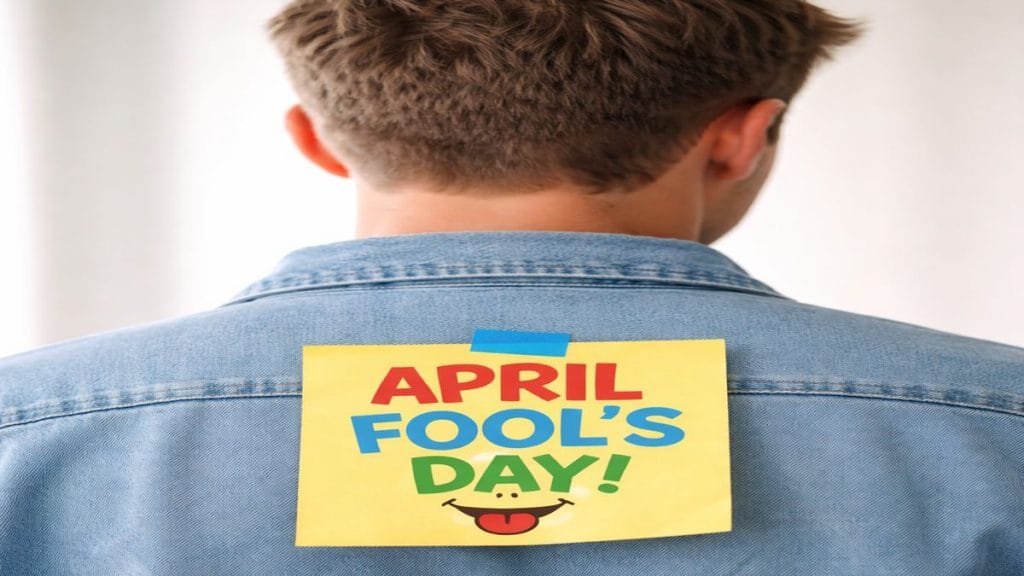
The prank(iest) day of the world is upon us! Today (April 1) is April Fools’ Day, and people around the world will pull practical pranks on their loved ones and friends. While some people eagerly anticipate the April holiday, others simply hope to avoid becoming the butt of the joke.
Though this holiday isn’t everyone’s cup of tea, you can’t help but laugh at some of the elaborate practical jokes that people dream up. But as a gleeful trickster or a hapless victim, have you ever wondered how this prank-pulling tradition began in the first place?
Also, what is the impact of prank-pulling on our health?
To this date, the origins of April Fools’ Day are unknown. Some suggest it started in 1582, when France switched from the Julian calendar to the Gregorian calendar. It is said that, as France made the switch, not everyone got the word that the start of the year had changed from April 1 to January 1. They kept celebrating it on April 1, and they were widely mocked as April Fools.
Some others speculate that April Fools’ Day began because of unpredictable spring weather.
There’s also a third theory that notes that the first known mentions comes from a 1508 poem referencing poisson d’avril, or “April fish,” a term used for someone easily fooled.
But regardless of its origin, April Fools’ Day has become a global tradition with people pulling pranks on one another. As Rob Weiner, the popular culture librarian at Texas Tech University, told Reader’s Digest, “April Fools’ Day didn’t happen overnight. It was passed through oral traditions initially.
And with the growth of media, it eventually spread through the world. In fact, some of the most epic April Fools’ Day pranks have been carried out by media outlets or big brands. For instance, in 1957, the BBC perpetrated the “Spaghetti Tree Hoax,” during which the UK network broadcast images of Swiss women casually “picking” spaghetti from trees and bushes during their annual harvest.
Rob Weiner, pop culture librarian at Texas Tech University, told Today.com, “We all have an innate desire to be mischievous. It’s part of our human nature,” and hence individuals try to pull pranks on others.
Other experts also note that perhaps the human desire or need for deception drives us to pull pranks.
At the heart of any prank is the same basic impulse — a desire to playfully assert dominance over a target by making them the butt of a joke. Dr Giselinde Kuipers, who teaches sociology at the Belgian university KU Leuven, told Salon.com, “It’s a form of superiority… “You’re basically preparing to do something that someone else really cannot know, and then you will feel superior to them.”
Pranks also give an opportunity to subvert the power dynamics that normally define their lives. Folklorist Moira Marsh, the subject librarian for folklore at Indiana University Bloomington and author of the book
Practically Joking, also told Salon, “If you are a younger person, you have licence to play jokes on your teachers, your elders, your parents,” Marsh explained. “You have the added thrill of a temporary role reversal or temporary power inversion. For a kid to be able to, for a little while, get the upper hand over an adult, it flips the usual relationship. It flips the usual power dynamic. That’s thrilling and enjoyable.”

Pulling good-natured pranks — when there’s no malice and is done affectionately — can relieve stress, create a smile, strengthen relationships, and stir self-reflection.
Many experts note that pranking in the home can build strong relationships and establish trust between parents and kids. Best-selling children’s author Matt Stanton told the Herald Sun, “An adult joining in with kids’ games can be surprising for them and bring wonderful moments of joy. It’s a great way to demonstrate to our kids that we can laugh at ourselves and still feel loved and secure.”
Playing tricks also helps teach many important social skills such as active listening, empathy, and resiliency. According to psychologist Susan Albers, to plan a prank, you need to know them well. Doing that requires spending at least as much time listening to those around you as you spend talking.
Pulling a prank on a buddy also helps improve resiliency. When we are teased or ribbed, we build the mental toughness we need for the future. But this only applies if the teasing doesn’t cross over into the realm of bullying.
Apart from this, playing a prank has tangible health benefits. When we trick someone, it induces laughter, and we all know what a few laughs can do for our bodies. When we laugh, we get rid of our stress, which, in turn, helps protect blood vessels and keeps our heart healthy.
Laughter also helps us to burn calories. When we laugh, multiple muscles in the body are activated, including those in the face, neck, and abdomen. Research suggests that laughing for just 10-15 minutes can burn up to 40 calories!
While it can be fun to prank your friends and family, it’s always possible to take a joke too far. And you need to consider different factors.
A well-done joke or prank isn’t about humiliating or hurting. Also, don’t be mean. The goal of a prank or joke is to bring people in on the fun. Laughing at somebody else’s expense isn’t funny. It’s bullying. So, be empathetic.
Also, make sure your prank doesn’t risk anybody’s health or safety. While it may be funny to see someone slip on the floor, it can have serious consequences.
All in all, an April Fools’ prank is crucial to maintaining one’s physical and mental health. So, go ahead and crack one silly joke aimed at someone you love.
With inputs from agencies
Though this holiday isn’t everyone’s cup of tea, you can’t help but laugh at some of the elaborate practical jokes that people dream up. But as a gleeful trickster or a hapless victim, have you ever wondered how this prank-pulling tradition began in the first place?
Also, what is the impact of prank-pulling on our health?
What are the origins of April Fools’ Day?
To this date, the origins of April Fools’ Day are unknown. Some suggest it started in 1582, when France switched from the Julian calendar to the Gregorian calendar. It is said that, as France made the switch, not everyone got the word that the start of the year had changed from April 1 to January 1. They kept celebrating it on April 1, and they were widely mocked as April Fools.
Some others speculate that April Fools’ Day began because of unpredictable spring weather.
There’s also a third theory that notes that the first known mentions comes from a 1508 poem referencing poisson d’avril, or “April fish,” a term used for someone easily fooled.
But regardless of its origin, April Fools’ Day has become a global tradition with people pulling pranks on one another. As Rob Weiner, the popular culture librarian at Texas Tech University, told Reader’s Digest, “April Fools’ Day didn’t happen overnight. It was passed through oral traditions initially.
And with the growth of media, it eventually spread through the world. In fact, some of the most epic April Fools’ Day pranks have been carried out by media outlets or big brands. For instance, in 1957, the BBC perpetrated the “Spaghetti Tree Hoax,” during which the UK network broadcast images of Swiss women casually “picking” spaghetti from trees and bushes during their annual harvest.
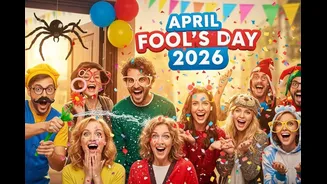
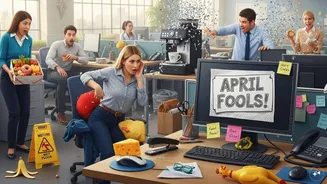
To this date, the origins of April Fools’ Day are unknown. Representational image/AI generated
Why do we pull pranks?
Rob Weiner, pop culture librarian at Texas Tech University, told Today.com, “We all have an innate desire to be mischievous. It’s part of our human nature,” and hence individuals try to pull pranks on others.
Other experts also note that perhaps the human desire or need for deception drives us to pull pranks.
At the heart of any prank is the same basic impulse — a desire to playfully assert dominance over a target by making them the butt of a joke. Dr Giselinde Kuipers, who teaches sociology at the Belgian university KU Leuven, told Salon.com, “It’s a form of superiority… “You’re basically preparing to do something that someone else really cannot know, and then you will feel superior to them.”
Pranks also give an opportunity to subvert the power dynamics that normally define their lives. Folklorist Moira Marsh, the subject librarian for folklore at Indiana University Bloomington and author of the book
Laughing and enjoying a good joke or prank isn’t a waste of time. It’s crucial to maintaining our physical and mental health. Representational image/Pixabay
But do April Fools’ Day pranks impact our health?
Pulling good-natured pranks — when there’s no malice and is done affectionately — can relieve stress, create a smile, strengthen relationships, and stir self-reflection.
Many experts note that pranking in the home can build strong relationships and establish trust between parents and kids. Best-selling children’s author Matt Stanton told the Herald Sun, “An adult joining in with kids’ games can be surprising for them and bring wonderful moments of joy. It’s a great way to demonstrate to our kids that we can laugh at ourselves and still feel loved and secure.”
Playing tricks also helps teach many important social skills such as active listening, empathy, and resiliency. According to psychologist Susan Albers, to plan a prank, you need to know them well. Doing that requires spending at least as much time listening to those around you as you spend talking.
Pulling a prank on a buddy also helps improve resiliency. When we are teased or ribbed, we build the mental toughness we need for the future. But this only applies if the teasing doesn’t cross over into the realm of bullying.
Apart from this, playing a prank has tangible health benefits. When we trick someone, it induces laughter, and we all know what a few laughs can do for our bodies. When we laugh, we get rid of our stress, which, in turn, helps protect blood vessels and keeps our heart healthy.
Laughter also helps us to burn calories. When we laugh, multiple muscles in the body are activated, including those in the face, neck, and abdomen. Research suggests that laughing for just 10-15 minutes can burn up to 40 calories!
What’s okay and not when pulling an April Fools’ prank?
While it can be fun to prank your friends and family, it’s always possible to take a joke too far. And you need to consider different factors.
A well-done joke or prank isn’t about humiliating or hurting. Also, don’t be mean. The goal of a prank or joke is to bring people in on the fun. Laughing at somebody else’s expense isn’t funny. It’s bullying. So, be empathetic.
Also, make sure your prank doesn’t risk anybody’s health or safety. While it may be funny to see someone slip on the floor, it can have serious consequences.
All in all, an April Fools’ prank is crucial to maintaining one’s physical and mental health. So, go ahead and crack one silly joke aimed at someone you love.
With inputs from agencies