





What is the story about?
The Donald Trump administration’s crackdown on legal immigration continues. The United States Citizenship and Immigration Services (USCIS) announced on Friday (May 22) that immigrants on temporary visas in the country will have to return to their home countries to apply for a green card.
According to a new memo by the agency, officers have been directed to approve green card applications filed from inside the US only in “extraordinary circumstances”. The change in the practice that has been prevalent for over half a century has caused chaos and uncertainty for hundreds of thousands of foreign nationals seeking permanent residency in the US.
We take a deep dive.
The US’ new policy mandates that most immigrants seeking a green card leave the country and apply at an embassy or consulate abroad.
USCIS said on Friday that officials adhere to consular processing, which would see applicants return to their home country and apply through a US embassy or consulate, instead of allowing "adjustment of status" from within the US.
“We’re returning to the original intent of the law to ensure aliens navigate our nation’s immigration system properly. From now on, an alien who is in the US temporarily and wants a Green Card must return to their home country to apply, except in extraordinary circumstances,” USCIS Spokesman Zach Kahler said in a statement.
“This policy allows our immigration system to function as the law intended instead of incentivising loopholes. When aliens apply from their home country, it reduces the need to find and remove those who decide to slip into the shadows and remain in the US illegally after being denied residency,” he added.
USCIS said in its statement that foreigners entering the US on non-immigrant visas, mostly students, temporary workers and tourists, are expected to stay in the country for a short time and for a particular reason.
“Nonimmigrants, like students, temporary workers, or people on tourist visas, come to the US for a short time and for a specific purpose. Our system is designed for them to leave when their visit is over. Their visit should not function as the first step in the Green Card process,” the statement read.
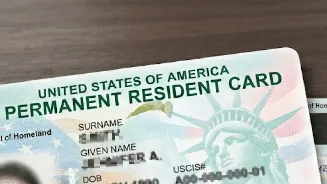
Foreigners can apply for green cards in two ways: either by applying at a US consulate abroad or by applying for a permanent resident card while already in the US, which is called an adjustment of status.
Currently, foreign nationals married to American citizens, those who have student and work visas, or who are refugees and asylum-seekers can apply for green cards from within the US.
The new policy will change that.
Over 1 million (10 lakh) immigrants in the US are waiting for their green cards,
The Guardian reported, citing an analyst with the Cato Institute. But it is unclear whether the new policy will impact pending green card applications.
H-1B visa workers have also not been exempted from the new rule. Many, including Indians, have been in employment-based green card backlogs for over a decade. The new policy has introduced further uncertainty for them, even after waiting for years to gain permanent residency in the US.
“The traditional assumption — that if you maintained status, paid your taxes, and met the requirements, your I-485 would go through — is no longer reliable,” Nicole Gunara, an immigration attorney, told
Hindustan Times (HT)
. “Applicants will need to earn the green card, not just qualify for one.”
Even maintaining a valid H-1B or L-1 status throughout the green card process, on its own, does not guarantee a favourable decision, the attorney said.
Applicants in the EB-2 and EB-3 backlog categories have to usually wait 10 to 15 years for a visa number. Many of them have built their lives in the US with spouses and children. As per Gunara, the new move means that their history — family ties, tax records, career progression — will become primary evidence, rather than background details officers take for granted.
"The most worrying part is how the memo views people on work visas. If you came to the US on an H-1B, L-1, or O-1, the government’s expectation — according to this memo — is that you will eventually go home. Not stay. The memo says that staying in the US to get a green card, instead of going back to your home country and applying at a US consulate there, is something officers should view as a negative. Yes, the memo admits that H-1Bs and L-1s are allowed to have “dual intent.” But it then says that allowance alone is not enough to get you approved," immigration attorney Rahul Reddy was quoted as saying by
Times of India.
Foreign students on F-1 visas, which are not dual-intent visas, could also be highly impacted by the policy change.
A dual-intent visa is a temporary visa that allows foreign nationals to apply for permanent residency.
“F-1 is not a dual intent visa. When students apply for this status via USCIS or for the visa at the consulate, they are representing to an officer that they intended to return home,” Gunara wrote in a piece published by Manifest OS.
“The memo instructs officers to weigh that representation when those same students later file for a Green Card. If you’re employing people on
OPT [Optional Practical Training] who are on a path toward permanent residence, this is worth a conversation with your immigration counsel,” she added.
For some immigrants, it could become difficult or even impossible to return to the US to gain permanent residency.
Immigration experts have rejected the new policy as vague and say it is likely to be challenged in court.
Michael Valverde, a former senior official at USCIS, told CBS that the new policy would "disrupt the plans of hundreds of thousands of families and employers annually".
"This is a largely unprecedented move that will limit lawful immigration to the US greatly," Valverde said. "People who followed the rules faithfully now face tremendous uncertainty."
HIAS, an aid group that provides services to refugees and other immigrants, accused USCIS of forcing survivors of trafficking and abused and neglected children to return to the dangerous countries they escaped from to process their applications for US green cards, reported The Guardian.
Immigration lawyers, lawmakers and human rights groups pointed out that many applicants cannot return home as it is not safe. For some, there is no embassy to apply to. For instance, the US Embassy in Afghanistan has remained shut since the US withdrawal from the country in August 2021.
In many countries, the US does not process immigrant visa applications. This could mean that applicants would be separated from their families in the US indefinitely.
“If families are told that the non-citizen family member must return to his or her country of origin to process their immigrant visa, but immigrant visas are not being processed there, it’s a Catch-22. These policies will effectively create an indefinite separation of families,” World Relief, a humanitarian and refugee resettlement organisation, wrote as per
Associated Press (AP).
Immigration attorney Cyrus Mehta claimed that USCIS is coming up with new rules to deprive non-citizens from getting green cards. "While adjustment of status is discretionary under INA 245 it has never been interpreted as an extraordinary form of relief and USCIS is inventing a new standard to deprive noncitizens from getting green cards in the US," Mehta said.
USCIS has not clarified when the change would be implemented, or whether applicants would have to remain abroad throughout the entire process.
A spokesperson for USCIS told BBC that as the policy was rolled out, "people who present applications that provide an economic benefit or otherwise are in the national interest will likely be able to continue on their current path".
"Others may be asked to apply abroad depending on individualised circumstances," they said.
The new method is the latest step by the Trump administration to curb legal immigration.
The US has banned or put restrictions on the entry of citizens from nearly 40 countries.
Under another policy, the Trump administration has halted issuing visas to immigrant visa applicants from 75 countries.
With inputs from agencies
According to a new memo by the agency, officers have been directed to approve green card applications filed from inside the US only in “extraordinary circumstances”. The change in the practice that has been prevalent for over half a century has caused chaos and uncertainty for hundreds of thousands of foreign nationals seeking permanent residency in the US.
We take a deep dive.
What’s the new US policy on green cards?
The US’ new policy mandates that most immigrants seeking a green card leave the country and apply at an embassy or consulate abroad.
USCIS said on Friday that officials adhere to consular processing, which would see applicants return to their home country and apply through a US embassy or consulate, instead of allowing "adjustment of status" from within the US.
“We’re returning to the original intent of the law to ensure aliens navigate our nation’s immigration system properly. From now on, an alien who is in the US temporarily and wants a Green Card must return to their home country to apply, except in extraordinary circumstances,” USCIS Spokesman Zach Kahler said in a statement.
“This policy allows our immigration system to function as the law intended instead of incentivising loopholes. When aliens apply from their home country, it reduces the need to find and remove those who decide to slip into the shadows and remain in the US illegally after being denied residency,” he added.
USCIS said in its statement that foreigners entering the US on non-immigrant visas, mostly students, temporary workers and tourists, are expected to stay in the country for a short time and for a particular reason.
“Nonimmigrants, like students, temporary workers, or people on tourist visas, come to the US for a short time and for a specific purpose. Our system is designed for them to leave when their visit is over. Their visit should not function as the first step in the Green Card process,” the statement read.
An alien who is in the U.S. temporarily and wants a Green Card must return to their home country to apply.
This policy allows our immigration system to function as the law intended instead of incentivizing loopholes.
The era of abusing our nation’s immigration system is over. https://t.co/ofyEYGPDLC
— Homeland Security (@DHSgov) May 22, 2026
How will it impact those seeking green card?
Foreigners can apply for green cards in two ways: either by applying at a US consulate abroad or by applying for a permanent resident card while already in the US, which is called an adjustment of status.
Currently, foreign nationals married to American citizens, those who have student and work visas, or who are refugees and asylum-seekers can apply for green cards from within the US.
The new policy will change that.
Over 1 million (10 lakh) immigrants in the US are waiting for their green cards,
H-1B visa workers have also not been exempted from the new rule. Many, including Indians, have been in employment-based green card backlogs for over a decade. The new policy has introduced further uncertainty for them, even after waiting for years to gain permanent residency in the US.
“The traditional assumption — that if you maintained status, paid your taxes, and met the requirements, your I-485 would go through — is no longer reliable,” Nicole Gunara, an immigration attorney, told
Even maintaining a valid H-1B or L-1 status throughout the green card process, on its own, does not guarantee a favourable decision, the attorney said.
Applicants in the EB-2 and EB-3 backlog categories have to usually wait 10 to 15 years for a visa number. Many of them have built their lives in the US with spouses and children. As per Gunara, the new move means that their history — family ties, tax records, career progression — will become primary evidence, rather than background details officers take for granted.
"The most worrying part is how the memo views people on work visas. If you came to the US on an H-1B, L-1, or O-1, the government’s expectation — according to this memo — is that you will eventually go home. Not stay. The memo says that staying in the US to get a green card, instead of going back to your home country and applying at a US consulate there, is something officers should view as a negative. Yes, the memo admits that H-1Bs and L-1s are allowed to have “dual intent.” But it then says that allowance alone is not enough to get you approved," immigration attorney Rahul Reddy was quoted as saying by
Foreign students on F-1 visas, which are not dual-intent visas, could also be highly impacted by the policy change.
A dual-intent visa is a temporary visa that allows foreign nationals to apply for permanent residency.
“F-1 is not a dual intent visa. When students apply for this status via USCIS or for the visa at the consulate, they are representing to an officer that they intended to return home,” Gunara wrote in a piece published by Manifest OS.
“The memo instructs officers to weigh that representation when those same students later file for a Green Card. If you’re employing people on
There's a ton of confusion on the new US immigration policy.
Here's an immigration lawyer's analysis, and how it actually affects every current US visa holder. pic.twitter.com/AAVG1fjITD
— Deedy (@deedydas) May 23, 2026
For some immigrants, it could become difficult or even impossible to return to the US to gain permanent residency.
Reactions to US policy change on green cards
Immigration experts have rejected the new policy as vague and say it is likely to be challenged in court.
Michael Valverde, a former senior official at USCIS, told CBS that the new policy would "disrupt the plans of hundreds of thousands of families and employers annually".
"This is a largely unprecedented move that will limit lawful immigration to the US greatly," Valverde said. "People who followed the rules faithfully now face tremendous uncertainty."
HIAS, an aid group that provides services to refugees and other immigrants, accused USCIS of forcing survivors of trafficking and abused and neglected children to return to the dangerous countries they escaped from to process their applications for US green cards, reported The Guardian.
Immigration lawyers, lawmakers and human rights groups pointed out that many applicants cannot return home as it is not safe. For some, there is no embassy to apply to. For instance, the US Embassy in Afghanistan has remained shut since the US withdrawal from the country in August 2021.
In many countries, the US does not process immigrant visa applications. This could mean that applicants would be separated from their families in the US indefinitely.
“If families are told that the non-citizen family member must return to his or her country of origin to process their immigrant visa, but immigrant visas are not being processed there, it’s a Catch-22. These policies will effectively create an indefinite separation of families,” World Relief, a humanitarian and refugee resettlement organisation, wrote as per
Immigration attorney Cyrus Mehta claimed that USCIS is coming up with new rules to deprive non-citizens from getting green cards. "While adjustment of status is discretionary under INA 245 it has never been interpreted as an extraordinary form of relief and USCIS is inventing a new standard to deprive noncitizens from getting green cards in the US," Mehta said.
USCIS has not clarified when the change would be implemented, or whether applicants would have to remain abroad throughout the entire process.
A spokesperson for USCIS told BBC that as the policy was rolled out, "people who present applications that provide an economic benefit or otherwise are in the national interest will likely be able to continue on their current path".
"Others may be asked to apply abroad depending on individualised circumstances," they said.
The new method is the latest step by the Trump administration to curb legal immigration.
The US has banned or put restrictions on the entry of citizens from nearly 40 countries.
Under another policy, the Trump administration has halted issuing visas to immigrant visa applicants from 75 countries.
With inputs from agencies