




What is the story about?
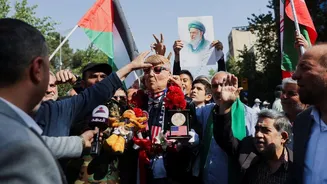
Iran is witnessing one of the most severe waves of anti-government protests in recent years.
The unrest, which began in late December, has transformed into nationwide demonstrations that challenge the authority of the Islamic Republic.
Iranian authorities have responded with a forceful crackdown, reportedly killing hundreds of protesters and restricting access to the internet and mobile communications.
As the situation inside Iran deteriorates, United States President Donald Trump is weighing a broad range of responses. His administration is considering economic penalties, cyber operations, diplomatic engagement, and potential military action.
Senior members of Trump’s national security team were scheduled to meet at the White House on Tuesday to discuss possible next steps.
The current unrest in Iran began in late December after the country’s worsening economic situation pushed living costs higher and weakened the national currency.
The Iranian rial has lost roughly half of its value over the past year, reaching record lows of around one million rials per US dollar, according to LSEG data.
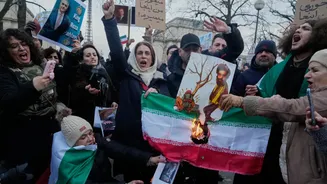
What started as protests over financial hardship soon expanded into broader demonstrations against the Islamic Republic’s leadership. These protests have been described as the deepest and most widespread in years, with the government struggling to contain the unrest.
Tehran has intensified its response, deploying security forces to suppress demonstrations. According to the US-based Human Rights Activists News Agency, more than 500 people have been killed.
Authorities have also restricted internet and phone services, limiting the flow of information from inside the country.
Iranian leaders have accused foreign governments of fuelling the unrest.
Iranian President Masoud Pezeshkian has blamed the US and Israel for encouraging instability, while Iran’s Supreme Leader Ayatollah Ali Khamenei has signalled that the government will not soften its stance.
Last Friday, Khamenei said Iran’s leadership would “not back down” despite the protests.
Mohammad Baqer Qalibaf, the speaker of Iran’s parliament, issued a warning during a session broadcast live on state television. He said that if the US attacks Iran, Israel and “all American military centres, bases and ships in the region will be our legitimate targets.”
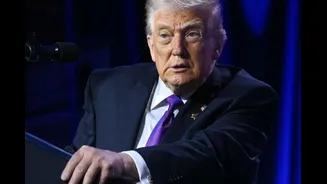
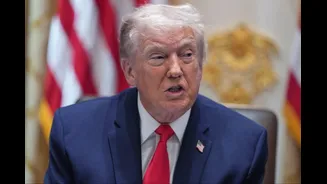
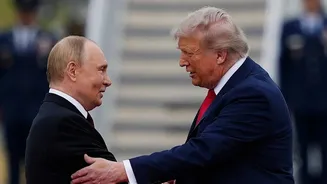
Trump has taken a hard line on Iran as the protests have increased. He has publicly supported the demonstrators and repeatedly warned Tehran against using lethal force.
Last Friday, amid reports of protesters being killed, Trump told reporters that Iran was in “big trouble” and warned that they “better not start shooting because we’ll start shooting, too.”
He added, “We'll be hitting them very hard where it hurts. And that doesn't mean boots on the ground, but it means hitting them very, very hard where it hurts.”
On Saturday, Trump wrote that the United States would come to the “rescue” of Iranians if the authorities continued killing protesters, adding, “Iran is looking at FREEDOM, perhaps like never before. The USA stands ready to help!!!”
On Monday, Trump announced that he was prepared to impose a new economic penalty on countries doing business with Iran.
In an online post, he said a 25 per cent tariff would be applied to “any country doing business with Iran” on “any and all business being done with the United States of America.”
According to a US official who spoke to ABC News, the options under consideration include additional sanctions on senior Iranian officials, as well as restrictions on Iran’s energy and banking sectors.
Former US officials say the list of possible actions extends beyond financial pressure. These options range from large-scale military operations to more targeted strikes against Iranian leaders or security infrastructure that have been linked to the violent suppression of protests.
The US is also examining cyber operations aimed at Iranian government systems, along with online influence campaigns designed to strengthen the digital presence of protesters and undermine Tehran’s messaging.
White House press secretary Karoline Leavitt said Trump keeps all options available.
“I think one thing President Trump is very good at is always keeping all of his options on the table and air strikes would be one of the many, many options on the table for the commander in chief. Diplomacy is always the first option for the president,” she told reporters.
Leavitt also suggested that Iran’s private communications with Washington differ from its public statements. “I think the president has an interest in exploring those messages. However, with that said, the president has shown he's unafraid to use military options if and when he deems necessary,” she said.
Mick Mulroy, a former US deputy assistant secretary of defence for West Asia, told ABC News that Trump is likely to receive intelligence assessments on the potential consequences of military action.
“I believe if they chose to move forward [on a military strike] it will be focused on regime targets specific to controlling, or oppressing, the protests,” Mulroy said. He added that such strikes could target the Islamic Revolutionary Guard Corps’ Basij forces or other internal security units that have been blamed for protester deaths.
Reports from The Wall Street Journal and Politico say Trump’s aides are preparing to brief him on measures such as cyberattacks against Iranian military and civilian systems, covert action, and efforts to strengthen anti-government voices online.
One proposal under discussion is sending Starlink satellite internet terminals into Iran. Starlink, owned by Elon Musk, could allow protesters to bypass government-imposed internet restrictions. Trump said he would speak to Musk about the idea.
“We may get the internet going, if that’s possible,” Trump told reporters. “We may speak to Elon Musk. I’m going to call him as soon as I’m finished with you.”
Iran has reportedly attempted to jam Starlink signals during the latest protests.
Politico also reported that Trump is not expected to deploy American ground forces inside Iran and that there has been no major movement of US military assets so far.
Washington could also target nuclear, military, or government facilities to weaken Iran’s capabilities and discourage disruptive actions.
Iran’s leadership has reportedly strengthened security measures around senior Revolutionary Guard figures and Iranian Supreme Leader Khamenei, making targeted strikes more difficult.
Some US lawmakers have expressed doubts about the effectiveness of bombing Iran. Republican Senator Rand Paul said, “I don't know that bombing Iran will have the effect that is intended.”
Democratic Senator Mark Warner also warned that military action could unite Iranians against an external enemy rather than weaken the government.
Others in Washington argue for a tougher approach. Senator Lindsey Graham said Trump should take stronger action against Iranian leaders. “If I were you, Mr President, I would kill the leadership that is killing the people,” Graham said on Fox News.
“You've got to end this.” Graham also said Trump “needs to embolden the protesters and scare the hell out of the [Iranian] regime.”
Reza Pahlavi, the US-based son of Iran’s former shah who was overthrown in 1979, has said he is ready to return to Iran to help guide a democratic transition.
There are currently around 30,000 U.S. troops stationed across the region. This includes 2,500 troops in Iraq and 1,000 in Syria. The Pentagon would likely move additional assets to the region if tensions escalate, particularly to protect US forces from potential Iranian retaliation.
The US Navy has six ships in the area, including three guided missile destroyers capable of defending against ballistic missile threats.
At present, there is no aircraft carrier deployed in the Middle East or Europe. The USS Gerald Ford and its strike group are in the Caribbean after being relocated from the Mediterranean to support operations related to Venezuela.
Military experts say that while large-scale operations against Iran remain less likely due to the risks involved, Washington is maintaining readiness to protect its forces and interests in the region.
Speaking to reporters on Air Force One, Trump said, “We’re looking at it very seriously. The military is looking at it, and we’re looking at some very strong options.”
He added, “We’ll make a determination.”
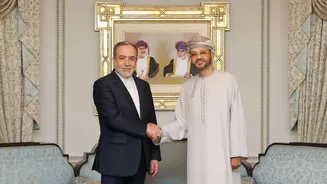
Even as Trump issues warnings, diplomatic engagement between Washington and Tehran has not stopped. Leavitt said Iran’s foreign minister, Abbas Araghchi, has been communicating directly with Trump’s special envoy, Steve Witkoff.
Araghchi said on Monday that Iran is “prepared” for war with the United States but remains open to diplomatic talks.
Iranian Foreign Ministry spokesperson Esmail Baghaei confirmed that the communication channel with Witkoff “remains open” and that “whenever necessary, messages are exchanged through that channel.” He also said that “certain points and ideas have been presented by the other side.”
Trump has indicated that Iranian officials contacted him over the weekend to discuss negotiations. Speaking aboard Air Force One on Sunday night, he said, “They want to negotiate. I think they're tired of being beat up by the United States.”
He added that a meeting could take place soon, but also warned that action might come first. “We may meet with them. I mean -- a meeting is being set up, but we may have to act because of what's happening, before the meeting, but a meeting is being set up.”
Meanwhile, US Secretary of State Marco Rubio has been consulting US allies about the situation. The State Department said Rubio spoke with his counterparts in France and Cyprus over the weekend. He also discussed the unrest with Israeli Prime Minister Benjamin Netanyahu, according to an Israeli official.
The US State Department has also posted messages in Farsi on X, including a warning to Tehran, “Don't play games with President Trump.”
Also Watch:
With inputs from agencies
The unrest, which began in late December, has transformed into nationwide demonstrations that challenge the authority of the Islamic Republic.
Iranian authorities have responded with a forceful crackdown, reportedly killing hundreds of protesters and restricting access to the internet and mobile communications.
As the situation inside Iran deteriorates, United States President Donald Trump is weighing a broad range of responses. His administration is considering economic penalties, cyber operations, diplomatic engagement, and potential military action.
Senior members of Trump’s national security team were scheduled to meet at the White House on Tuesday to discuss possible next steps.
What's happening in Iran?
The current unrest in Iran began in late December after the country’s worsening economic situation pushed living costs higher and weakened the national currency.
The Iranian rial has lost roughly half of its value over the past year, reaching record lows of around one million rials per US dollar, according to LSEG data.
What started as protests over financial hardship soon expanded into broader demonstrations against the Islamic Republic’s leadership. These protests have been described as the deepest and most widespread in years, with the government struggling to contain the unrest.
Tehran has intensified its response, deploying security forces to suppress demonstrations. According to the US-based Human Rights Activists News Agency, more than 500 people have been killed.
Authorities have also restricted internet and phone services, limiting the flow of information from inside the country.
Iranian leaders have accused foreign governments of fuelling the unrest.
Iranian President Masoud Pezeshkian has blamed the US and Israel for encouraging instability, while Iran’s Supreme Leader Ayatollah Ali Khamenei has signalled that the government will not soften its stance.
Last Friday, Khamenei said Iran’s leadership would “not back down” despite the protests.
Mohammad Baqer Qalibaf, the speaker of Iran’s parliament, issued a warning during a session broadcast live on state television. He said that if the US attacks Iran, Israel and “all American military centres, bases and ships in the region will be our legitimate targets.”
What has Trump said?
Trump has taken a hard line on Iran as the protests have increased. He has publicly supported the demonstrators and repeatedly warned Tehran against using lethal force.
Last Friday, amid reports of protesters being killed, Trump told reporters that Iran was in “big trouble” and warned that they “better not start shooting because we’ll start shooting, too.”
He added, “We'll be hitting them very hard where it hurts. And that doesn't mean boots on the ground, but it means hitting them very, very hard where it hurts.”
On Saturday, Trump wrote that the United States would come to the “rescue” of Iranians if the authorities continued killing protesters, adding, “Iran is looking at FREEDOM, perhaps like never before. The USA stands ready to help!!!”
On Monday, Trump announced that he was prepared to impose a new economic penalty on countries doing business with Iran.
In an online post, he said a 25 per cent tariff would be applied to “any country doing business with Iran” on “any and all business being done with the United States of America.”
What are Trump's options in Iran?
According to a US official who spoke to ABC News, the options under consideration include additional sanctions on senior Iranian officials, as well as restrictions on Iran’s energy and banking sectors.
Former US officials say the list of possible actions extends beyond financial pressure. These options range from large-scale military operations to more targeted strikes against Iranian leaders or security infrastructure that have been linked to the violent suppression of protests.
The US is also examining cyber operations aimed at Iranian government systems, along with online influence campaigns designed to strengthen the digital presence of protesters and undermine Tehran’s messaging.
White House press secretary Karoline Leavitt said Trump keeps all options available.
“I think one thing President Trump is very good at is always keeping all of his options on the table and air strikes would be one of the many, many options on the table for the commander in chief. Diplomacy is always the first option for the president,” she told reporters.
Leavitt also suggested that Iran’s private communications with Washington differ from its public statements. “I think the president has an interest in exploring those messages. However, with that said, the president has shown he's unafraid to use military options if and when he deems necessary,” she said.
Mick Mulroy, a former US deputy assistant secretary of defence for West Asia, told ABC News that Trump is likely to receive intelligence assessments on the potential consequences of military action.
“I believe if they chose to move forward [on a military strike] it will be focused on regime targets specific to controlling, or oppressing, the protests,” Mulroy said. He added that such strikes could target the Islamic Revolutionary Guard Corps’ Basij forces or other internal security units that have been blamed for protester deaths.
Reports from The Wall Street Journal and Politico say Trump’s aides are preparing to brief him on measures such as cyberattacks against Iranian military and civilian systems, covert action, and efforts to strengthen anti-government voices online.
One proposal under discussion is sending Starlink satellite internet terminals into Iran. Starlink, owned by Elon Musk, could allow protesters to bypass government-imposed internet restrictions. Trump said he would speak to Musk about the idea.
“We may get the internet going, if that’s possible,” Trump told reporters. “We may speak to Elon Musk. I’m going to call him as soon as I’m finished with you.”
Iran has reportedly attempted to jam Starlink signals during the latest protests.
Will Trump deploy US military?
Politico also reported that Trump is not expected to deploy American ground forces inside Iran and that there has been no major movement of US military assets so far.
Washington could also target nuclear, military, or government facilities to weaken Iran’s capabilities and discourage disruptive actions.
Iran’s leadership has reportedly strengthened security measures around senior Revolutionary Guard figures and Iranian Supreme Leader Khamenei, making targeted strikes more difficult.
Some US lawmakers have expressed doubts about the effectiveness of bombing Iran. Republican Senator Rand Paul said, “I don't know that bombing Iran will have the effect that is intended.”
Democratic Senator Mark Warner also warned that military action could unite Iranians against an external enemy rather than weaken the government.
Others in Washington argue for a tougher approach. Senator Lindsey Graham said Trump should take stronger action against Iranian leaders. “If I were you, Mr President, I would kill the leadership that is killing the people,” Graham said on Fox News.
“You've got to end this.” Graham also said Trump “needs to embolden the protesters and scare the hell out of the [Iranian] regime.”
Reza Pahlavi, the US-based son of Iran’s former shah who was overthrown in 1979, has said he is ready to return to Iran to help guide a democratic transition.
What do we know about the US military presence in the region?
There are currently around 30,000 U.S. troops stationed across the region. This includes 2,500 troops in Iraq and 1,000 in Syria. The Pentagon would likely move additional assets to the region if tensions escalate, particularly to protect US forces from potential Iranian retaliation.
The US Navy has six ships in the area, including three guided missile destroyers capable of defending against ballistic missile threats.
At present, there is no aircraft carrier deployed in the Middle East or Europe. The USS Gerald Ford and its strike group are in the Caribbean after being relocated from the Mediterranean to support operations related to Venezuela.
Military experts say that while large-scale operations against Iran remain less likely due to the risks involved, Washington is maintaining readiness to protect its forces and interests in the region.
Speaking to reporters on Air Force One, Trump said, “We’re looking at it very seriously. The military is looking at it, and we’re looking at some very strong options.”
He added, “We’ll make a determination.”
What about negotiations?
Even as Trump issues warnings, diplomatic engagement between Washington and Tehran has not stopped. Leavitt said Iran’s foreign minister, Abbas Araghchi, has been communicating directly with Trump’s special envoy, Steve Witkoff.
Araghchi said on Monday that Iran is “prepared” for war with the United States but remains open to diplomatic talks.
Iranian Foreign Ministry spokesperson Esmail Baghaei confirmed that the communication channel with Witkoff “remains open” and that “whenever necessary, messages are exchanged through that channel.” He also said that “certain points and ideas have been presented by the other side.”
Trump has indicated that Iranian officials contacted him over the weekend to discuss negotiations. Speaking aboard Air Force One on Sunday night, he said, “They want to negotiate. I think they're tired of being beat up by the United States.”
He added that a meeting could take place soon, but also warned that action might come first. “We may meet with them. I mean -- a meeting is being set up, but we may have to act because of what's happening, before the meeting, but a meeting is being set up.”
Meanwhile, US Secretary of State Marco Rubio has been consulting US allies about the situation. The State Department said Rubio spoke with his counterparts in France and Cyprus over the weekend. He also discussed the unrest with Israeli Prime Minister Benjamin Netanyahu, according to an Israeli official.
The US State Department has also posted messages in Farsi on X, including a warning to Tehran, “Don't play games with President Trump.”
Also Watch:
With inputs from agencies