








What is the story about?
In its Annual Threat Assessment, the Office of the Director of National Intelligence (ODNI) has referenced India and its neighbourhood numerous times.
The ODNI government publishes the report annually to outline the administration’s assessment of global threats facing the United States. Along with the National Security Strategy and National Defence Strategy, the document offers insights into the worldview of the president and their administration.
In line with Trump’s America First platform, this year’s report covers drugs, border security, and domestic security in detail, in addition to threats from China and Russia and rapid technological advances.
Here are five key points the Annual Threat Assessment makes about India, relating to counternarcotics, tensions with Pakistan, and terrorism.
1. Narcotics
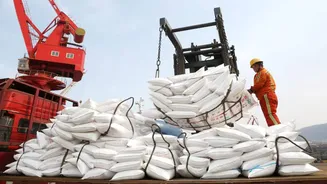
The report said that India, along with China, remains the “primary source” of chemicals and equipment used to make fentanyl.
For years, the United States has suffered from an epidemic of fentanyl, a synthetic opioid responsible for most drug‑overdose deaths in the country. President Donald Trump channelled public anger over the epidemic during the 2024 election.
The ODNI noted that both China and India have stepped up enforcement efforts but said that “Mexico‑based drug traffickers continue to circumvent international controls through mislabelled shipments and the purchase of unregulated chemicals”.
2. Counternarcotics
The ODNI noted in the report that there has been “noticeable improvement” on the part of India and China on the fentanyl issue.
India increased counternarcotics efforts in 2025, and Prime Minister Narendra Modi and other Indian officials signalled in January a “willingness to deepen engagement with the US on counternarcotics”, the report said.
Previously, FBI Director Kash Patel said he had been working with Indian officials to curb the routing of fentanyl precursor chemicals through India.
In a podcast with Joe Rogan, Patel said the FBI is working in India with “the heads of their government law‑enforcement authorities” to identify and shut down Indian companies involved in sending Chinese fentanyl‑making chemicals and equipment to the United States.
3. India making missiles with longer range
In the section on weapons of mass destruction (WMD) and countries modernising their arsenals, the report said that India is developing new and longer‑range nuclear delivery systems.
Indeed, India has multiple nuclear‑capable missiles, including the intercontinental ballistic missile (ICBM) Agni‑5, with a range of around 7,000–8,000 kilometres.
Notably, the report mentioned India’s development of such weapons but did not flag it as a threat. By contrast, it labelled China, North Korea, Pakistan, and Russia as threats, saying these nations “will continue to research, develop, and field delivery systems that will increase their ranges and accuracy, challenge US missile defences, and provide new WMD‑use options”.
4. India-Pakistan conflict
The report mentioned the India-Pakistan conflict last year and said that “South Asia remained a source of enduring security challenges for the US”, and that tensions between India and Pakistan continued to carry the risk of nuclear escalation.
In May, India launched Operation Sindoor in response to the Pahalgam terrorist attack, striking terrorist sites in Pakistan and Pakistan‑Occupied Jammu and Kashmir (POJK). When Pakistan struck India’s military and civilian areas the next day, India retaliated with strikes on Pakistani military installations, including airbases and air‑defence systems. India hammered Pakistan for four days until Pakistan requested a ceasefire.
5. Terrorism sparking India-Pakistan conflict
The Annual Threat Assessment cited the India–Pakistan conflict following the Pahalgam terrorist attack and highlighted the risk of non‑state actors sparking a conflict between the two countries that could potentially turn nuclear.
The report repeated Trump’s false claim that his intervention had led to the ceasefire between the two countries and had prevented a potential nuclear confrontation.
“[W]e assess that neither country seeks to return to open conflict, but that conditions exist for terrorist actors to continue to create catalysts for crises,” the report said.
The ODNI government publishes the report annually to outline the administration’s assessment of global threats facing the United States. Along with the National Security Strategy and National Defence Strategy, the document offers insights into the worldview of the president and their administration.
In line with Trump’s America First platform, this year’s report covers drugs, border security, and domestic security in detail, in addition to threats from China and Russia and rapid technological advances.
Here are five key points the Annual Threat Assessment makes about India, relating to counternarcotics, tensions with Pakistan, and terrorism.
1. Narcotics
The report said that India, along with China, remains the “primary source” of chemicals and equipment used to make fentanyl.
For years, the United States has suffered from an epidemic of fentanyl, a synthetic opioid responsible for most drug‑overdose deaths in the country. President Donald Trump channelled public anger over the epidemic during the 2024 election.
The ODNI noted that both China and India have stepped up enforcement efforts but said that “Mexico‑based drug traffickers continue to circumvent international controls through mislabelled shipments and the purchase of unregulated chemicals”.
2. Counternarcotics
The ODNI noted in the report that there has been “noticeable improvement” on the part of India and China on the fentanyl issue.
India increased counternarcotics efforts in 2025, and Prime Minister Narendra Modi and other Indian officials signalled in January a “willingness to deepen engagement with the US on counternarcotics”, the report said.
Previously, FBI Director Kash Patel said he had been working with Indian officials to curb the routing of fentanyl precursor chemicals through India.
In a podcast with Joe Rogan, Patel said the FBI is working in India with “the heads of their government law‑enforcement authorities” to identify and shut down Indian companies involved in sending Chinese fentanyl‑making chemicals and equipment to the United States.
3. India making missiles with longer range
In the section on weapons of mass destruction (WMD) and countries modernising their arsenals, the report said that India is developing new and longer‑range nuclear delivery systems.
Indeed, India has multiple nuclear‑capable missiles, including the intercontinental ballistic missile (ICBM) Agni‑5, with a range of around 7,000–8,000 kilometres.
Notably, the report mentioned India’s development of such weapons but did not flag it as a threat. By contrast, it labelled China, North Korea, Pakistan, and Russia as threats, saying these nations “will continue to research, develop, and field delivery systems that will increase their ranges and accuracy, challenge US missile defences, and provide new WMD‑use options”.
4. India-Pakistan conflict
The report mentioned the India-Pakistan conflict last year and said that “South Asia remained a source of enduring security challenges for the US”, and that tensions between India and Pakistan continued to carry the risk of nuclear escalation.
In May, India launched Operation Sindoor in response to the Pahalgam terrorist attack, striking terrorist sites in Pakistan and Pakistan‑Occupied Jammu and Kashmir (POJK). When Pakistan struck India’s military and civilian areas the next day, India retaliated with strikes on Pakistani military installations, including airbases and air‑defence systems. India hammered Pakistan for four days until Pakistan requested a ceasefire.
5. Terrorism sparking India-Pakistan conflict
The Annual Threat Assessment cited the India–Pakistan conflict following the Pahalgam terrorist attack and highlighted the risk of non‑state actors sparking a conflict between the two countries that could potentially turn nuclear.
The report repeated Trump’s false claim that his intervention had led to the ceasefire between the two countries and had prevented a potential nuclear confrontation.
“[W]e assess that neither country seeks to return to open conflict, but that conditions exist for terrorist actors to continue to create catalysts for crises,” the report said.