








What is the story about?
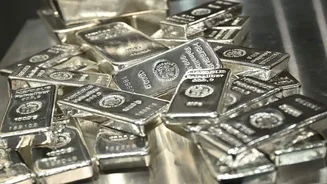
After giving bumper returns in 2025, silver prices are likely to remain volatile through 2026, as major global bank HSBC has flagged the metal as fundamentally overvalued, warning that stretched valuations and shifting supply-demand dynamics could trigger sharp price corrections.
In its latest metals outlook, HSBC said silver is currently trading well above levels justified by long-term fundamentals, even as prices have surged over the past year on strong investment flows and industrial demand from clean energy sectors.
According to the bank, global silver demand rose to nearly 1.2 billion ounces in 2025, driven largely by solar panel manufacturing, electronics, and electric vehicles. However, HSBC expects demand growth to slow in 2026 as solar capacity additions moderate and global manufacturing growth cools.
On the supply side, global silver mine output is projected to increase to about 1.05 billion ounces in 2026, supported by higher production from Latin America and by-product output from copper and zinc mines. This rising supply, combined with easing industrial demand, could narrow market deficits and pressure prices.
HSBC also pointed out that silver’s investment positioning has become crowded, making the metal highly sensitive to changes in interest rates, US dollar movements, and risk sentiment. A shift in monetary policy expectations could therefore trigger outsized price swings.
“Silver remains fundamentally overvalued and vulnerable to heightened volatility,” the bank said, adding that even small macroeconomic shocks could lead to sharp corrections in 2026.
While long-term demand linked to electrification and clean energy remains supportive, HSBC cautioned that near-term returns could be uneven and prone to sudden reversals.
The report has clarified that silver is likely to undergo correction in 2026 after supply constraints ease. The metal is going through the high-risk and high-volatility phase.
In its latest metals outlook, HSBC said silver is currently trading well above levels justified by long-term fundamentals, even as prices have surged over the past year on strong investment flows and industrial demand from clean energy sectors.
According to the bank, global silver demand rose to nearly 1.2 billion ounces in 2025, driven largely by solar panel manufacturing, electronics, and electric vehicles. However, HSBC expects demand growth to slow in 2026 as solar capacity additions moderate and global manufacturing growth cools.
On the supply side, global silver mine output is projected to increase to about 1.05 billion ounces in 2026, supported by higher production from Latin America and by-product output from copper and zinc mines. This rising supply, combined with easing industrial demand, could narrow market deficits and pressure prices.
HSBC also pointed out that silver’s investment positioning has become crowded, making the metal highly sensitive to changes in interest rates, US dollar movements, and risk sentiment. A shift in monetary policy expectations could therefore trigger outsized price swings.
“Silver remains fundamentally overvalued and vulnerable to heightened volatility,” the bank said, adding that even small macroeconomic shocks could lead to sharp corrections in 2026.
While long-term demand linked to electrification and clean energy remains supportive, HSBC cautioned that near-term returns could be uneven and prone to sudden reversals.
The report has clarified that silver is likely to undergo correction in 2026 after supply constraints ease. The metal is going through the high-risk and high-volatility phase.