








What is the story about?
The Indian Constitution is often considered as the country’s ‘greatest living document’. It’s definitely the longest in the world — containing 1,45,000 words, it is 30 times as long as America’s, which in contrast has only 4,400 words.
But have you ever wondered about the men and women who drafted this document that dictates our country’s governance — past, present and future?
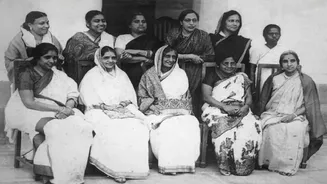
Ahead of the country’s 77th Republic Day, when the Constitution officially came into effect, we pay tribute to the 299 members of the Constituent Assembly — who tirelessly worked for two years, 11 months and 17 days to draft one of the most progressive constitutions in the world — especially the 15 women, hailing from diverse backgrounds and enduring patriarchy, caste oppression, child marriage and widowhood.
These 15 greats are: Ammu Swaminathan, Annie Mascarene, Begum Aizaz Rasul, Dakshayani Velayudhan, Durgabai Deshmukh, Hansa Jivraj Mehta, Kamla Chaudhry, Leela Roy, Malati Choudhury, Purnima Banerjee, Rajkumari Amrit Kaur, Renuka Ray, Sarojini Naidu, Sucheta Kripalani and Vijaya Lakshmi Pandit.
Also known as Ammukutty, Swaminathan was a courageous social worker and political leader. She played a crucial role in advocating for women’s rights and social justice within the Indian Constitution. She also fought for to erase caste-based discrimination in India.
In 1917, she became politically active when she formed the Women’s India Association with Annie Besant to address the social and economic problems of women workers. Once she became a part of the Constituent Assembly, she advocated for adult franchise and the removal of untouchability.
Her personal experience with child marriage also pushed Swaminathan to push for the Child Marriage Restraint Act and Age of Consent Act.
Born in Thiruvananthapuram to a Latin Christian family, Mascarene worked as a lawyer and politician before gaining entry to the Constituent Assembly. She fought to integrate the princely state of Travancore into the newly independent India and became the first woman to hold a ministerial and legislative assembly position in Travancore.
During Constituent Assembly debates, Mascarene spoke about the centralisation of power for a smooth functioning of a democracy, but also warned against complete centralisation that would negatively affect the nature of democratic institutions.
The only Muslim woman member in the Constituent Assembly, Rasul was born into a princely family in Punjab and was introduced to politics early on. Despite being a member of the Muslim League, she was one of the few who opposed separate electorates based on religion.
Moreover, she opposed reservations and separate electorates on communal lines; in the Assembly debates, she once said in 1948, “Reservation is a self-destructive weapon which separates the minorities from the majority for all time.”
Rasul also made a name for herself as the President of the Indian Women’s Hockey Federation and established the All India Women’s Hockey Association for 20 years.
Born into the Pulaya community of Kerala, Dakshayani Velayudhan faced acute discrimination from the upper caste communities in Cochin and Travancore. She was the first and only Scheduled Caste woman elected to this body. During her time in the Assembly, Velayudhan actively participated in debates, advocating for the rights of marginalised communities.
Initially a Gandhian, she vehemently opposed untouchability, calling it a “sin against humanity”. While drafting the Constitution, she was vocal in her support of Article 17 that called for the abolition of untouchability.
Later, in the 1970s, she formed a Dalit women’s organisation and worked to upskill them.
Known as the ‘mother of social work’, Durgabai Deshmukh was a prominent lawyer, freedom fighter, social reformer, and politician, who played a huge role in organising women satyagrahis in the Civil Disobedience Movement.
Her passion for social work came as a result of her childhood — she was not born into privilege. She saw several cruel customs and poor treatment of women. Also, when she was jailed during the Salt Satyagraha, Deshmukh observed that several of her fellow inmates were imprisoned for crimes they did not even commit.
When she joined the Constituent Assembly, Deshmukh weighed in on judicial matters and advocated lowering the age from 35 to 30 to hold a seat in the Council of Ministers. And following India’s Independence, she served in the Planning Commission as well as a leader of social services and became the chairperson of the Central Social Welfare Board (CSWB).
Mehta was a social activist and feminist. She was the founder of Desh Sevika Dal. In 1947, Mehta presented the first national flag on behalf of the women of India, symbolising the integral role women played in the nation’s freedom struggle and the new era of democracy.
In the Constituent Assembly, she made strong arguments against reservation for women, stating: “What we have asked for is social justice, economic justice and political justice, not reserved seats for quotas and separate electorates.”
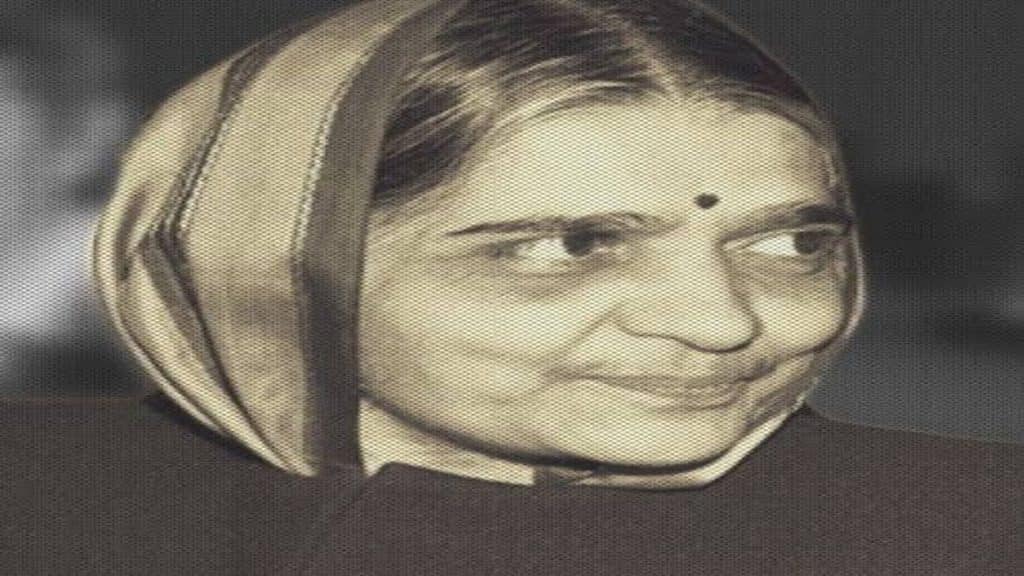
In the later years, Mehta also served on the board of Unesco and became the first Vice Chancellor of MS University in Baroda.
When she was appointed to the UN Human Rights Council, Mehta was instrumental for changing the phrase ‘all men are born free and equal’ to ‘all human beings are born free and equal’.
Chaudhry was a Hindi story writer and a firm Gandhian. She participated in the Civil Disobedience Movement of 1930 and was arrested several times.
Roy was a brave soldier of Indian freedom struggle and was a close associate of Subhas Chandra Bose. In 1931, she started publishing a magazine called “Jayashree” that was edited and managed by women only.
The only elected woman member from Bengal to the Assembly, Roy resigned from her post to stage a protest against the partition of India and dedicated herself to the relief and rehabilitation of refugees.
Choudhury had many nicknames; Mahatma Gandhi called her ‘toofani’ for her dazzling energy and belief in the fight for freedom whereas Rabindranath Tagore called her Meenu. She was instrumental in emphasising the role of education, especially adult education.
Banerjee played an important part in the drafting of the Constitution. She believed that education was “right of livelihood and right of earning an honourable bread”. She further argued that it was the government’s responsibility to ensure that through an approved syllabus, proper appreciation of all religions is inculcated into students for the sake of unity of the country.
She famously led the chorus for signing “Jana Gana Mana”, once it was officially adopted as the National Anthem.
A princess by birth, Kaur was a staunch activist. She joined Gandhi in the Civil Disobedience movement in 1930 and was passionate about the political participation of women.
She was a firm proponent universal adult franchise and did not believe in reservations for women. She argued that true equality would only be gained when women made it to the legislature through ordinary elections rather than through reservations.
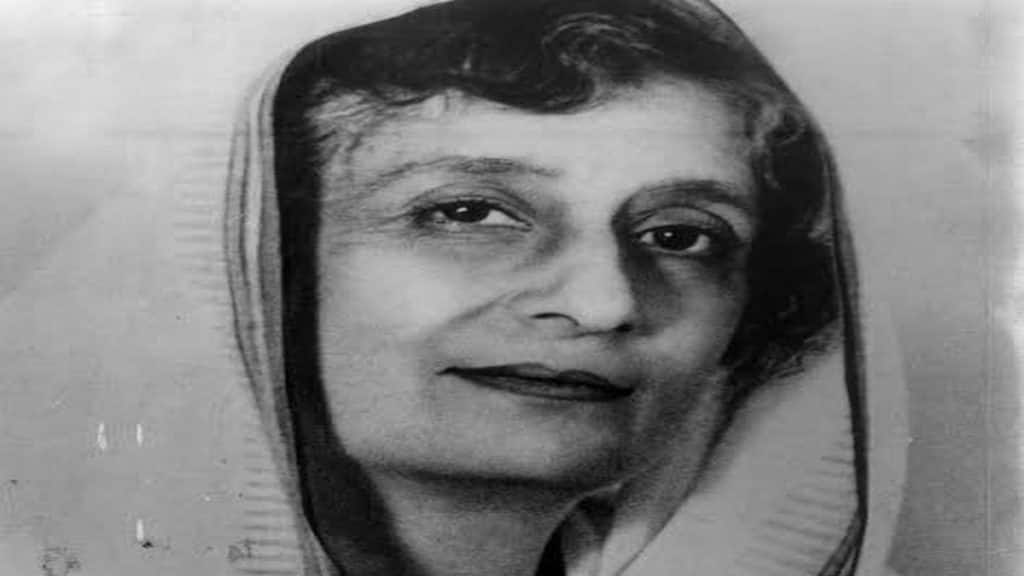
Renuka Ray also wrote in her autobiography how Rajkumari Amrit Kaur was the binding factor amongst the women members.
She further advocated for the Uniform Civil Code along with Hansa Mehta. This stems from her own secularism — she was seen carrying a spinning wheel, the Bhagwad Gita and the Bible when she was jailed after the Quit India Movement.
Kaur also served as the first women health minister and founded renowned institutions like the All India Institute of Medical Sciences (AIIMS).
In the Constituent Assembly, Ray focused on social welfare, particularly for marginalised communities. She also faced criticism from among her peers for advocating for the right to divorce and women’s right to an inheritance.
Naidu was perhaps the most well-known woman in the Constituent Assembly. She actively participated in the debates and deliberations, advocating for a constitution that upheld the principles of equality, justice, and freedom. Naidu’s contributions were particularly notable in emphasising the importance of women’s rights and ensuring their inclusion in the constitutional framework.
Kripalani played a prominent role in the Quit India Movement of 1942. She established the women’s wing of the Congress party in 1940. It is said that she led the Constituent Assembly in singing Vande Mataram, Saare Jahan Se Achcha and the national anthem.
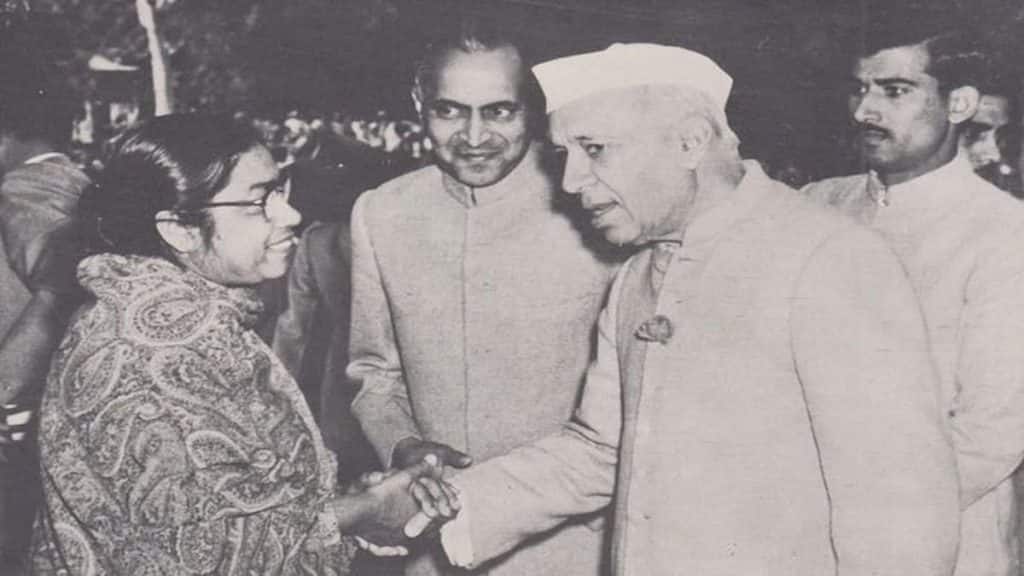
Years later, in 1963, she made history when she became India’s first female chief minister, assuming the office as the head of Uttar Pradesh government.
The sister of Jawaharlal Nehru, Vijaya Lakshmi Pandit was one of the first leaders to call for an Indian constituent assembly to frame a Constitution.
In the Assembly, she underscored the importance of India's duties towards its citizens and the international community.
After independence, Pandit became the face of India on a global stage. She was the only woman delegate at the United Nations Organisation Conference. She was also the first woman President of the UN General Assembly in 1953.
If it wasn’t for these women, who knows how different the Constitution would be. It’s for this reason that we should honour and pay tribute to them, this Republic Day.
With inputs from agencies
But have you ever wondered about the men and women who drafted this document that dictates our country’s governance — past, present and future?
Ahead of the country’s 77th Republic Day, when the Constitution officially came into effect, we pay tribute to the 299 members of the Constituent Assembly — who tirelessly worked for two years, 11 months and 17 days to draft one of the most progressive constitutions in the world — especially the 15 women, hailing from diverse backgrounds and enduring patriarchy, caste oppression, child marriage and widowhood.
These 15 greats are: Ammu Swaminathan, Annie Mascarene, Begum Aizaz Rasul, Dakshayani Velayudhan, Durgabai Deshmukh, Hansa Jivraj Mehta, Kamla Chaudhry, Leela Roy, Malati Choudhury, Purnima Banerjee, Rajkumari Amrit Kaur, Renuka Ray, Sarojini Naidu, Sucheta Kripalani and Vijaya Lakshmi Pandit.
Ammu Swaminathan
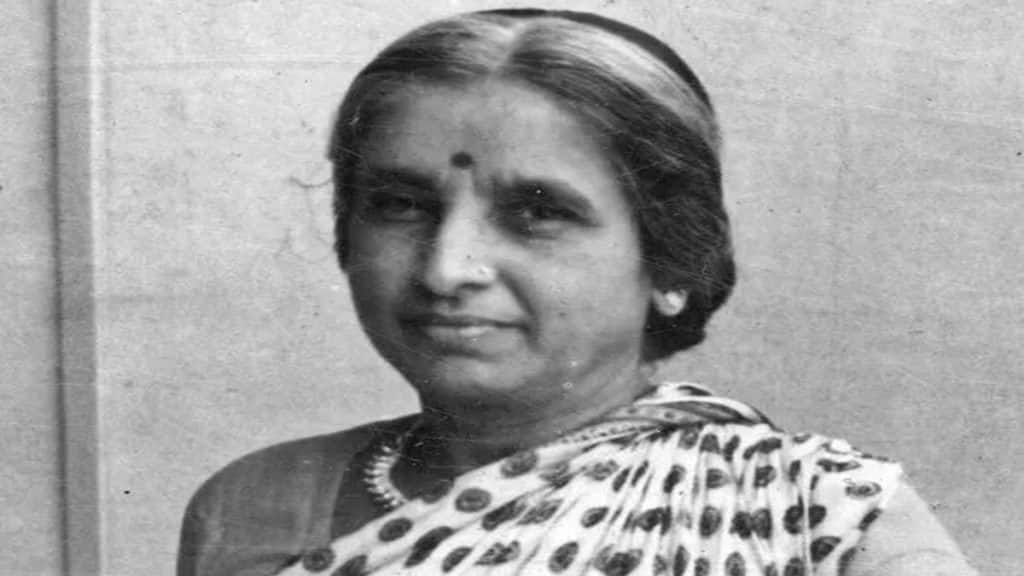
Also known as Ammukutty, Swaminathan was a courageous social worker and political leader. She played a crucial role in advocating for women’s rights and social justice within the Indian Constitution. She also fought for to erase caste-based discrimination in India.
Ammu Swaminathan was an advocate for womens rights and spoke of the importance of gender equality. Image Courtesy: X
In 1917, she became politically active when she formed the Women’s India Association with Annie Besant to address the social and economic problems of women workers. Once she became a part of the Constituent Assembly, she advocated for adult franchise and the removal of untouchability.
Her personal experience with child marriage also pushed Swaminathan to push for the Child Marriage Restraint Act and Age of Consent Act.
Annie Mascarene
Born in Thiruvananthapuram to a Latin Christian family, Mascarene worked as a lawyer and politician before gaining entry to the Constituent Assembly. She fought to integrate the princely state of Travancore into the newly independent India and became the first woman to hold a ministerial and legislative assembly position in Travancore.
During Constituent Assembly debates, Mascarene spoke about the centralisation of power for a smooth functioning of a democracy, but also warned against complete centralisation that would negatively affect the nature of democratic institutions.
Begum Aizaz Rasul
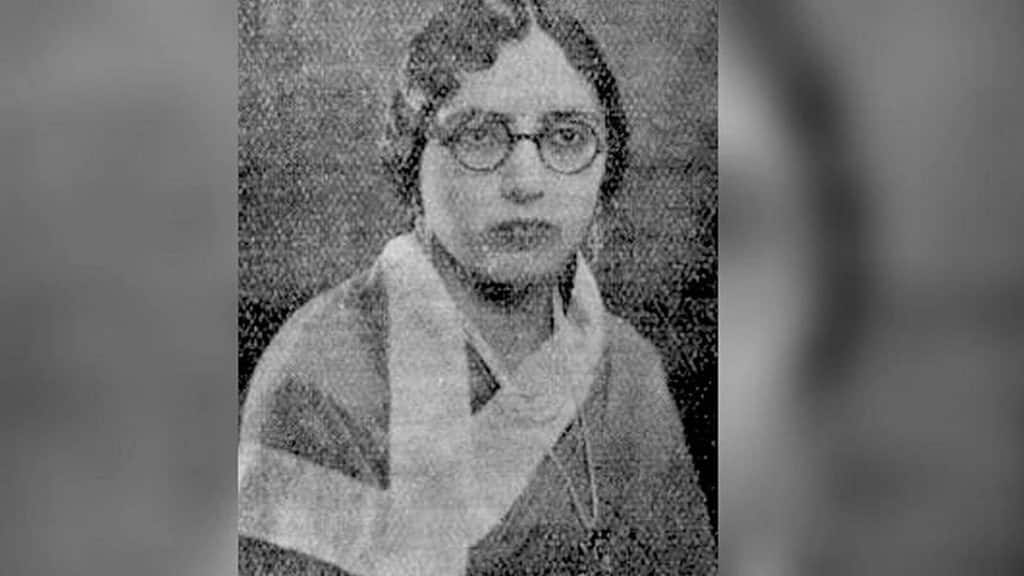
The only Muslim woman member in the Constituent Assembly, Rasul was born into a princely family in Punjab and was introduced to politics early on. Despite being a member of the Muslim League, she was one of the few who opposed separate electorates based on religion.
Begum Aizaz Rasul was the only Muslim woman member in the Constituent Assembly. Image Courtesy: X
Moreover, she opposed reservations and separate electorates on communal lines; in the Assembly debates, she once said in 1948, “Reservation is a self-destructive weapon which separates the minorities from the majority for all time.”
Rasul also made a name for herself as the President of the Indian Women’s Hockey Federation and established the All India Women’s Hockey Association for 20 years.
Dakshayani Velayudhan
Born into the Pulaya community of Kerala, Dakshayani Velayudhan faced acute discrimination from the upper caste communities in Cochin and Travancore. She was the first and only Scheduled Caste woman elected to this body. During her time in the Assembly, Velayudhan actively participated in debates, advocating for the rights of marginalised communities.
Initially a Gandhian, she vehemently opposed untouchability, calling it a “sin against humanity”. While drafting the Constitution, she was vocal in her support of Article 17 that called for the abolition of untouchability.
Later, in the 1970s, she formed a Dalit women’s organisation and worked to upskill them.
Durgabai Deshmukh
Known as the ‘mother of social work’, Durgabai Deshmukh was a prominent lawyer, freedom fighter, social reformer, and politician, who played a huge role in organising women satyagrahis in the Civil Disobedience Movement.
Her passion for social work came as a result of her childhood — she was not born into privilege. She saw several cruel customs and poor treatment of women. Also, when she was jailed during the Salt Satyagraha, Deshmukh observed that several of her fellow inmates were imprisoned for crimes they did not even commit.
When she joined the Constituent Assembly, Deshmukh weighed in on judicial matters and advocated lowering the age from 35 to 30 to hold a seat in the Council of Ministers. And following India’s Independence, she served in the Planning Commission as well as a leader of social services and became the chairperson of the Central Social Welfare Board (CSWB).
Hansa Jivraj Mehta
Mehta was a social activist and feminist. She was the founder of Desh Sevika Dal. In 1947, Mehta presented the first national flag on behalf of the women of India, symbolising the integral role women played in the nation’s freedom struggle and the new era of democracy.
In the Constituent Assembly, she made strong arguments against reservation for women, stating: “What we have asked for is social justice, economic justice and political justice, not reserved seats for quotas and separate electorates.”
Hansa Jivraj Mehta was an eminent writer in Gujarati language, reformist, social activist, educator, independence activist and feminist. Image Courtesy: X
In the later years, Mehta also served on the board of Unesco and became the first Vice Chancellor of MS University in Baroda.
When she was appointed to the UN Human Rights Council, Mehta was instrumental for changing the phrase ‘all men are born free and equal’ to ‘all human beings are born free and equal’.
Kamla Chaudhry
Chaudhry was a Hindi story writer and a firm Gandhian. She participated in the Civil Disobedience Movement of 1930 and was arrested several times.
Leela Roy
Roy was a brave soldier of Indian freedom struggle and was a close associate of Subhas Chandra Bose. In 1931, she started publishing a magazine called “Jayashree” that was edited and managed by women only.
The only elected woman member from Bengal to the Assembly, Roy resigned from her post to stage a protest against the partition of India and dedicated herself to the relief and rehabilitation of refugees.
Malati Choudhury
Choudhury had many nicknames; Mahatma Gandhi called her ‘toofani’ for her dazzling energy and belief in the fight for freedom whereas Rabindranath Tagore called her Meenu. She was instrumental in emphasising the role of education, especially adult education.
Purnima Banerjee
Banerjee played an important part in the drafting of the Constitution. She believed that education was “right of livelihood and right of earning an honourable bread”. She further argued that it was the government’s responsibility to ensure that through an approved syllabus, proper appreciation of all religions is inculcated into students for the sake of unity of the country.
She famously led the chorus for signing “Jana Gana Mana”, once it was officially adopted as the National Anthem.
Rajkumari Amrit Kaur
A princess by birth, Kaur was a staunch activist. She joined Gandhi in the Civil Disobedience movement in 1930 and was passionate about the political participation of women.
She was a firm proponent universal adult franchise and did not believe in reservations for women. She argued that true equality would only be gained when women made it to the legislature through ordinary elections rather than through reservations.
Rajukumar Amrit Kaur founded the renowned All India Institute of Medical Sciences (AIIMS). Image Courtesy: X
Renuka Ray also wrote in her autobiography how Rajkumari Amrit Kaur was the binding factor amongst the women members.
She further advocated for the Uniform Civil Code along with Hansa Mehta. This stems from her own secularism — she was seen carrying a spinning wheel, the Bhagwad Gita and the Bible when she was jailed after the Quit India Movement.
Kaur also served as the first women health minister and founded renowned institutions like the All India Institute of Medical Sciences (AIIMS).
Renuka Ray
In the Constituent Assembly, Ray focused on social welfare, particularly for marginalised communities. She also faced criticism from among her peers for advocating for the right to divorce and women’s right to an inheritance.
Sarojini Naidu
Naidu was perhaps the most well-known woman in the Constituent Assembly. She actively participated in the debates and deliberations, advocating for a constitution that upheld the principles of equality, justice, and freedom. Naidu’s contributions were particularly notable in emphasising the importance of women’s rights and ensuring their inclusion in the constitutional framework.
Sucheta Kripalani
Kripalani played a prominent role in the Quit India Movement of 1942. She established the women’s wing of the Congress party in 1940. It is said that she led the Constituent Assembly in singing Vande Mataram, Saare Jahan Se Achcha and the national anthem.
Sucheta Kripalani holds the honour of being India’s first female chief minister. Image Courtesy: X
Years later, in 1963, she made history when she became India’s first female chief minister, assuming the office as the head of Uttar Pradesh government.
Vijaya Lakshmi Pandit
The sister of Jawaharlal Nehru, Vijaya Lakshmi Pandit was one of the first leaders to call for an Indian constituent assembly to frame a Constitution.
In the Assembly, she underscored the importance of India's duties towards its citizens and the international community.
After independence, Pandit became the face of India on a global stage. She was the only woman delegate at the United Nations Organisation Conference. She was also the first woman President of the UN General Assembly in 1953.
If it wasn’t for these women, who knows how different the Constitution would be. It’s for this reason that we should honour and pay tribute to them, this Republic Day.
With inputs from agencies