







What is the story about?
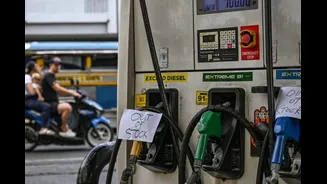
Australia has decided to adjust fuel quality as supplies are hit due to the ongoing war in Iran. The new quality changes will allow a high level of sulfur in fuel oil for about two months, a move that is expected to release 100 million litres into the domestic supply.
The country, reliant on oil imports for fuel, has seen petrol prices spike since the outbreak of the war in West Asia.
The Australian Energy Minister, Chris Bowen, said that one of the biggest oil suppliers in the country, Ampol, has agreed to redirect supply to regions experiencing shortages and the wholesale market.
“This will allow around 100 million litres a month of new petrol supply that would otherwise have been exported to be blended instead into the Australian domestic supply,” Bowen said.
The move will prioritise oil supplies to Farmers, fishers and regional communities.
The Australian government has criticised oil retailers for raising prices amid an increase in domestic demand, which has already been affected by the war.
Treasurer Jim Chalmers said that while the country has “enough fuel”, there were supply issues, particularly in rural areas.
“This conflict in the Middle East is already putting additional pressure on Australians, we understand that,” he told national broadcaster ABC.
Shares in Asia fell broadly on Thursday as oil prices roared 9 per cent past $100 a barrel on reports of more ships struck in Gulf waters and terminal shutdowns - a jump that could rapidly stoke inflation and push global borrowing costs higher.
Brent crude futures jumped 9.2 per cent to $100.37 a barrel, extending a rise of more than 4 per cent overnight. US crude futures surged 8.1 per cent to $94.26 a barrel.
Shares slid, with MSCI's broadest index of Asia-Pacific shares outside Japan, falling 1.5%, while the Nikkei dropped 1.4 per cent.
Chinese blue-chips lost 0.6 per cent and Hong Kong's Hang Seng index skidded 1.2 per cent.
Both S&P 500 futures and Nasdaq futures fell 0.9 per cent. EUROSTOXX 50 futures were down 0.8 per cent and DAX futures lost 1 per cent.
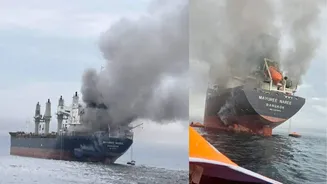
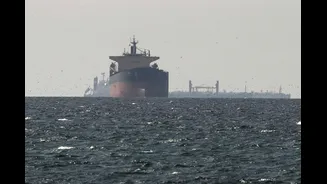
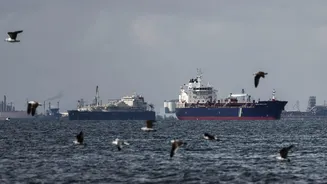
Explosive-packed Iranian boats appear to have struck two fuel tankers in Iraqi waters on Wednesday, igniting fires aboard both vessels and killing one crew member, according to port authorities and maritime security and risk analysts. The attack followed earlier incidents in which projectiles hit four other ships in Gulf waters.
The strikes signal a further escalation in the confrontation between Iran and US-Israeli forces. Since the conflict erupted, at least 16 ships tied to US and European interests have reportedly been targeted across the region.
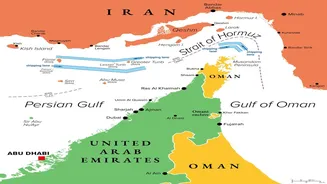
Shipping activity in the Gulf and along the narrow Strait of Hormuz, a vital route that carries roughly one-fifth of the world’s oil, has slowed dramatically since the United States and Israel launched strikes on Iran on February 28. The disruption has helped push global oil prices to their highest levels since 2022.
Iran’s Revolutionary Guards have warned that continued attacks on Iran could prompt them to block oil shipments from the Middle East to the United States, Israel and their allies. “Not one litre of oil” would be allowed to pass if the strikes persist, they said.
With inputs from agencies
The country, reliant on oil imports for fuel, has seen petrol prices spike since the outbreak of the war in West Asia.
The Australian Energy Minister, Chris Bowen, said that one of the biggest oil suppliers in the country, Ampol, has agreed to redirect supply to regions experiencing shortages and the wholesale market.
“This will allow around 100 million litres a month of new petrol supply that would otherwise have been exported to be blended instead into the Australian domestic supply,” Bowen said.
The move will prioritise oil supplies to Farmers, fishers and regional communities.
The Australian government has criticised oil retailers for raising prices amid an increase in domestic demand, which has already been affected by the war.
Treasurer Jim Chalmers said that while the country has “enough fuel”, there were supply issues, particularly in rural areas.
“This conflict in the Middle East is already putting additional pressure on Australians, we understand that,” he told national broadcaster ABC.
Oil prices surge
Shares in Asia fell broadly on Thursday as oil prices roared 9 per cent past $100 a barrel on reports of more ships struck in Gulf waters and terminal shutdowns - a jump that could rapidly stoke inflation and push global borrowing costs higher.
Brent crude futures jumped 9.2 per cent to $100.37 a barrel, extending a rise of more than 4 per cent overnight. US crude futures surged 8.1 per cent to $94.26 a barrel.
Shares slid, with MSCI's broadest index of Asia-Pacific shares outside Japan, falling 1.5%, while the Nikkei dropped 1.4 per cent.
Chinese blue-chips lost 0.6 per cent and Hong Kong's Hang Seng index skidded 1.2 per cent.
Both S&P 500 futures and Nasdaq futures fell 0.9 per cent. EUROSTOXX 50 futures were down 0.8 per cent and DAX futures lost 1 per cent.
Ships hit
Explosive-packed Iranian boats appear to have struck two fuel tankers in Iraqi waters on Wednesday, igniting fires aboard both vessels and killing one crew member, according to port authorities and maritime security and risk analysts. The attack followed earlier incidents in which projectiles hit four other ships in Gulf waters.
The strikes signal a further escalation in the confrontation between Iran and US-Israeli forces. Since the conflict erupted, at least 16 ships tied to US and European interests have reportedly been targeted across the region.
Shipping activity in the Gulf and along the narrow Strait of Hormuz, a vital route that carries roughly one-fifth of the world’s oil, has slowed dramatically since the United States and Israel launched strikes on Iran on February 28. The disruption has helped push global oil prices to their highest levels since 2022.
Iran’s Revolutionary Guards have warned that continued attacks on Iran could prompt them to block oil shipments from the Middle East to the United States, Israel and their allies. “Not one litre of oil” would be allowed to pass if the strikes persist, they said.
With inputs from agencies