








What is the story about?
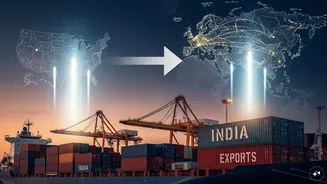
India achieved a record $47 billion (₹4.15 lakh crore) in electronics exports in 2025, powered largely by the Production-Linked Incentive (PLI) scheme for smartphones, Union Minister for Electronics and IT Ashwini Vaishnaw said on Monday.
According to the minister, nearly $30 billion of total exports came from PLI-driven smartphone manufacturing, underlining the central role of government incentives in transforming India into a global electronics hub.
Vaishnaw highlighted that India’s electronics exports have grown 11 times since 2014–15, when the current government took office. Electronics has now emerged as the country’s third-largest export category, creating around 25 lakh new jobs, with significant participation of women and opportunities for MSMEs.
He noted that domestic electronics production has surged six-fold over the past decade from ₹1.9 lakh crore in 2014–15 to ₹11.3 lakh crore in 2024–25. Exports, meanwhile, have expanded eightfold during the same period.
Calling the performance a success story of the Make in India initiative, Vaishnaw said:“Global players are confident, Indian companies are competitive, and jobs are being created. This is the real impact of Make in India.”
The government has positioned electronics manufacturing as a key pillar of India’s industrial strategy, with incentives aimed at attracting multinational firms, strengthening supply chains, and reducing import dependence, particularly in high-value sectors like smartphones, semiconductors, and IT hardware.
According to the minister, nearly $30 billion of total exports came from PLI-driven smartphone manufacturing, underlining the central role of government incentives in transforming India into a global electronics hub.
Vaishnaw highlighted that India’s electronics exports have grown 11 times since 2014–15, when the current government took office. Electronics has now emerged as the country’s third-largest export category, creating around 25 lakh new jobs, with significant participation of women and opportunities for MSMEs.
He noted that domestic electronics production has surged six-fold over the past decade from ₹1.9 lakh crore in 2014–15 to ₹11.3 lakh crore in 2024–25. Exports, meanwhile, have expanded eightfold during the same period.
Calling the performance a success story of the Make in India initiative, Vaishnaw said:“Global players are confident, Indian companies are competitive, and jobs are being created. This is the real impact of Make in India.”
The government has positioned electronics manufacturing as a key pillar of India’s industrial strategy, with incentives aimed at attracting multinational firms, strengthening supply chains, and reducing import dependence, particularly in high-value sectors like smartphones, semiconductors, and IT hardware.