






What is the story about?
Artificial intelligence is rapidly changing how people search, write, code and even make films. Now, it is trying to reshape music itself.
At Google I/O 2026, Google introduced major upgrades to Flow Music, its AI-powered music creation platform that allows users to generate studio-style tracks from a handful of prompts, notes or ideas.
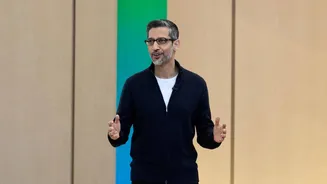
On stage, the demos looked futuristic and almost magical. Users could rewrite lyrics instantly, transform one song into another genre, extend short musical clips into entirely new tracks and even create matching music videos through conversational prompts.
But behind the excitement lies a growing anxiety that has been quietly building across the music industry for months. If AI can generate convincing songs in seconds, what happens to originality? What happens to musicians whose work trained these systems in the first place? And perhaps most importantly, what happens when listeners can no longer tell the difference between human-made music and machine-generated sound?
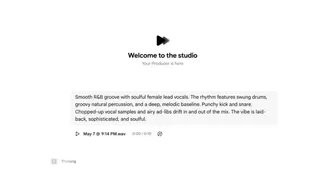
Google Flow Music is essentially an AI-assisted music studio designed to simplify song creation. While earlier versions already allowed users to generate and share songs, the latest update gives creators significantly more control over individual parts of a track.
Users can now highlight specific sections of a song and edit them independently. Lyrics can be rewritten or translated instantly without changing the rest of the composition. Beat drops can be restyled, melodies adjusted and short samples expanded into entirely different musical directions.
One of the most talked-about additions is the “covers” feature. This allows users to transform an existing track into another style while preserving its structure and melody. A pop song, for instance, can suddenly become a lo-fi study track or an orchestral ballad with a few prompts.
Google also integrated Gemini Omni into the platform, enabling users to create AI-generated music videos conversationally. Users can direct scenes, pacing, subjects and visual styles simply by describing them to the AI assistant.
Alongside the web version, Google is now launching mobile apps for both Flow and Flow Music. The apps aim to turn music generation into an on-the-go experience rather than something limited to professional studios or desktop software.
For amateur creators, the possibilities are exciting. Someone with little technical knowledge can suddenly experiment with composition, production and visuals without expensive equipment or years of training.
For professional musicians, however, the reaction is more complicated.
The rise of AI-generated music has already started changing streaming platforms long before Google’s latest announcement.
French streaming platform Deezer recently revealed that it now receives nearly 75,000 AI-generated tracks every single day, accounting for roughly 44 per cent of all daily uploads. That translates to more than two million AI-generated songs every month.
Yet listener behaviour tells a very different story. Deezer says AI-generated tracks account for only around 1-3 per cent of total streams on the platform. Even more strikingly, the company claims that nearly 85 per cent of those streams appear fraudulent, likely driven by bots rather than genuine listeners.
Still, the scale of AI music production is becoming impossible to ignore.
Earlier this year, several artists’ rights organisations released an open letter titled “Say No To Suno”, criticising AI music generators for diluting royalty pools and training models using artists’ work without proper authorisation.
The economics of streaming make these fears particularly serious. Platforms such as Spotify and Apple Music operate on a pro-rata royalty system, meaning artists are paid based on their share of overall streams. If AI-generated tracks flood platforms in massive quantities, human musicians fear their share of payouts could shrink dramatically.
At the same time, AI music is slowly entering the mainstream. Self-disclosed AI projects such as Xania Monet and Breaking Rust have already appeared on Billboard charts. Some labels are even beginning to strike licensing agreements with AI music companies, allowing artists to monetise the use of their voice, likeness or musical style.
The contradiction is becoming increasingly obvious: the industry is simultaneously resisting AI and investing in it.
Perhaps the biggest concern is not whether AI music sounds good enough. It is whether audiences will eventually stop caring who made it.
According to a study commissioned by Deezer, 97 per cent of listeners could not reliably distinguish between AI-generated and human-made music. Meanwhile, 80 per cent said fully AI-generated songs should be clearly labelled.
That tension sits at the centre of the debate. AI tools like Google Flow Music undeniably lower creative barriers. They allow more people to experiment, produce and share music without traditional limitations.
But music has never been purely about technical perfection. It has always carried emotion, identity, imperfections and lived experiences that listeners connect with deeply.
The fear within the industry is that AI may eventually optimise music into something endlessly personalised, instantly generated and infinitely scalable, but emotionally hollow.
For now, AI music remains more hype than dominance. Human-made songs still overwhelmingly drive listening habits. Yet with tools becoming more sophisticated every few months, the question is no longer whether AI will influence music creation.
It is how much of the industry will still feel human once it does.
At Google I/O 2026, Google introduced major upgrades to Flow Music, its AI-powered music creation platform that allows users to generate studio-style tracks from a handful of prompts, notes or ideas.
On stage, the demos looked futuristic and almost magical. Users could rewrite lyrics instantly, transform one song into another genre, extend short musical clips into entirely new tracks and even create matching music videos through conversational prompts.
But behind the excitement lies a growing anxiety that has been quietly building across the music industry for months. If AI can generate convincing songs in seconds, what happens to originality? What happens to musicians whose work trained these systems in the first place? And perhaps most importantly, what happens when listeners can no longer tell the difference between human-made music and machine-generated sound?
Google Flow Music: What is it?
Google Flow Music is essentially an AI-assisted music studio designed to simplify song creation. While earlier versions already allowed users to generate and share songs, the latest update gives creators significantly more control over individual parts of a track.
Users can now highlight specific sections of a song and edit them independently. Lyrics can be rewritten or translated instantly without changing the rest of the composition. Beat drops can be restyled, melodies adjusted and short samples expanded into entirely different musical directions.
One of the most talked-about additions is the “covers” feature. This allows users to transform an existing track into another style while preserving its structure and melody. A pop song, for instance, can suddenly become a lo-fi study track or an orchestral ballad with a few prompts.
Have a riff stuck in your head? Now you can create a song in @GoogleFlowMusic. 🎵
Simply record your riff into Google Flow Music, and prompt it with whatever musical direction you want — like sophisticated R&B. Google Flow Music will give you enough of a foundation so you can… pic.twitter.com/o3cr9NgeyL
— Google (@Google) May 19, 2026
Google also integrated Gemini Omni into the platform, enabling users to create AI-generated music videos conversationally. Users can direct scenes, pacing, subjects and visual styles simply by describing them to the AI assistant.
Alongside the web version, Google is now launching mobile apps for both Flow and Flow Music. The apps aim to turn music generation into an on-the-go experience rather than something limited to professional studios or desktop software.
For amateur creators, the possibilities are exciting. Someone with little technical knowledge can suddenly experiment with composition, production and visuals without expensive equipment or years of training.
For professional musicians, however, the reaction is more complicated.
AI in music
The rise of AI-generated music has already started changing streaming platforms long before Google’s latest announcement.
French streaming platform Deezer recently revealed that it now receives nearly 75,000 AI-generated tracks every single day, accounting for roughly 44 per cent of all daily uploads. That translates to more than two million AI-generated songs every month.
Yet listener behaviour tells a very different story. Deezer says AI-generated tracks account for only around 1-3 per cent of total streams on the platform. Even more strikingly, the company claims that nearly 85 per cent of those streams appear fraudulent, likely driven by bots rather than genuine listeners.
Still, the scale of AI music production is becoming impossible to ignore.
Earlier this year, several artists’ rights organisations released an open letter titled “Say No To Suno”, criticising AI music generators for diluting royalty pools and training models using artists’ work without proper authorisation.
The economics of streaming make these fears particularly serious. Platforms such as Spotify and Apple Music operate on a pro-rata royalty system, meaning artists are paid based on their share of overall streams. If AI-generated tracks flood platforms in massive quantities, human musicians fear their share of payouts could shrink dramatically.
At the same time, AI music is slowly entering the mainstream. Self-disclosed AI projects such as Xania Monet and Breaking Rust have already appeared on Billboard charts. Some labels are even beginning to strike licensing agreements with AI music companies, allowing artists to monetise the use of their voice, likeness or musical style.
The contradiction is becoming increasingly obvious: the industry is simultaneously resisting AI and investing in it.
What does it mean for the industry?
Perhaps the biggest concern is not whether AI music sounds good enough. It is whether audiences will eventually stop caring who made it.
According to a study commissioned by Deezer, 97 per cent of listeners could not reliably distinguish between AI-generated and human-made music. Meanwhile, 80 per cent said fully AI-generated songs should be clearly labelled.
That tension sits at the centre of the debate. AI tools like Google Flow Music undeniably lower creative barriers. They allow more people to experiment, produce and share music without traditional limitations.
But music has never been purely about technical perfection. It has always carried emotion, identity, imperfections and lived experiences that listeners connect with deeply.
The fear within the industry is that AI may eventually optimise music into something endlessly personalised, instantly generated and infinitely scalable, but emotionally hollow.
For now, AI music remains more hype than dominance. Human-made songs still overwhelmingly drive listening habits. Yet with tools becoming more sophisticated every few months, the question is no longer whether AI will influence music creation.
It is how much of the industry will still feel human once it does.