








What is the story about?
Senior officials from the PMO and the commerce department have held at least five high-level meetings in recent weeks with Indian missions, the Ministry of External Affairs (MEA) and trade bodies, underscoring the need for deeper trade engagement in both goods and services, the Times of India reported on Friday, citing officials familiar with the discussions.
The push comes as exporters grapple with rising trade barriers, including fresh US tariffs.
The report said Indian embassies and high commissions have been instructed to treat export promotion as a priority task, moving beyond a narrow focus on a handful of large economies.
“Har ek country zaroori hota hai (every country is important),” an official told the Times of India, summing up the message conveyed by the PMO.
While the commerce department has, over the past few months, identified 20 countries and six product categories for focused export promotion as US tariffs kicked in, the government is now broadening the approach. Missions have been told to actively explore opportunities even in smaller markets.
“Even countries with $100-200 million exports are being prioritised as an increase in a group of such countries can add weight to the overall kitty,” the report said.
According to the report, the emphasis is on diversifying not just export destinations but also import sources and product categories, helping India reduce dependence on a few markets and integrate more deeply into global supply chains.
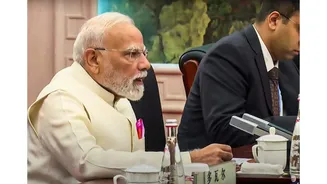
Principal Secretary to the Prime Minister Shaktikanta Das has chaired meetings involving representatives from over 100 countries, with senior officials from the commerce department and the MEA in attendance. These reviews followed Prime Minister Narendra Modi’s recent interactions with a select group of exporters, where concerns over tariffs, market access and regulatory barriers were discussed.
“It is better to diversify,” another official told the Times of India. “Wherever there is a small or a big opportunity, we should seek to integrate into the supply chain. Every small market today can be a big opportunity tomorrow. We should not look at it from the current size and we should leverage our presence there.”
According to the report, detailed instructions have now been issued to overseas missions, laying out strategies to be followed country by country. Each territorial division in the commerce department and the corresponding MEA desk will conduct monthly reviews with trade bodies to track progress.
Commercial missions have been asked to actively promote emerging areas such as e-commerce exports, sustainability-linked products, indigenous and GI-tagged goods, and global branding initiatives. There is also a renewed focus on building and strengthening “Brand India” in overseas markets.
Trade intelligence and market research have been designated as key responsibilities for missions, alongside early identification of regulatory changes and non-tariff barriers that could affect Indian exporters.
Missions are expected to flag evolving regulatory frameworks and non-tariff barriers early, so that the government can respond in time, the report said.
The directive reflects a broader strategic shift in India’s trade policy from reliance on a few major markets to a more distributed, opportunity-driven approach.
With global supply chains being reshaped by protectionism, sustainability norms and technology shifts, the government believes Indian missions can play a critical role in identifying niche opportunities and helping exporters plug into new value chains.
For exporters facing an uncertain global environment, the message from New Delhi is clear: cast the net wider, and leave no market unexplored.
The push comes as exporters grapple with rising trade barriers, including fresh US tariffs.
The report said Indian embassies and high commissions have been instructed to treat export promotion as a priority task, moving beyond a narrow focus on a handful of large economies.
“Har ek country zaroori hota hai (every country is important),” an official told the Times of India, summing up the message conveyed by the PMO.
Beyond big markets
While the commerce department has, over the past few months, identified 20 countries and six product categories for focused export promotion as US tariffs kicked in, the government is now broadening the approach. Missions have been told to actively explore opportunities even in smaller markets.
“Even countries with $100-200 million exports are being prioritised as an increase in a group of such countries can add weight to the overall kitty,” the report said.
According to the report, the emphasis is on diversifying not just export destinations but also import sources and product categories, helping India reduce dependence on a few markets and integrate more deeply into global supply chains.
PMO-led reviews
Principal Secretary to the Prime Minister Shaktikanta Das has chaired meetings involving representatives from over 100 countries, with senior officials from the commerce department and the MEA in attendance. These reviews followed Prime Minister Narendra Modi’s recent interactions with a select group of exporters, where concerns over tariffs, market access and regulatory barriers were discussed.
“It is better to diversify,” another official told the Times of India. “Wherever there is a small or a big opportunity, we should seek to integrate into the supply chain. Every small market today can be a big opportunity tomorrow. We should not look at it from the current size and we should leverage our presence there.”
Clear instructions for missions
According to the report, detailed instructions have now been issued to overseas missions, laying out strategies to be followed country by country. Each territorial division in the commerce department and the corresponding MEA desk will conduct monthly reviews with trade bodies to track progress.
Commercial missions have been asked to actively promote emerging areas such as e-commerce exports, sustainability-linked products, indigenous and GI-tagged goods, and global branding initiatives. There is also a renewed focus on building and strengthening “Brand India” in overseas markets.
Trade intelligence and market research have been designated as key responsibilities for missions, alongside early identification of regulatory changes and non-tariff barriers that could affect Indian exporters.
Missions are expected to flag evolving regulatory frameworks and non-tariff barriers early, so that the government can respond in time, the report said.
Strategic shift
The directive reflects a broader strategic shift in India’s trade policy from reliance on a few major markets to a more distributed, opportunity-driven approach.
With global supply chains being reshaped by protectionism, sustainability norms and technology shifts, the government believes Indian missions can play a critical role in identifying niche opportunities and helping exporters plug into new value chains.
For exporters facing an uncertain global environment, the message from New Delhi is clear: cast the net wider, and leave no market unexplored.