





What is the story about?
How much attention do you pay to food labels? In India, probably very little. Often printed on the back of products in an illegible font, they are easy to miss. However, the country is looking to change that.
Attempts are underway to introduce strong front-of-package warning labels (FOPLs) for packaged food in what is being pegged as one of the country’s most contentious public health policy battles, with backing from doctors, nutrition experts, and consumer groups.
The debate has, however, now moved beyond policy rooms. All eyes are on the Supreme Court of India, which has become an important pressure point. The top court has directed the Food Safety and Standards Authority of India (FSSAI), the statutory body under the health ministry, to introduce FOPL warnings for
packaged products high in sugar, salt and saturated fat, calling the measure essential to safeguard citizens’ right to health. It also observed that current back-of-pack information is insufficient.
So, when will packaged foods carry clear warning labels? And why is it taking so long? We explain.
Front-of-package warning labels (FOPLs) are symbols that display prominent alerts on packaged foods to help consumers quickly identify unhealthy products. These range from black warnings to traffic light coding for products. Public health experts say that front labels are the missing link that empowers customers to make a conscious choice.
Such warnings on food products are seen in countries across Latin America, Europe, and even some parts of Asia. However, India is lacking.
“They [the labels] have to be such that even a small child should be able to know that this food is good or bad for me,” said Dr Arun Gupta, a prominent paediatrician and the convenor of Delhi-based think tank Nutrition Advocacy in Public Interest (NAPi).
“The food labels on the back are not sufficient. They are also written in a language that a common man cannot understand. The warning labels have to be clear, good or bad, clearly mentioned for salt, sugar, and fat content in the food,” added Dr Gupta, who is renowned for his advocacy against unhealthy food marketing and his fight for stricter food safety regulations.
Dr Gupta is among several public health experts who have been pushing for the enforcement of food safety measures in the country. These labels, they believe, are important for India, where obesity, diabetes, and hypertension are rising rapidly, including among children.

Packaged foods that need attention include chips, biscuits, namkeens, carbonated soft drinks, breakfast cereals, artificially sweetened yoghurt, and ice creams.
“Packaged foods are actually ultraprocessed packaged foods (UPFs), which are industrial formulations high in added sugar, salt, unhealthy fats, and artificial additives like colours, preservatives, and flavour enhancers. They are actually manufactured, engineered products (not foods) designed to create hyperpalatability, convenience, and long shelf life to gain huge profits,” warns Dr Rekha Harish, professor and head of the department of paediatrics, GMC Jammu and HIMSR Delhi. She is known for her advocacy for restricting the sale of junk food in and around schools.
According to her, “scientific evidence now clearly links UPF consumption to a wide spectrum of adverse health outcomes, posing as an urgent public health threat especially to children and young people”. She warns that India faces a silent “nutritional transition” in which traditional diets are being replaced by packaged food.
A series in the journal Lancet published in November 2025 found that UPFs were displacing long-established dietary patterns, worsening diet quality, and increasing the risk of multiple chronic diseases. The Government of India Economic Survey 2025-26 has also strongly recommended the warnings as FOPLs.
“A 2022 randomised study across six Indian states tested different types of labels. Warning labels were most effective. In the trial, triangular warning labels showing high sugar, salt, and fat were used,” informs Dr Gupta.
The push for FPL in India started in 2013 and gathered momentum around 2017-2018, when nutrition researchers and health activists began demanding stronger regulations. “Prime Minister Narendra Modi stepped in and even called for a meeting on the same,” says Dr Gupta.
According to Dr Harish, the issue became urgent as India witnessed an explosion in the prevalence of lifestyle diseases.
“India now has one of the world’s largest populations living with diabetes, and childhood obesity is on a sharp rise. Packaged snacks and sugary drinks have penetrated rural markets,” said Dr Sriranjani Santosh, a renowned paediatrician known for her work on wrong labelling, like that of ORS.
The SC is hearing a PIL arguing that back-of-pack nutritional information is inadequate for consumer awareness.
On February 10, the top court told FSSAI that it was unsatisfied with its response on the issue and gave it four weeks to file an affidavit. The Bench emphasised that the food regulator must prioritise public health over the economic concerns of multinational food corporations.
In an affidavit filed on March 13, FSSAI said it is considering a tabular or pictorial format to highlight food high in fat, sugar, and salt (HFSS) to help consumers make informed choices. It said that no single country’s model can be directly replicated in India, given the country’s vast demographic diversity, multiple languages, and varying literacy levels. The regulator indicated that more consultations are needed before finalising the format.
It has also sought an additional six weeks to submit a detailed proposal.
On March 19, the food body consulted with stakeholders to discuss the issue.
Experts believe the SC’s growing interest in public health could be a turning point.
“The judiciary in the past has recognised lifestyle diseases and public health as a governance challenge. Courts have made sure many public health battles are won,” said Dr Harish.
Activists are now comparing FOPL regulation with other public health battles, such as:
In all these cases, the industry resisted stronger warnings despite mounting public health pressure and scientific evidence.
Over the past few years, regulatory conversations have revolved around the proposed Indian Nutrition Rating (INR), a star-based system that aggregates a food's positives and negatives. Health activists and doctors, however, feel that these warnings are insufficient and complex. Even the SC suggested health warnings that specify the quantity of fat/sugar/salt separately. It cited examples of similar food labels in Israel.
Many health experts cited evidence from countries like Mexico, Chile, and Peru, where warning labels were associated with reduced sugary purchases, product reformulation, and greater consumer awareness.
“After the Supreme Court directive in February, the consultation was held on March 19, 2026. While the industry was supporting the star rating system, the health experts have asked for clear warnings about the levels of sugar/salt, and fat,” Dr Santosh says.
“The star rating is complex. Suppose the food is high in sugar, but the other two components are fine, and it gets a four-star rating. How will a person with diabetes know which component is high? If the rating is three, it is still bad for those with hypertension.”
Warning labels, by contrast, function as immediate alerts, signalling when a product is harmful to health and exceeds the recommended levels of sugar/fat/salt. However, the industry has argued that “no food” should be labelled “bad” and that stronger warnings will hurt businesses.
There are concerns over “negative messaging”, with some arguing that awareness will play a better role than warnings.
Industry groups opine that Indian consumers may not understand the warning system copied from Latin America, as no single language can be used nationwide.
While India still doesn’t have a mandatory warning-label system comparable to those in other countries, the momentum is building.
Experts say whether India adopts a stronger warning system or settles for a weaker information system could shape the country’s fight against obesity and diabetes in the coming decades.
Attempts are underway to introduce strong front-of-package warning labels (FOPLs) for packaged food in what is being pegged as one of the country’s most contentious public health policy battles, with backing from doctors, nutrition experts, and consumer groups.
The debate has, however, now moved beyond policy rooms. All eyes are on the Supreme Court of India, which has become an important pressure point. The top court has directed the Food Safety and Standards Authority of India (FSSAI), the statutory body under the health ministry, to introduce FOPL warnings for
So, when will packaged foods carry clear warning labels? And why is it taking so long? We explain.
What are front-of-pack labels?
Front-of-package warning labels (FOPLs) are symbols that display prominent alerts on packaged foods to help consumers quickly identify unhealthy products. These range from black warnings to traffic light coding for products. Public health experts say that front labels are the missing link that empowers customers to make a conscious choice.
Such warnings on food products are seen in countries across Latin America, Europe, and even some parts of Asia. However, India is lacking.
“They [the labels] have to be such that even a small child should be able to know that this food is good or bad for me,” said Dr Arun Gupta, a prominent paediatrician and the convenor of Delhi-based think tank Nutrition Advocacy in Public Interest (NAPi).
“The food labels on the back are not sufficient. They are also written in a language that a common man cannot understand. The warning labels have to be clear, good or bad, clearly mentioned for salt, sugar, and fat content in the food,” added Dr Gupta, who is renowned for his advocacy against unhealthy food marketing and his fight for stricter food safety regulations.
Dr Gupta is among several public health experts who have been pushing for the enforcement of food safety measures in the country. These labels, they believe, are important for India, where obesity, diabetes, and hypertension are rising rapidly, including among children.
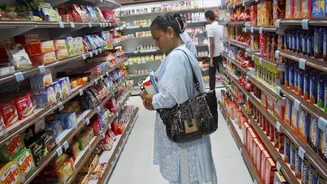
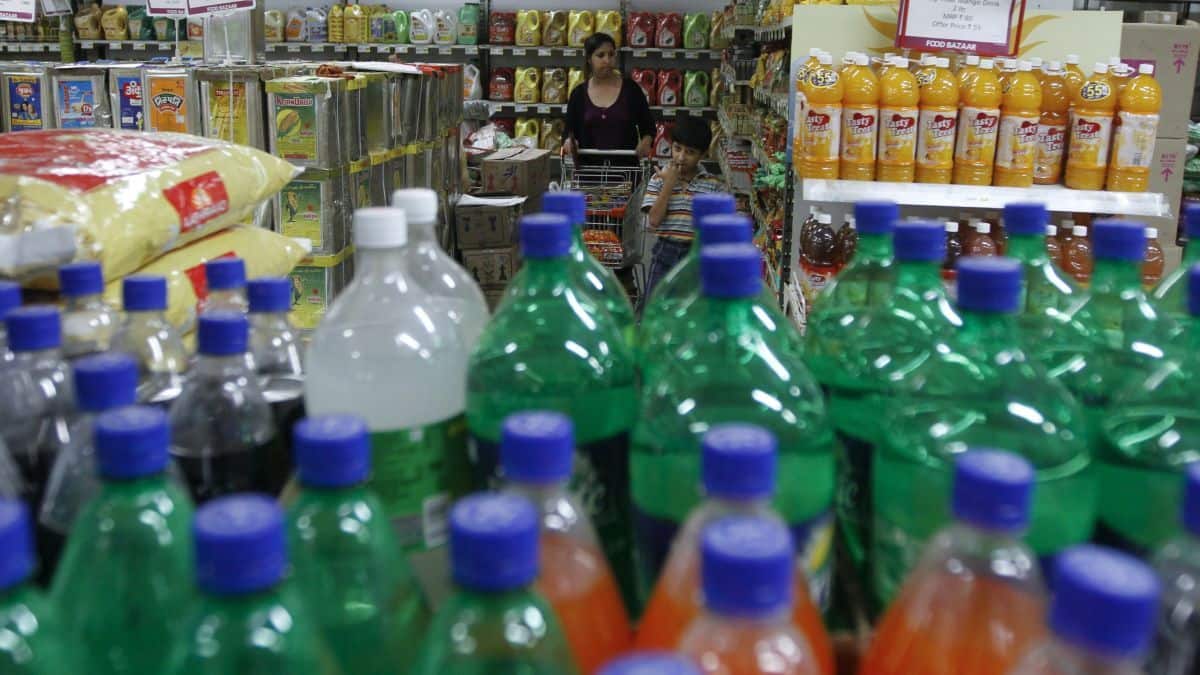
India faces rising obesity and packaged foods are partly to blame. File photo/Reuters
Packaged foods that need attention include chips, biscuits, namkeens, carbonated soft drinks, breakfast cereals, artificially sweetened yoghurt, and ice creams.
“Packaged foods are actually ultraprocessed packaged foods (UPFs), which are industrial formulations high in added sugar, salt, unhealthy fats, and artificial additives like colours, preservatives, and flavour enhancers. They are actually manufactured, engineered products (not foods) designed to create hyperpalatability, convenience, and long shelf life to gain huge profits,” warns Dr Rekha Harish, professor and head of the department of paediatrics, GMC Jammu and HIMSR Delhi. She is known for her advocacy for restricting the sale of junk food in and around schools.
According to her, “scientific evidence now clearly links UPF consumption to a wide spectrum of adverse health outcomes, posing as an urgent public health threat especially to children and young people”. She warns that India faces a silent “nutritional transition” in which traditional diets are being replaced by packaged food.
A series in the journal Lancet published in November 2025 found that UPFs were displacing long-established dietary patterns, worsening diet quality, and increasing the risk of multiple chronic diseases. The Government of India Economic Survey 2025-26 has also strongly recommended the warnings as FOPLs.
“A 2022 randomised study across six Indian states tested different types of labels. Warning labels were most effective. In the trial, triangular warning labels showing high sugar, salt, and fat were used,” informs Dr Gupta.
How the push for front labels started
The push for FPL in India started in 2013 and gathered momentum around 2017-2018, when nutrition researchers and health activists began demanding stronger regulations. “Prime Minister Narendra Modi stepped in and even called for a meeting on the same,” says Dr Gupta.
According to Dr Harish, the issue became urgent as India witnessed an explosion in the prevalence of lifestyle diseases.
“India now has one of the world’s largest populations living with diabetes, and childhood obesity is on a sharp rise. Packaged snacks and sugary drinks have penetrated rural markets,” said Dr Sriranjani Santosh, a renowned paediatrician known for her work on wrong labelling, like that of ORS.
- Dr Santosh lists events that led to the change:
- It started with a PIL by Udhay Foundation that unhealthy foods should not be sold near schools. In September 2013, the Delhi HC ordered the formation of a regulatory committee.
- In 2014, the warnings on the front-of-the-pack recommendation were given by the committee.
- In May 2018, the first draft of the recommendations was published. It proposed that whenever food contains high levels of sugar, salt, or fat, a red mark should be placed on the front of the packet. There was industry opposition as they believed it could affect sales
- Finally, a new draft was submitted in September 2022. It was proposed that foods should get a star rating system. More stars for healthy food and fewer for those laden with sugar/salt/fat. “Consumer organisations, however, want the front-of-the-pack warnings. From 2018 to 2026, FSSAI has only been reviewing the matter,’’ she adds.
- In 2024, a writ petition was filed in the Supreme Court. “FSSAI has now crossed the extension. We were expecting something to happen in early May, but there is no further development,” Dr Santosh says.
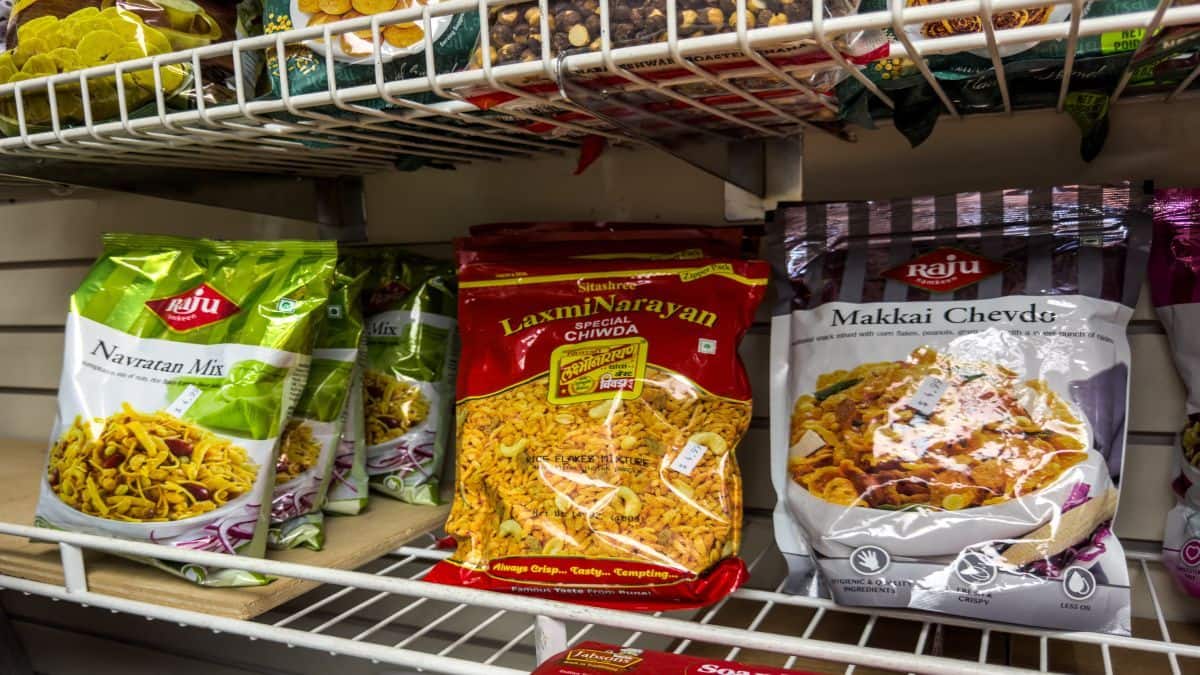
The Supreme Court has observed that the current back-of-pack information on ultra-processed foods is insufficient. File photo/Reuters
What has the Supreme Court said?
The SC is hearing a PIL arguing that back-of-pack nutritional information is inadequate for consumer awareness.
On February 10, the top court told FSSAI that it was unsatisfied with its response on the issue and gave it four weeks to file an affidavit. The Bench emphasised that the food regulator must prioritise public health over the economic concerns of multinational food corporations.
In an affidavit filed on March 13, FSSAI said it is considering a tabular or pictorial format to highlight food high in fat, sugar, and salt (HFSS) to help consumers make informed choices. It said that no single country’s model can be directly replicated in India, given the country’s vast demographic diversity, multiple languages, and varying literacy levels. The regulator indicated that more consultations are needed before finalising the format.
It has also sought an additional six weeks to submit a detailed proposal.
On March 19, the food body consulted with stakeholders to discuss the issue.
Why the Supreme Court matters now
Experts believe the SC’s growing interest in public health could be a turning point.
“The judiciary in the past has recognised lifestyle diseases and public health as a governance challenge. Courts have made sure many public health battles are won,” said Dr Harish.
Activists are now comparing FOPL regulation with other public health battles, such as:
- Smoking in public places
- Tobacco warnings
- Cigarette advertising restrictions
- Environmental pollution norms
- Restriction on the sale of junk food in schools
In all these cases, the industry resisted stronger warnings despite mounting public health pressure and scientific evidence.
A series in the journal Lancet published in November 2025 found that ultra-processed foods were displacing long-established dietary patterns, worsening diet quality, and increasing the risk of multiple chronic diseases. File photo/Reuters
What are the hurdles ahead?
Over the past few years, regulatory conversations have revolved around the proposed Indian Nutrition Rating (INR), a star-based system that aggregates a food's positives and negatives. Health activists and doctors, however, feel that these warnings are insufficient and complex. Even the SC suggested health warnings that specify the quantity of fat/sugar/salt separately. It cited examples of similar food labels in Israel.
Many health experts cited evidence from countries like Mexico, Chile, and Peru, where warning labels were associated with reduced sugary purchases, product reformulation, and greater consumer awareness.
“After the Supreme Court directive in February, the consultation was held on March 19, 2026. While the industry was supporting the star rating system, the health experts have asked for clear warnings about the levels of sugar/salt, and fat,” Dr Santosh says.
“The star rating is complex. Suppose the food is high in sugar, but the other two components are fine, and it gets a four-star rating. How will a person with diabetes know which component is high? If the rating is three, it is still bad for those with hypertension.”
Warning labels, by contrast, function as immediate alerts, signalling when a product is harmful to health and exceeds the recommended levels of sugar/fat/salt. However, the industry has argued that “no food” should be labelled “bad” and that stronger warnings will hurt businesses.
There are concerns over “negative messaging”, with some arguing that awareness will play a better role than warnings.
Industry groups opine that Indian consumers may not understand the warning system copied from Latin America, as no single language can be used nationwide.
What is the way forward?
While India still doesn’t have a mandatory warning-label system comparable to those in other countries, the momentum is building.
Experts say whether India adopts a stronger warning system or settles for a weaker information system could shape the country’s fight against obesity and diabetes in the coming decades.