








What is the story about?
US President Donald Trump has directed American defence companies to ramp up weapons production by invoking the Cold War-era Defense Production Act (DPA), citing concerns that existing production bottlenecks could threaten US national security.
In a memorandum issued on June 11 and made public only recently, Trump stated that certain conditions exist that "may pose a direct threat to the national defense." Addressed to the "Secretary of War," the memorandum highlighted challenges facing the US defence industrial base.
"Limited production capacity, fragile supply chains, long-lead dependencies, and related production bottlenecks may impair the ability of the United States to produce, sustain, and expand the availability of munitions, missiles, and equipment required for the national defense," Trump wrote.
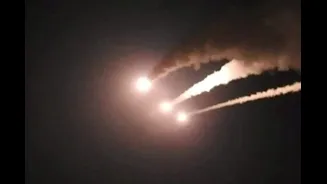
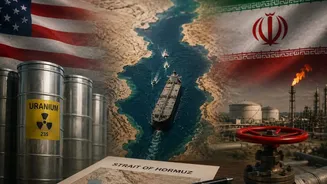
The move comes amid growing concerns over US munitions stockpiles, particularly in the aftermath of the Iran conflict.
According to a report by the Center for Strategic and International Studies (CSIS ), cited by CBS News, the United States may have expended more than half of its inventory of four critical munitions during the war with Iran.
Meanwhile, a report by the Congressional Research Service (CRS) detailed significant equipment losses and damage suffered during the conflict. The list includes four F-15E Strike Eagle fighter jets, seven KC-135 Stratotanker aerial refuelling aircraft, one F-35A Lightning II fighter jet, one E-3 Sentry AWACS aircraft, two MC-130J Commando II special operations aircraft, and 24 MQ-series drones, among other assets.
According to multiple media reports, at least 42 US aircraft, including fighter jets and drones, were either lost or damaged during the conflict.
US Defense Secretary Pete Hegseth has previously stated that the Iran war cost Washington approximately $29 billion. The figure includes the repair and replacement of military equipment, as well as broader operational expenses associated with maintaining forces in the theatre.
To accelerate defence production, Trump invoked the Defense Production Act of 1950, a law that grants the President broad authority to expand and expedite the supply of materials deemed critical to national security.
The legislation allows the federal government to direct private companies to prioritise government contracts and, in certain circumstances, enables firms to cooperate in ways that might otherwise be considered non-competitive.
The act is typically invoked during national emergencies, including natural disasters, major security crises, and wartime contingencies.
Trump's decision comes despite his earlier dismissal of reports suggesting the US was facing ammunition shortages. Speaking to NBC News, the President said, "We have unlimited middle and upper ammunition, which is really what we're using in this war."
The move also coincides with the Trump administration's push for a significantly larger defence budget. The White House is reportedly seeking a $1.5 trillion defence allocation from Congress.
A day before the memorandum was made public, Hegseth met Senate Republicans on Capitol Hill to discuss a proposed $350 billion reconciliation package for additional defence funding, with a particular focus on replenishing depleted munitions stockpiles.
In a memorandum issued on June 11 and made public only recently, Trump stated that certain conditions exist that "may pose a direct threat to the national defense." Addressed to the "Secretary of War," the memorandum highlighted challenges facing the US defence industrial base.
"Limited production capacity, fragile supply chains, long-lead dependencies, and related production bottlenecks may impair the ability of the United States to produce, sustain, and expand the availability of munitions, missiles, and equipment required for the national defense," Trump wrote.
Concerns over munitions stockpiles
The move comes amid growing concerns over US munitions stockpiles, particularly in the aftermath of the Iran conflict.
According to a report by the Center for Strategic and International Studies (CSIS ), cited by CBS News, the United States may have expended more than half of its inventory of four critical munitions during the war with Iran.
Meanwhile, a report by the Congressional Research Service (CRS) detailed significant equipment losses and damage suffered during the conflict. The list includes four F-15E Strike Eagle fighter jets, seven KC-135 Stratotanker aerial refuelling aircraft, one F-35A Lightning II fighter jet, one E-3 Sentry AWACS aircraft, two MC-130J Commando II special operations aircraft, and 24 MQ-series drones, among other assets.
According to multiple media reports, at least 42 US aircraft, including fighter jets and drones, were either lost or damaged during the conflict.
US Defense Secretary Pete Hegseth has previously stated that the Iran war cost Washington approximately $29 billion. The figure includes the repair and replacement of military equipment, as well as broader operational expenses associated with maintaining forces in the theatre.
Cold War-era powers invoked
To accelerate defence production, Trump invoked the Defense Production Act of 1950, a law that grants the President broad authority to expand and expedite the supply of materials deemed critical to national security.
The legislation allows the federal government to direct private companies to prioritise government contracts and, in certain circumstances, enables firms to cooperate in ways that might otherwise be considered non-competitive.
The act is typically invoked during national emergencies, including natural disasters, major security crises, and wartime contingencies.
Trump's decision comes despite his earlier dismissal of reports suggesting the US was facing ammunition shortages. Speaking to NBC News, the President said, "We have unlimited middle and upper ammunition, which is really what we're using in this war."
The move also coincides with the Trump administration's push for a significantly larger defence budget. The White House is reportedly seeking a $1.5 trillion defence allocation from Congress.
A day before the memorandum was made public, Hegseth met Senate Republicans on Capitol Hill to discuss a proposed $350 billion reconciliation package for additional defence funding, with a particular focus on replenishing depleted munitions stockpiles.